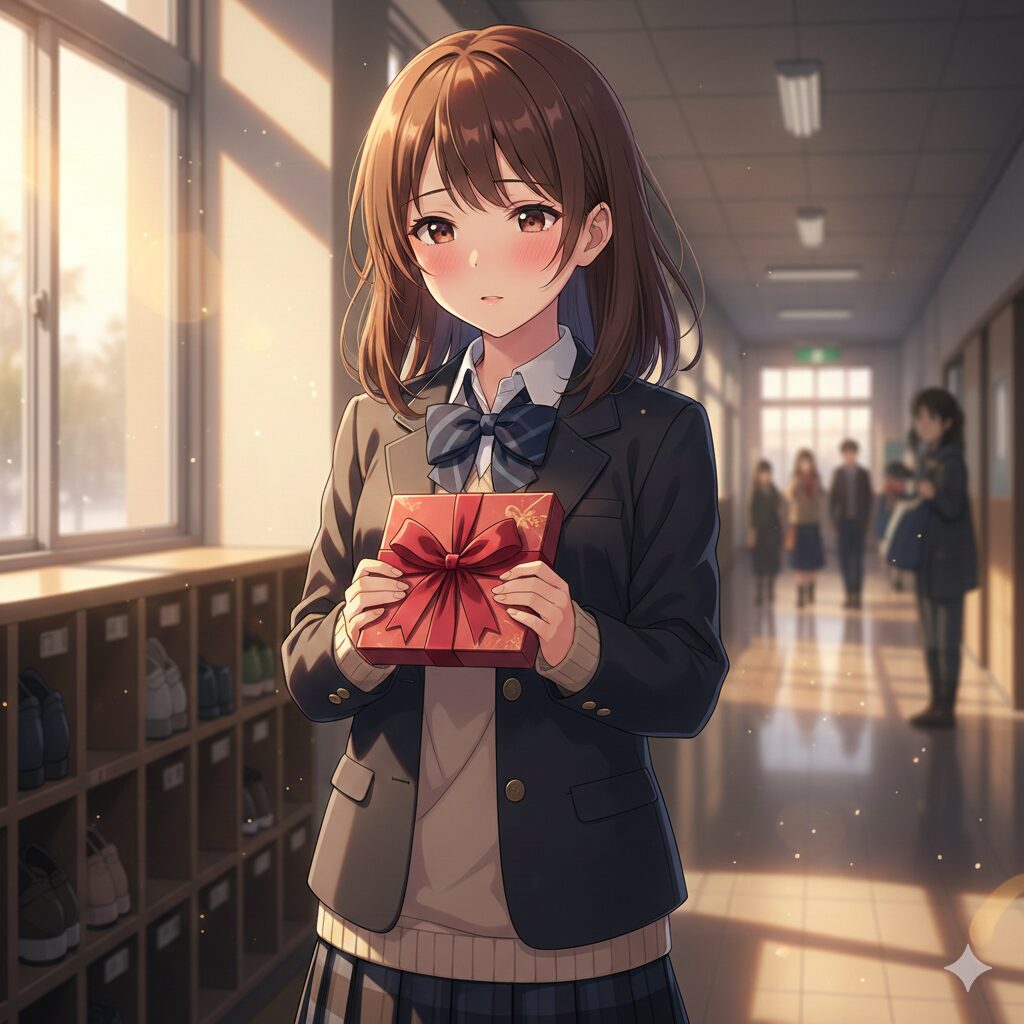
St. Valentine’s Day on February 14th is celebrated around the world as a day of love. However, did you know that Valentine’s Day in Japan has evolved in a completely different direction from the rest of the world?
In the West, it is common for men to give cards, flowers, or gifts to women, or for couples to exchange gifts. In Japan, however, it has long been established as “a day for women to give chocolates to men.” Why does Japan alone have such a unique custom? The answer lies in a complex mix of commercial strategy history and cultural background rooted in the Japanese psyche.

1. The Origins of Valentine’s Day in Japan: The Magic of Chocolate
The history of Valentine’s Day in Japan began with marketing strategies by confectionery companies. There are several theories, but here are some of the most prominent ones:
- The Morozoff Theory (1936): Morozoff, a confectionery company in Kobe, is said to have been the first to place an ad in an English newspaper saying, “Let’s send chocolates to your Valentine.” Initially, this was aimed at foreigners living in Japan.
- The Mary Chocolate Theory (1958): They held the first Valentine’s sale at a department store in Tokyo. Although anecdote has it that they only sold a few chocolate bars in the first three days, the following year they started selling heart-shaped chocolates with the slogan “From women to men,” and it gradually caught on.
- The Sony Plaza Theory (1968): An import goods store proposed chocolate as a stylish, Western-style gift culture, which permeated the younger generation.
By the late 1970s, this custom was fully established as a national event in Japan. It was during this period that the romantic narrative of “the only day a woman can confess her love to the man she likes” was completed.
2. “Honmei” and “Giri”: The Complex Caste System of Chocolate
To understand Valentine’s Day in Japan, the most important and unique aspect is the classification of chocolate types. These function not just as sweets, but as social tools to smooth human relationships.
Honmei-Choco (True Love Chocolate)
This is the proof of true love. These are chocolates given by a woman to someone she genuinely loves (a boyfriend, husband, or a crush). Luxury brand chocolates or homemade chocolates are often chosen, embodying “serious” feelings.
Giri-Choco (Obligation Chocolate)
This is likely the most difficult concept for foreigners to understand, yet it is quintessentially Japanese. “Giri” means obligation or social debt. In other words, these are chocolates given to male colleagues, bosses, or friends with absolutely no romantic feelings, but rather to show “daily gratitude” or to “maintain smooth relationships.” Inexpensive and casual items are chosen.
Note: In recent years, this “Giri-choco” culture is changing. More companies are banning the distribution of chocolates in the workplace, and women are feeling tired of this social pressure, leading to a gradual decline.
Tomo-Choco (Friend Chocolate) & Jibun-Choco (Self Chocolate)
Entering the 21st century, Valentine’s shifted from a romantic event to a “festival for enjoying chocolate.” “Tomo-choco,” exchanged between female friends, and “Jibun-choco,” purchased as a reward for oneself from high-end chocolatiers, are becoming the main players in the current market.
3. Decoding Japanese Culture from Valentine’s Day: Communication by “Sensing” and the Aesthetics of “Return Gifts”
Why did the style of “women giving to men” take root in Japan? This relates to the social position and character of Japanese women in the past.
Historically, it was very courageous for a Japanese woman to confess her love to a man, and there was even a tendency to view it as “immodest.” Valentine’s Day gave these shy Japanese women a “free pass” in the form of chocolate, providing them with a chance to openly confess their love.
Also, Japan has a unique day called “White Day (March 14).” This is the day when men who received chocolate on Valentine’s Day give a return gift (marshmallows, cookies, candy, etc.) to the women. The culture of gift-giving—”if you receive something, you must give something back”—is deeply rooted in Japan. The confectionery industry cleverly utilized this dutiful national character to create a two-month-long gift-giving event.
4. What Do You Think?
The Japanese culture of using chocolate to convey love. It may be commercial, but it is also a beautiful form of communication born from a shy national character. However, it also has the aspect of exhausting obligatory gifting.
How do you spend February 14th in your country? If you were in Japan, who would you give “Giri-choco” to, and who would you give “Honmei-choco” to? Or would you buy the finest chocolate for yourself?
Useful Links to Learn More About Japanese Culture
【2月14日】日本独自の進化を遂げた愛と義務の祭り「バレンタインデー」
世界中で愛の日として祝われる2月14日のセント・バレンタインデー。しかし、日本のバレンタインデーが世界のそれとは全く異なる独自の進化を遂げていることを、あなたはご存知でしょうか?
欧米では男性から女性へ、あるいは互いにカードや花束、ギフトを贈り合うのが一般的です。しかし、日本では長きにわたり「女性から男性へチョコレートを贈る日」として定着してきました。なぜ日本だけが、このようにユニークな習慣を持つようになったのでしょうか?そこには、日本の商業戦略の歴史と、日本人の深層心理に根ざした文化背景が複雑に絡み合っています。
1. 日本のバレンタインデーの起源:チョコレートの魔法
日本のバレンタインデーの歴史は、製菓会社のマーケティング戦略から始まりました。これにはいくつかの説がありますが、有力なものをいくつか紹介しましょう。
- モロゾフ説(1936年):神戸の製菓会社モロゾフが、英字新聞に「あなたのバレンタインにチョコレートを贈りましょう」という広告を出したのが最初と言われています。当初は外国人向けでした。
- メリーチョコレート説(1958年):東京の百貨店で初めてバレンタインセールを行いました。当初は3日間で板チョコ数枚しか売れなかったという逸話がありますが、翌年以降、「女性から男性へ」というキャッチコピーでハート型のチョコを販売し、徐々に火がつきました。
- ソニープラザ説(1968年):輸入雑貨店が、より欧米風のオシャレなギフト文化としてチョコレートを提案し、若い世代に浸透させました。
1970年代後半には、この習慣は日本の国民的行事として完全に定着しました。この時期に、「女性が意中の男性に愛を告白できる唯一の日」というロマンチックな物語が完成したのです。
2. 「本命」と「義理」:複雑なチョコレートの階級制度
日本のバレンタインデーを理解する上で、最も重要かつユニークなのが、チョコレートの種類の分類です。これは単なるお菓子ではなく、人間関係を円滑にするための社会的なツールとして機能しています。
本命チョコ (Honmei-Choco)
これこそが真の愛の証です。女性が本気で好きな相手(恋人、夫、あるいは片思いの相手)に贈るチョコレートです。高級ブランドのチョコレートや、手作りのチョコレートが選ばれることが多く、そこには「本気」の感情が込められています。
義理チョコ (Giri-Choco)
これが外国人にとって最も理解しがたい、しかし日本的な概念でしょう。「義理」とは義務や社会的責任を意味します。つまり、恋愛感情は全くないけれど、職場の同僚や上司、男友達に対して「日頃の感謝」や「円滑な人間関係の維持」のために贈るチョコレートです。安価でカジュアルなものが選ばれます。
注意:近年、この「義理チョコ」文化は変化しています。職場での配布を禁止する企業が増えたり、女性たちがこの社会的プレッシャーに疲れを感じたりしているため、徐々に減少傾向にあります。
友チョコ (Tomo-Choco) & 自分チョコ (Jibun-Choco)
21世紀に入り、バレンタインは恋愛イベントから「チョコレートを楽しむ祭り」へと変化しました。女性同士で交換する「友チョコ」や、高級ショコラティエの作品を自分へのご褒美として購入する「自分チョコ」が、現在の市場の主役になりつつあります。
3. バレンタインから読み解く日本文化:「察する」コミュニケーションと「お返し」の美学
なぜ日本では「女性から男性へ」というスタイルが定着したのでしょうか?これには、かつての日本女性の社会的立場と性格が関係しています。
かつての日本女性にとって、自分から男性に愛を告白することは非常に勇気がいることであり、また「はしたない」とされる風潮すらありました。バレンタインデーは、そんなシャイな日本女性たちに、チョコレートという「免罪符」を与えることで、大手を振って愛を告白できるチャンスを提供したのです。
また、日本には「ホワイトデー(3月14日)」という独自の日が存在します。これはバレンタインにチョコをもらった男性が、女性にお返し(マシュマロ、クッキー、キャンディなど)をする日です。日本には「何かをもらったら、必ずお返しをする」という贈答文化が深く根付いており、製菓業界はこの義理堅い国民性を巧みに利用して、2ヶ月連続のギフトイベントを作り上げたのです。
4. あなたはどう思いますか?
愛を伝えるためにチョコレートを使う日本の文化。それは商業的でありながら、シャイな国民性が生み出した美しいコミュニケーションの形かもしれません。しかし、義務的な贈り物に疲弊する側面も持っています。
あなたの国では、2月14日をどのように過ごしますか?もしあなたが日本にいたら、誰に「義理チョコ」を渡し、誰に「本命チョコ」を渡しますか?それとも、自分自身のために最高級のチョコレートを買いますか?

コメント