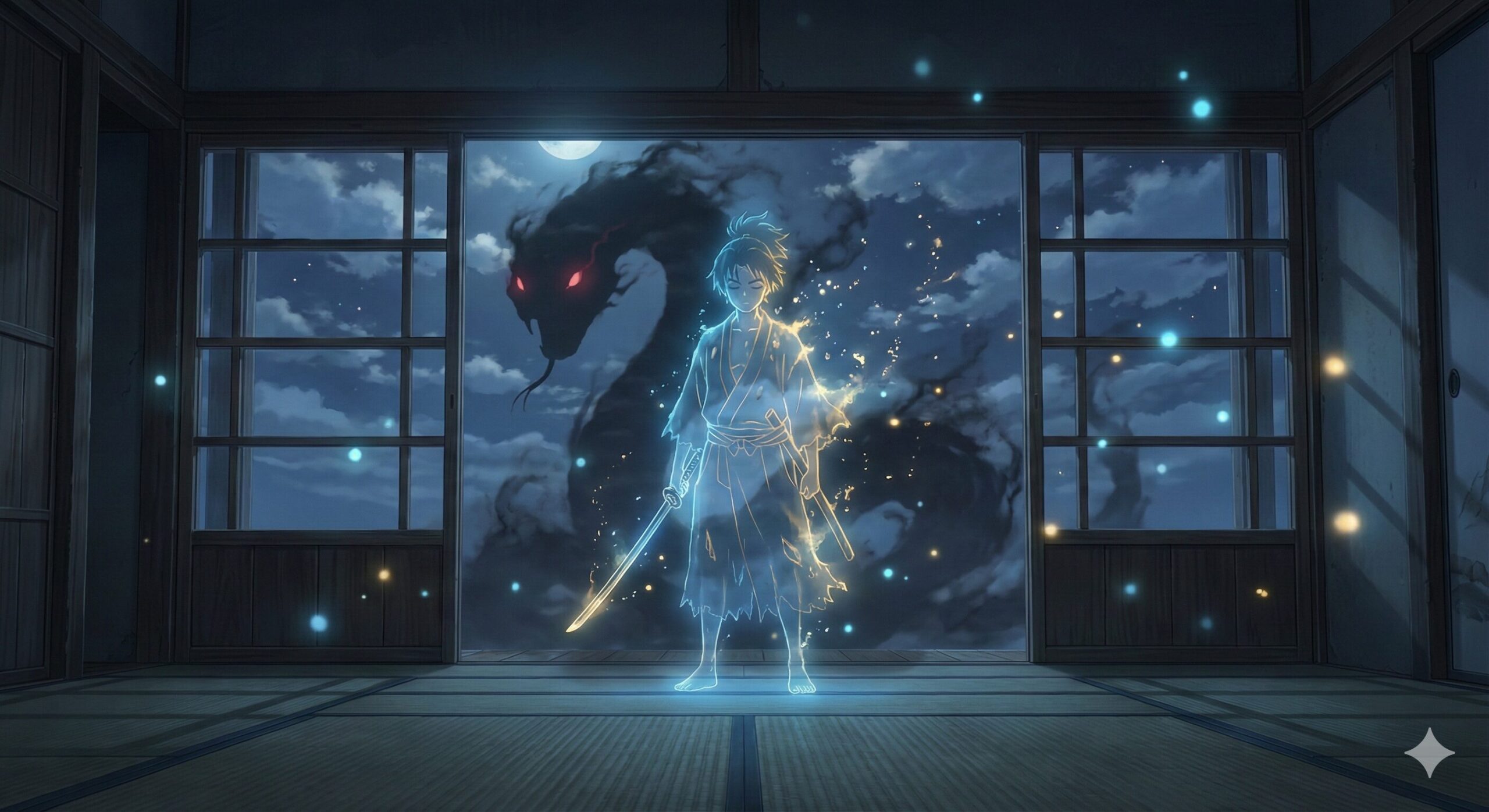
In the quiet rice paddies of Japan, a familiar chorus can be heard every summer. It is the song of the frogs. Today, I will share with you a dramatic and moving folktale about one such small frog who risked everything to repay a debt of gratitude. This is the story of “The Frog’s Repayment” (Kaeru no Ongaeshi).

The Story: The Frog and the Serpent
Long ago, in a rural village in Japan, there lived a kind-hearted young farmer named Heita.
One hot and humid summer day, as Heita was walking along the narrow path between the rice fields, he noticed a commotion in the grass. A large Meadow Bunting Snake (Aodaisho) had cornered a large pond frog. The snake raised its head, ready to strike and swallow the frog whole. The poor frog was frozen in terror.
“This won’t do,” Heita thought.
Heita immediately stomped his hoe on the ground and shouted, “Hey! Be off with you!” Startled by the sudden noise and vibration, the snake glared at Heita with hateful eyes before slithering away into the tall grass. Having narrowly escaped death, the frog turned toward Heita, croaked “Gero-Gero” as if to say thank you, and hopped back into the safety of the muddy water.
“Stay safe now,” Heita laughed, waving the creature goodbye.
Several years passed. It was the day of a memorial service for Heita’s late father. Villagers had gathered at Heita’s house, and a monk was chanting sutras. Suddenly, amidst the solemn atmosphere, strange noises began to erupt from beneath the floorboards.
Thump! Crash! Bam!
It sounded like a violent struggle. The guests looked at each other in confusion. “Is it an earthquake?” “No, it’s coming from right under the floor!”
The sounds grew more intense, shaking the entire house. Then, silence fell as abruptly as it had begun. From the shadows of the floorboards, a young samurai stranger staggered out.
The samurai was covered in blood and mud, his breathing ragged. He was mortally wounded. Heita rushed over to him. “Who are you? What happened down there?”
The young samurai looked up at Heita and managed a weak smile.
“Heita-san, have you forgotten me? Years ago, on the path by the rice field, you saved a frog from being eaten by a snake. I am that frog.”
Heita gasped. “You are that frog?”
“That snake held a grudge against you for interfering that day. It knew you would have guests today, and it planned to set fire to your house from underneath to kill everyone. I sensed its evil intent and came to stop it.”
The samurai clutched his chest, his life fading.
“I fought the snake under the floor and managed to defeat it. However, I have been poisoned by its fangs and will not survive. I assumed this human form only to express my gratitude to you one last time…”
As he finished speaking, the samurai’s form vanished. In his place lay the body of a large pond frog, and beside it, the massive carcass of the snake with its throat torn out.
Heita picked up the frog’s body and wept. “For someone like me… you gave your little life…”
Heita buried the frog with great honor. It is said that every year thereafter, beautiful flowers bloomed around the frog’s grave.
Analysis: The Power of “Ongaeshi”
This story vividly illustrates the Japanese concept of Ongaeshi (repayment of a favor). Unlike Western fairytales where the hero might receive a pot of gold, in Japanese folklore, the repayment often involves a deep, spiritual commitment.
Why did the frog fight to the death? Because Heita saved him without expecting anything in return. In Japanese culture, such pure benevolence creates a heavy debt of gratitude for the recipient. The frog, though small, possessed a spirit of “Bushido” (the way of the warrior)—valuing loyalty above life itself.
The transformation into a samurai also reflects Japanese Animism (Shinto beliefs). It suggests that all living things have souls and that animals can possess spiritual powers equal to or greater than humans.
Cultural Insight: The Meaning of “Kaeru”
In Japanese, the word for “Frog” is Kaeru. This word is a homophone for several significant concepts:
- Kaeru (帰る): To return home safely.
- Kaeru (返る): To return (a favor or object).
- Kaeru (変える): To change or transform.
Because of this wordplay, frogs are considered lucky charms in Japan. People often carry small frog amulets to ensure they “return home safely” from travels or that money “returns” to their wallet.
A Question for You
If you were Heita, would you have stopped to save a small frog? And if you were the frog, would you have sacrificed your life for a human who saved you years ago?
In a modern world often driven by profit and loss, this story reminds us that the connection between souls is the most precious treasure of all.
Want to read more Japanese Folktales?
Japanese legends hold many secrets and wisdoms. Discover more stories here.
👉 Read more: Japanese Folktale Series
You can also explore more about Japanese heritage at the official Cultural Heritage Online.
【日本昔話】蛙の恩返し:小さな命が教えてくれる「義」と「勇気」の物語
日本の田園風景に欠かせない生き物、それは「蛙(カエル)」です。日本の夏、水田からは彼らの大合唱が聞こえてきます。今日ご紹介するのは、そんな小さな蛙が、命を賭して恩人に報いる壮絶で美しい物語です。
昔話「蛙の恩返し」
むかしむかし、ある村に、心優しい百姓の若者が住んでいました。彼の名前は平太(へいた)と言いました。
ある蒸し暑い夏の日、平太が田んぼのあぜ道を歩いていると、草むらで一匹のトノサマガエルが、大きな青大将(ヘビ)に睨まれているのを見つけました。ヘビは鎌首をもたげ、今にもカエルを一口で飲み込もうとしています。カエルは恐怖で身動きが取れず、ただ震えていました。
「これはいかん」
平太はとっさに持っていた鍬(くわ)で地面を強く叩き、「こら!行ってしまえ!」と大声を上げました。驚いたヘビは、恨めしそうな目で平太を一瞥すると、シュルシュルと草むらの奥へ姿を消しました。命拾いしたカエルは、平太の方を向いて「ゲロゲロ」と何度か鳴くと、ぴょんぴょんと田んぼの中へ帰っていきました。
「達者で暮らせよ」と平太は笑って見送りました。
それから数年が経ちました。平太の家では、父の法事が行われることになりました。村の人々が集まり、静かにお経が読まれている最中、突然、床下から奇妙な音が響き始めました。
ドタン、バタン!ドスン!
まるで何かが激しく格闘しているような音です。参列者たちは顔を見合わせました。「なんだ、地震か?」「いや、床下だぞ」
音は激しさを増し、家全体が揺れるほどになりました。そして、しばらくすると、ピタリと音が止みました。静寂が戻ったその時、床下から一人の見知らぬ若侍(わかざむらい)がふらりと現れたのです。
若侍は全身傷だらけで、息も絶え絶えでした。衣服は泥にまみれ、深い傷から血が流れています。平太は慌てて駆け寄りました。「あなたはいったい誰ですか? 何があったのですか?」
若侍は平太を見上げ、苦しい息の中で微笑みました。
「平太さん、私をお忘れですか。数年前、あぜ道でヘビに飲まれそうになっていたところを、あなたに助けていただいたカエルでございます」
平太は息を呑みました。「あの時のカエルか!」
「あの日、逃げたヘビは、ずっとあなたを恨んでいました。今日、法事で人が集まる隙を狙って、床下から家に火を放ち、あなたの一家を焼き殺そうと企んでいたのです。私はその気配を察し、急いで駆けつけました」
若侍は胸を押さえ、言葉を続けました。
「床下でヘビと戦い、なんとか退治いたしました。しかし、私もヘビの毒を受けてしまい、もう助かりません。最後に一目、恩人であるあなたにお礼が言いたくて、人の姿を借りました……」
言い終わると同時に、若侍の姿はふっと消え、そこには大きなトノサマガエルの死骸と、その横に、喉を食いちぎられた巨大な青大将の死骸が転がっていました。
平太はカエルの亡骸を抱き上げ、涙を流しました。「俺なんかのために、こんな小さな体で……」
平太はカエルを手厚く葬り、その墓の周りには毎年、美しい花が咲き乱れたと言われています。
考察:恩義が生む超自然的な力
この物語は、日本の「恩返し(Ongaeshi)」の精神を強烈に描いています。鶴の恩返しのように美しい着物を織るのではなく、この物語の「恩返し」は「命の交換」です。
なぜ、カエルはこれほどまでに壮絶な戦いを選んだのでしょうか。それは、平太がカエルに見返りを求めず、ただ純粋な慈悲心で命を救ったからです。日本の精神性において、無償の善意(徳)は、受けた側にとって何よりも重い「心の負債」となり、それを返すことが至上の名誉とされます。
また、カエルが人間に化けて戦うという描写は、日本の「アニミズム(自然崇拝)」の影響が見て取れます。動物も人間と同じように魂を持ち、感情を持ち、時には人間以上の霊力を発揮するという考え方です。
日本文化の鍵:「カエル」という言葉の響き
日本語で「Frog」は「Kaeru(カエル)」と発音します。この音は、以下の言葉と同じ発音です。
- 帰る (Kaeru): To return home.
- 返る (Kaeru): To return (as in an object or favor).
- 変える (Kaeru): To change / transform.
つまり、カエルは「無事に家に帰る」「受けた恩を返す」「姿を変えて守る」という、複数の幸運な意味を持つ生き物として、古来より日本人に愛されてきました。旅行のお守りとしてカエルのマスコットを持つのも、この語呂合わせに由来しています。
あなたへの問いかけ
もしあなたが平太の立場なら、小さな生き物を助けるために足を止めますか? また、もしあなたがカエルの立場なら、かつて自分を助けてくれた誰かのために、自分の命を投げ出すことができるでしょうか?
現代社会では「損得勘定」が優先されがちです。しかし、この物語は、損得を超えた「魂のつながり」こそが、真に尊いものであると教えてくれています。
もっと日本の昔話を知りたいですか?
日本の伝説や民話には、まだまだ隠された知恵がたくさんあります。他の物語もぜひチェックしてください。
👉 日本の昔話シリーズ一覧はこちら (Japanese Folktale Series)
また、日本の文化庁が提供する文化遺産オンラインでも、多くの伝承に触れることができます。

コメント