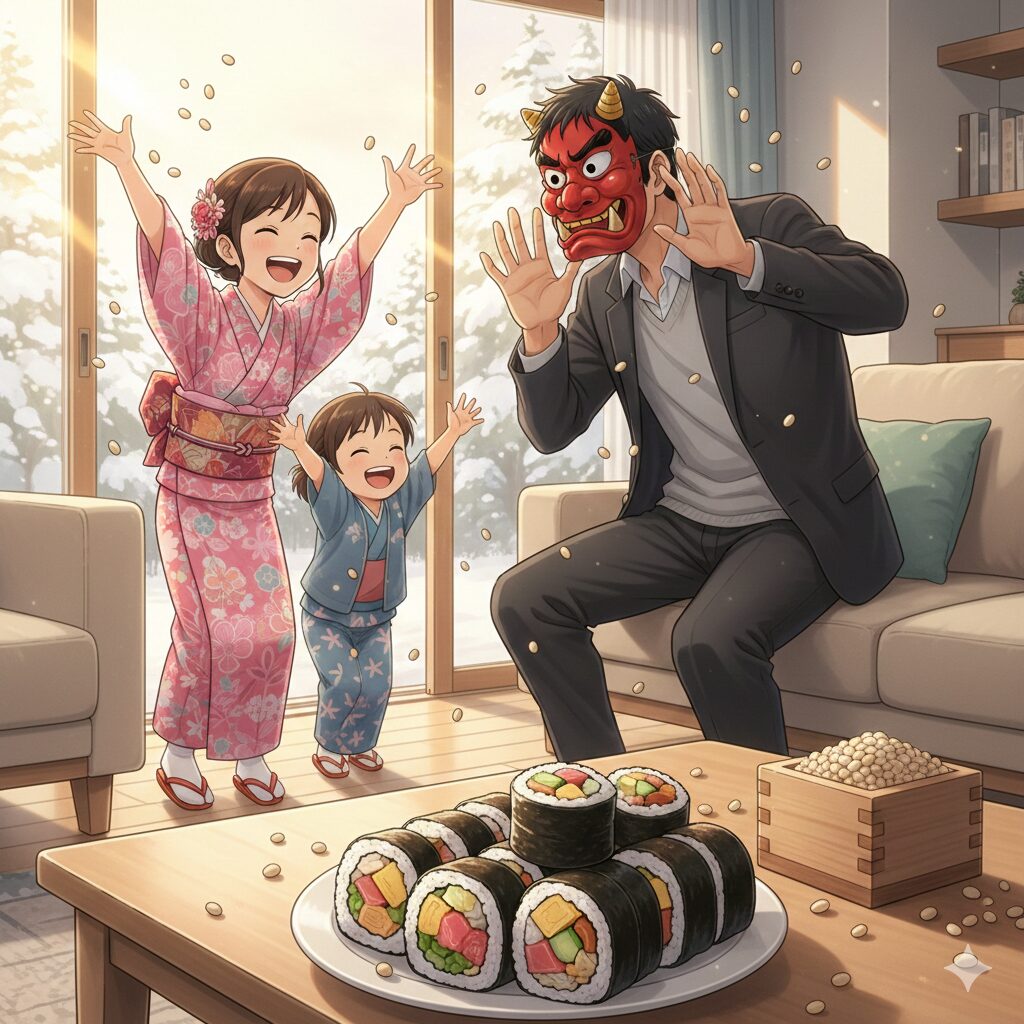
February 3rd marks a significant turning point in Japan, signaling the end of winter and the beginning of spring. This day is known as “Setsubun.” Is it merely an event for throwing beans? Far from it. This day encapsulates Japanese spirituality, reverence for the seasons, and a philosophy of “purification” cultivated over centuries of history.

History of Setsubun: From Imperial Court Rituals to Common Folk Traditions
Originally, the word “Setsubun” meant “division of seasons,” referring to the days before the beginning of spring, summer, autumn, and winter. However, since the old lunar calendar regarded “Spring” as the most important start of the New Year, “Setsubun” came to specifically refer to the day before “Risshun” (the first day of spring) from the Edo period onwards.
The Tsuina Ceremony
The roots of Setsubun lie in a ritual called “Tsuina,” which was transmitted from China and practiced in the Imperial Court during the Heian period. It was an event held on New Year’s Eve to drive away “Ekiki” (demons that bring plagues). For people of that era, invisible diseases and disasters were feared as the work of demons.
By the Muromachi period, this ritual evolved into the form of throwing beans to drive away demons and spread among the common people. Why beans? It is believed that grains house the force of life, and phonetically in Japanese, “Ma-me” (beans) sounds like “destroying demons” (Ma-Me).
Traditional Rituals and Rules
1. Mamemaki (Bean Throwing)
Roasted soybeans (Fuku-mame) are thrown with the chant, “Oni wa soto, Fuku wa uchi” (Demons out, Luck in!). Traditionally, the head of the household or a “Toshi-otoko/Toshi-onna” (someone born in the current zodiac year) performs the throwing.
- Why Roasted Beans? Using raw beans is considered bad luck because if a forgotten bean sprouts, it symbolizes the rooting of evil. Therefore, beans must be roasted (fired). This also signifies “shooting the demon’s eye” (another play on words).
- Eating the Beans: After throwing, it is customary to eat the number of beans equivalent to your age (or age + 1) to pray for good health throughout the year.
2. Ehou-maki (Lucky Direction Roll)
A custom that has firmly taken root across Japan in recent years is “Ehou-maki.” Facing the lucky direction of the year (Ehou), one eats a thick sushi roll whole, in silence, while making a wish.
This tradition is said to have originated among merchants in Osaka. Typically, seven ingredients are used, representing the Seven Lucky Gods. The rule is to eat the roll uncut to signify “not cutting ties or good fortune.”
Note: The lucky direction for 2026 is South-South-East. Have your compass app ready.
3. Hiiragi Iwashi (Holly and Sardine)
There is a custom of decorating the entrance with a grilled sardine head stuck onto a holly branch. The strong smell of the sardine and the sharp thorns of the holly are meant to ward off demons from entering the house. While less common in modern urban areas, this talisman is still cherished in rural areas and traditional households.
The Depths of Japanese Culture: Why We Fear and Love “Oni”
What becomes visible through Setsubun is the Japanese sense of “Kegare” (impurity). Before welcoming the new season (Spring = New Year), we physically purge the stagnation and evil spirits accumulated during winter through action (bean throwing). This is deeply connected to the Shinto spirit of “Misogi” (purification).
Also interesting is the existence of the “Oni” (demon). While Oni are objects of fear, in Japanese pop culture (anime and manga), they are often depicted as beings with tragic pasts or even lovable characters. In some regions, during Setsubun, people chant “Oni wa uchi” (Demons in). This reflects a uniquely Japanese, tolerant religious view that seeks to embrace even foreign entities or rough deities.
A Question for You
In modern society, we fight against “modern demons” such as invisible stress and anxiety. What is the “Oni” you want to drive away? And what is the “Fuku” (Luck) you wish to invite in?
This February 3rd, instead of just eating beans as a snack, why not throw them with all your might, intending to reset your inner self?
To learn more about Japan’s special days, please check the series below:
What’s Today’s Special Day Series
2月3日は「節分」。鬼を払い福を呼ぶ、日本古来の禊(みそぎ)と再生の儀式
日本の冬の終わりと、春の始まりを告げる重要な分岐点。それが2月3日の「節分(Setsubun)」です。単なる豆まきのイベントだと思っていませんか?実はこの日には、日本の精神性、季節への畏敬の念、そして長い歴史の中で培われてきた「浄化」の思想が凝縮されています。
節分の歴史:宮中儀式から庶民の行事へ
節分とは、本来「季節を分ける」という意味があり、立春・立夏・立秋・立冬の前日すべてを指していました。しかし、旧暦の日本では「春」が一年の始まり(新年)として最も重要視されていたため、江戸時代以降、「節分」といえば立春の前日を指すようになったのです。
追儺(ついな)の儀式
節分のルーツは、中国から伝わり、平安時代の宮中で行われていた「追儺(ついな)」という儀式にあります。これは大晦日に疫鬼(疫病をもたらす鬼)を追い払う行事でした。当時の人々にとって、病や災害は目に見えない「鬼」の仕業と恐れられていたのです。
室町時代になると、この儀式が豆をまいて鬼を追い払う形へと変化し、民間へと広がっていきました。なぜ豆なのか?それは、穀物には生命力が宿ると信じられていたこと、そして語呂合わせで「魔(マ)を滅(メ)っする」に通じるからだと言われています。
伝統的な儀式とルール
1. 豆まき(Mamemaki)
「鬼は外、福は内(Oni wa soto, Fuku wa uchi)」という掛け声とともに、炒った大豆(福豆)を撒きます。一般的には、一家の主あるいは「年男・年女(その年の干支生まれの人)」が撒くのが習わしです。
- 炒り豆を使う理由:生の豆を使い、拾い忘れた豆から芽が出てしまうと「縁起が悪い」とされたため、必ず火を通した豆を使います。「魔の目を射る(炒る)」という意味も込められています。
- 食べる数:豆まきの後、自分の年齢(あるいは年齢+1個)の数だけ豆を食べ、一年の無病息災を願います。
2. 恵方巻(Ehou-maki)
近年、日本全国で定着したのが「恵方巻」の風習です。その年のもっとも縁起が良いとされる方角(恵方)を向き、願い事を思い浮かべながら、太巻き寿司を無言で丸かじりします。
この習慣は大阪の商家で始まったとされ、七福神にちなんで7種類の具材を入れるのが基本です。「縁を切らない」ように包丁で切らず、一本そのまま食べるのがルールです。
注意:2026年の恵方は「南南東」です。コンパスアプリを準備しておきましょう。
3. 柊鰯(Hiiragi Iwashi)
玄関に、焼いた鰯(イワシ)の頭を柊(ヒイラギ)の枝に刺したものを飾る風習があります。鰯の強烈な臭いと、柊の鋭いトゲで、鬼が家に入ってくるのを防ぐ魔除けの意味があります。現代の都市部では見かけることが少なくなりましたが、地方や伝統を重んじる家庭では今も健在です。
日本文化の深層:なぜ私たちは「鬼」を恐れ、そして愛するのか
節分を通して見えてくるのは、日本人の「ケガレ(穢れ)」に対する感覚です。新しい季節(春=新年)を迎える前に、冬の間に溜まった淀みや邪気を物理的なアクション(豆まき)で祓い清める。これは神道の「禊(みそぎ)」の精神に通底しています。
また、興味深いのは「鬼」の存在です。鬼は恐怖の対象でありながら、日本のポップカルチャー(アニメや漫画)では、しばしば悲しき過去を持つ存在や、愛すべきキャラクターとして描かれます。節分においても、地域によっては「鬼も内(鬼も招き入れる)」と唱える場所があります。これは、異質なものや荒ぶる神さえも包摂しようとする、日本独自の寛容な宗教観を表していると言えるでしょう。
あなたへの問いかけ
現代社会において、私たちは目に見えないストレスや不安という「現代の鬼」と戦っています。あなたにとって、追い払いたい「鬼」は何ですか?そして、招き入れたい「福」とは何でしょうか?
今年の2月3日は、ただのスナック感覚で豆を食べるのではなく、自分自身の心の中をリセットするつもりで、力一杯豆を投げてみてはいかがでしょうか。
もっと日本の記念日について知りたい方は、以下のシリーズ記事をご覧ください。
What’s Today’s Special Day Series

コメント