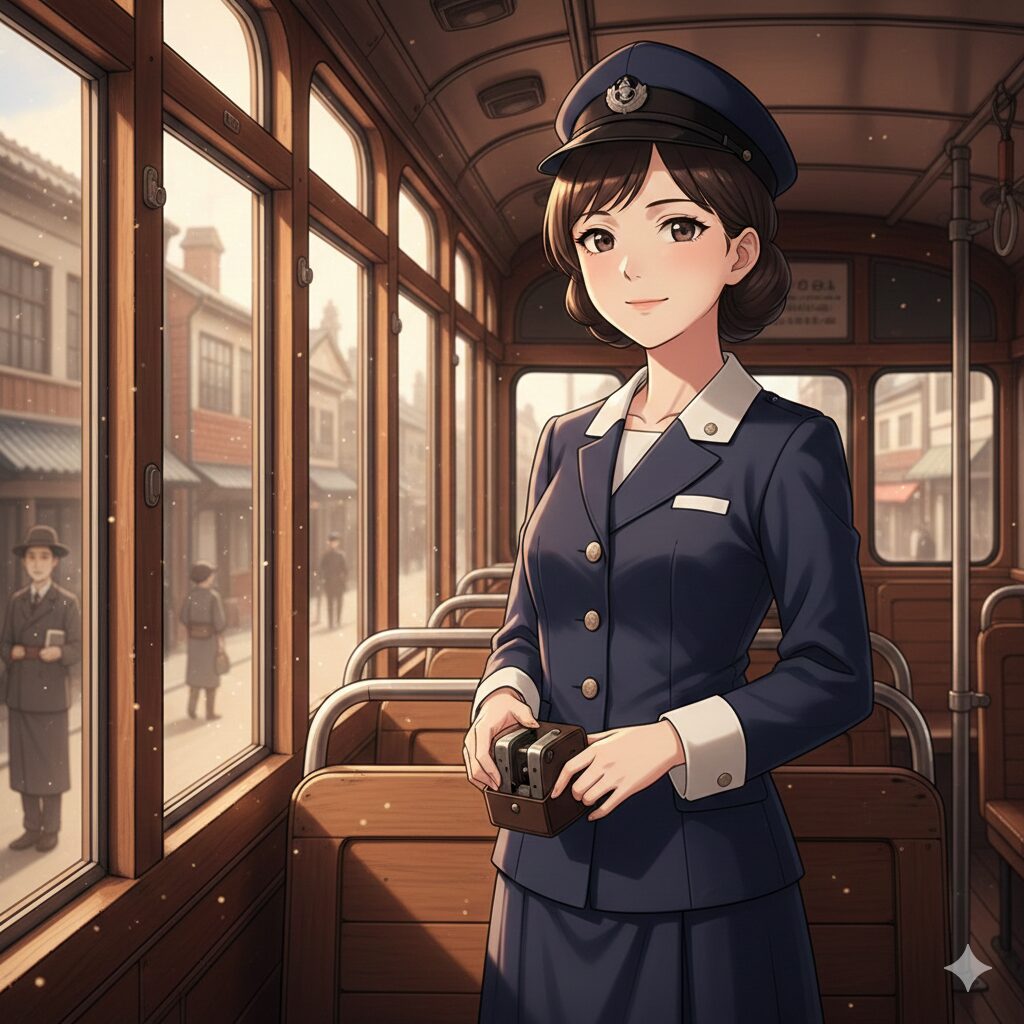
In the Japanese calendar, February 2nd is not just another winter day. It stands as a monumental date in the history of women’s labor and Japanese hospitality culture. This is “Bus Girl Day.”
On this day in 1920 (Taisho Year 9), the Tokyo Shigai Automobile Company (a predecessor of the current Toei Bus system) employed the first female conductors in Japan. Known affectionately as “Bus Girls,” they instantly became icons of the era, symbolizing the romantic and modernizing atmosphere of 1920s Tokyo.

Stylish Uniforms and Taisho Democracy
Why did simple bus conductors garner such attention? The answer lies in the historical backdrop and brilliant branding.
At the time, common professions for women were limited to factory work or telephone operation. However, “Bus Girls” stood in the public eye, performing duties alongside men, representing a new wave of female social advancement. Most notably, their uniforms—black serge fabric with crisp white collars—were designed by Mitsukoshi, Japan’s most prestigious department store.
Their starting salary was 35 yen, a high wage even compared to public servants of the time, leading to an overwhelming number of applicants. Contrasted with other uniforms of the day, their “black collars” became a symbol of the “Modern Girl,” admired by students and intellectuals alike.
Decoding Japanese Culture: From Function to “Emotion”
This historical event highlights the uniqueness of Japan’s “mobility culture.” Globally, a bus conductor’s role is functional: collect fares and ensure safety. In Japan, however, this profession evolved into something entirely different.
Evolution from “Conductor” to “Tour Guide”
Initially tasked with punching tickets and opening doors, these women soon began providing sightseeing commentary to passengers. This was the prototype for the “Bus Guide,” a profession that exploded in popularity during Japan’s post-war economic boom.
As evidenced by Columbia Rose’s 1957 hit song “Tokyo no Bus Girl,” these women were elevated from transport staff to “entertainers who curate the emotional journey.” With precise announcements, elegant manners, and sometimes even singing to passengers, they embodied the spirit of Omotenashi (hospitality)—integrating the host-guest philosophy of the tea ceremony into public transport.
The Decline of Human Touch in the Age of Efficiency
However, the era demanded efficiency. From the 1960s onwards, “One-Man Buses” (driver-only operation) became the norm, and Bus Girls disappeared from city streets. Today, their legacy lives on only in sightseeing tour buses.
Yet, the fact that February 2nd remains a commemorative day is significant. It reminds us of the “richness of travel time” and “human connection” we may have lost in our pursuit of automation.
A Question for You: Efficiency or Warmth?
Modern society has accustomed us to paying fares with smartphones and reaching our destinations without exchanging a single word with anyone. It is undeniably convenient and rational.
But imagine if, today, you boarded a bus and were greeted by a woman in a retro 1920s uniform smiling and saying, “Beautiful weather today, isn’t it?” Wouldn’t that transform a mundane commute into a memorable journey?
After reading this, how do you feel? do you prefer the seamless efficiency of modern automated systems, or do you find yourself longing for a society where human warmth, however inefficient, is part of the experience? I would love to hear your thoughts.
References & Related Info
- Toei Transportation Official Site – The origins of Tokyo’s bus history.
- National Diet Library: Portraits of Modern Japanese Historical Figures – Explore the Taisho era context.
- Internal Link: Back to “What’s Today’s Special Day Series”
1920年2月2日:東京の街を駆け抜けた「新しい女性」の象徴
日本の暦において、2月2日は単なる冬の一日ではありません。これは日本の女性労働史、そして「おもてなし」の歴史における記念碑的な日、「バスガールの日」です。
1920年(大正9年)のこの日、東京市街自動車会社(現在の東京都交通局の前身の一つ)が、日本で初めて女性の車掌を採用し、バスに乗務させました。彼女たちは「バスガール」と呼ばれ、当時の大正ロマン華やぐ東京において、瞬く間に時代の寵児となりました。
黒襟の制服と大正デモクラシー
なぜ、ただの車掌がこれほどまでに注目されたのでしょうか。それは、当時の時代背景と演出の巧みさにあります。
当時、女性の職業といえば、紡績工場の女工や電話交換手などが主でしたが、人前に立ち、男性と同じように業務をこなす「バスガール」は、女性の社会進出の新しい象徴でした。特筆すべきは、その制服です。黒のサージ(serge)生地に白襟というハイカラなデザインは、あの三越百貨店が手掛けたものでした。
初任給は35円。当時の公務員の初任給と比べても高待遇であり、募集に対して凄まじい倍率の応募が殺到しました。彼女たちは「赤エリ(当時の別の制服)」に対して「黒エリ」と呼ばれ、モダンガールの先駆けとして、当時の学生や知識人たちの憧れの的となったのです。
「バスガール」から読み解く日本文化:機能から「情緒」への転換
この歴史的な出来事から、日本独特の「移動文化」の特異性が浮かび上がります。世界的に見て、バスの車掌は「運賃を徴収し、安全を確認する」という機能的な役割が主です。しかし、日本ではこの職業が独自の進化を遂げました。
「車掌」から「バスガイド」への進化
当初は切符切りとドアの開閉が主な業務でしたが、やがて彼女たちは乗客に対して沿線の観光案内を行うようになります。これが、戦後の高度経済成長期に爆発的な人気を博す「観光バスガイド」の原型です。
1957年にコロムビア・ローズが歌った『東京のバスガール』が大ヒットしたことからも分かるように、日本のバスガールは単なる輸送スタッフではなく、「旅の情緒を演出するエンターテイナー」へと昇華しました。正確なアナウンス、美しい所作、そして時には歌で乗客を和ませる。これは、日本の茶道や接客業に通じる「主客一体」の精神が、公共交通機関にまで及んだ稀有な例と言えます。
ワンマン化による衰退と、残された精神
しかし、時代は効率化を求めました。1960年代以降、車掌を必要としない「ワンマンバス」が普及し、街中を走る路線バスからバスガールの姿は消えました。現在では、観光バスにおいてのみ、その系譜を継ぐバスガイドが活躍しています。
それでも、2月2日が記念日として残っている事実は重要です。それは、私たちが効率化の果てに失った「移動時間の豊かさ」や「人との触れ合い」への郷愁を思い出させてくれるからです。
あなたは「便利さ」と「温もり」、どちらを選びますか?
現代の私たちは、スマートフォンで運賃を支払い、誰とも言葉を交わさずに目的地へ到着することに慣れきっています。それは確かに便利で、合理的です。
しかし、もし今日、あなたが乗ったバスに、大正時代のハイカラな制服を着た女性が乗っていて、「今日は良いお天気ですね」と微笑みかけてくれたらどうでしょう? 無機質な移動時間が、思い出深い旅へと変わる気がしませんか?
この記事を読んで、あなたは効率化された現代のシステムを肯定しますか? それとも、少し不便でも人の温もりが介在する社会に魅力を感じますか? ぜひ、あなたの考えを聞かせてください。
参考リンク・関連情報
- 東京都交通局(Toei Transportation)公式サイト – バスの歴史の源流
- 国立国会図書館「近代日本人の肖像」 – 大正時代の風俗を知る
- 内部リンク:What’s Today’s Special Day Series 一覧へ


コメント