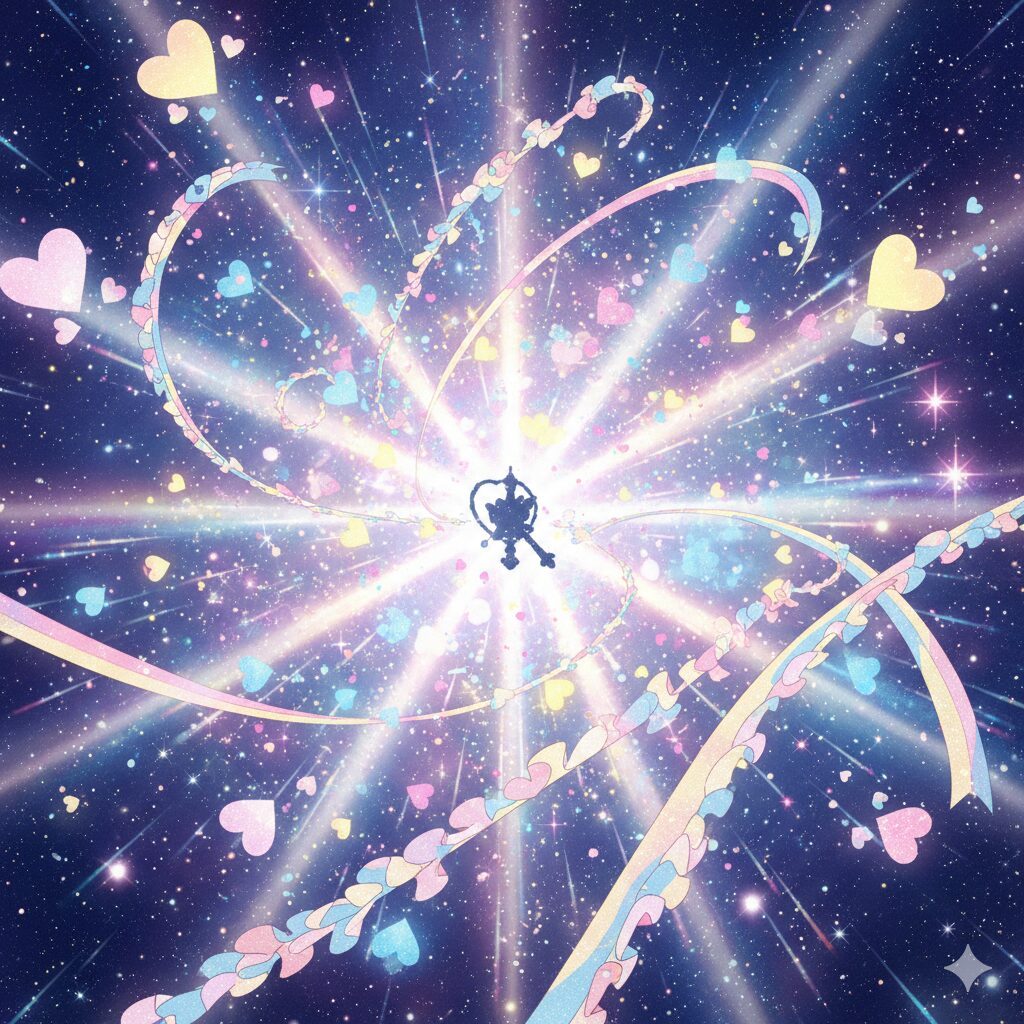

February 1st: The Day the Legend Began
On February 1, 2004, the first episode of a certain animation aired on the TV Asahi network in Japan. The title was Futari wa Precure (Pretty Cure). Produced by Toei Animation, this work became the first installment of the massive “Precure Series” franchise, which has continued for over 20 years and keeps breaking records to this day.
In 2018, the Japan Anniversary Association officially recognized February 1st as “Precure Day” to honor the series’ achievements and thank the fans. But why is the premiere date of a kids’ anime considered so significant?
“Girls Want to Rampage Too”: Redefining Magical Girls
Before Precure, the “Magical Girl” genre in Japan was dominated by a style where heroines transformed with magical wands and gracefully purified enemies with spells. While Sailor Moon had established the image of fighting heroines, Precure evolved it further, or rather, returned it to a primal state.
Takashi Washio, the producer of Futari wa Precure, proposed a shocking concept: “Girls want to rampage too.”
Precure’s combat style is not about long-range magical beams. They use their own fists and legs to engage in intense physical hand-to-hand combat (martial arts). Seeing them crack the ground, catch enemy attacks, and fight while covered in mud brought the context of Dragon Ball and Kamen Rider—previously considered “for boys”—into Sunday morning anime for girls.
The Meaning of “Futari” (The Two of Us)
The first Precures, “Cure Black” (Nagisa Misumi) and “Cure White” (Honoka Yukishiro), had completely opposite personalities and hobbies. They could not transform alone. Only by holding hands and aligning their hearts could they become superheroes.
This conveyed the message that the strongest power comes not from leadership or absolute individual strength, but from dialogue, partnership, and accepting differences. This philosophy has been passed down continuously, even as the series changes year after year.
Decoding Japanese Society and Gender Views Through Precure
It is easy to dismiss the Precure series as merely “anime to sell toys,” but that is a shallow view. Looking back at over 20 years of history, the changes in Japanese views on gender are reflected in the series like a mirror.
Diversifying Hero Images
With each series, Precure has freed itself from the curse of traditional “girlishness.”
- Breaking Free from Being Protected: In older anime, there was often a male character (like Tuxedo Mask) to save the day in a pinch. In modern Precure, the girls themselves are the strongest shield and sword.
- Male Precures: The idea of “a boy becoming a Precure,” once considered taboo, was realized within the series’ history (such as Cure Wing in Soaring Sky! Precure). This sends a modern message that “gender doesn’t matter when it comes to loving cute things or wanting to protect others.”
- Adult Women, Aliens, and Androids: The qualification to become a Precure is not limited to middle school girls. Transcending age, species, and gender, those with a soul that wants to fight for someone else become Precure.
“Nichiasa” as a Rite of Passage
In Japan, children’s programs are concentrated on Sunday mornings, a time slot known as “Nichiasa.” Japanese children grow up watching Precure, eventually graduate from it, and when they become adults and parents, they start watching it again with their own children.
This cycle has created a common language across generations. For Japanese people in their 20s and 30s today, the Precure theme songs are anthems everyone can sing, and cheering songs for facing difficulties. February 1st is the day this “baton of courage” first began to be passed.
What Does “Transformation” Mean to You?
Precures gain superhuman strength by “transforming,” but the essence of it is an affirmation of “becoming the self you want to be.” Even after transforming, they worry, get hurt, yet stand up again.
I would like to ask you, the reader:
Who was the hero you looked up to as a child? And now, as an adult, what do you want to protect, or what “enemies” (difficulties) are you fighting?
Perhaps we, too, can transform into our own Precure just by screaming in our hearts. Why not make today, February 1st, a day to reaffirm the “unyielding heart” within you?
Related Links
- Precure Series Official Portal Site (Toei Animation)
- What’s Today’s Special Day Series – Kiri53.com Category
日本のカレンダーには、伝統的な行事だけでなく、現代のポップカルチャーが作り出した重要な記念日が存在します。2月1日。この日は、日本中の少女たち、そしてかつて少女だった大人たち、さらには多くのアニメファンにとって、革命が起きた日として記憶されています。それは「プリキュアの日」です。
2月1日:伝説が始まった日
2004年2月1日、日本のテレビ放送網(テレビ朝日系列)で、あるアニメーションの第1話が放送されました。タイトルは『ふたりはプリキュア』。東映アニメーションが制作したこの作品は、その後20年以上続き、現在もなお記録を更新し続ける巨大フランチャイズ「プリキュアシリーズ」の記念すべき第1作目でした。
2018年、日本記念日協会は、このシリーズの功績とファンへの感謝を込め、2月1日を正式に「プリキュアの日」として認定しました。しかし、なぜ単なる子供向けアニメの放送開始日が、これほどまでに重要視されるのでしょうか?
「女の子だって暴れたい」:魔法少女の再定義
プリキュアが登場する以前、日本の「魔法少女」ジャンル(魔女っ子もの)は、魔法のステッキで変身し、優雅に魔法をかけて敵を浄化するというスタイルが主流でした。『美少女戦士セーラームーン』が戦うヒロイン像を確立していましたが、プリキュアはそれをさらに進化、あるいは「原点回帰」させました。
『ふたりはプリキュア』のプロデューサー、鷲尾天氏が掲げたコンセプトは衝撃的でした。「女の子だって暴れたい」。
プリキュアの戦闘スタイルは、魔法の杖による遠距離攻撃ではありません。彼女たちは、自身の拳と脚を使い、激しい肉弾戦(マーシャルアーツ)を行います。地面を砕き、敵の攻撃を受け止め、泥だらけになりがら戦うその姿は、それまで「男の子のもの」とされていた『ドラゴンボール』や『仮面ライダー』の文脈を、日曜朝の女児向けアニメに持ち込んだのです。
「ふたり」であることの意味
初代プリキュアである「キュアブラック(美墨なぎさ)」と「キュアホワイト(雪城ほのか)」は、性格も趣味も全く正反対のふたりです。彼女たちは一人では変身できません。ふたりが手を繋ぎ、心を合わせることで初めてスーパーヒーローになれるのです。
これは、リーダーシップや絶対的な個人の力ではなく、「対話」と「パートナーシップ」、そして「違いを認め合うこと」が最強の力になるというメッセージでした。この哲学は、シリーズが変わっても脈々と受け継がれています。
プリキュアから読み解く日本社会とジェンダー観の変遷
プリキュアシリーズを単なる「おもちゃを売るためのアニメ」と断じることは簡単ですが、それは浅はかな見方です。20年以上の歴史を振り返ると、そこには日本社会におけるジェンダー観の変化が鏡のように映し出されています。
多様化するヒーロー像
シリーズを重ねるごとに、プリキュアは「女の子らしさ」という呪縛から自由になっていきました。
- 守られる存在からの脱却:かつてのアニメでは、ピンチの時に助けてくれる男性キャラクター(タキシード仮面のような存在)がいましたが、近年のプリキュアでは、彼女たち自身が最強の盾であり剣です。
- 男性プリキュアの登場:かつてはタブーとされていた「男の子がプリキュアになる」という展開も、シリーズの歴史の中で実現しました(『ひろがるスカイ!プリキュア』のキュアウィングなど)。これは、「かわいいもの、守るものが好きな心に性別は関係ない」という現代的なメッセージです。
- 成人女性や宇宙人、アンドロイド:プリキュアになる資格は、中学生の女の子だけではありません。年齢、種族、性別を超え、「誰かのために戦いたい」という魂を持つ者がプリキュアになるのです。
通過儀礼としての「ニチアサ」
日本では日曜日の朝(ニチアサ)に、子供向け番組が集中して放送されます。日本の子供たちは、プリキュアを見て育ち、やがて卒業し、そして大人になって親となった時、再び自分の子供と一緒にプリキュアを見るようになります。
このサイクルは、世代を超えた共通言語を生み出しました。今の20代、30代の日本人にとって、プリキュアの主題歌は「誰もが歌えるアンセム」であり、困難に立ち向かう時の応援歌なのです。2月1日は、そんな「勇気のバトン」が渡され始めた日なのです。
あなたにとっての「変身」とは?
プリキュアたちは、「変身」することで超人的な力を手に入れますが、その本質は「なりたい自分になること」への肯定です。彼女たちは変身後も、悩み、傷つき、それでも立ち上がります。
この記事を読んでいるあなたに問いかけたいと思います。
あなたが子供の頃、憧れていたヒーローは誰ですか?そして大人になった今、あなたが守りたいもの、あるいは戦っている「敵(困難)」は何でしょうか?
もしかすると、私たちもまた、心の中で叫ぶだけで、自分だけのプリキュアに変身できるのかもしれません。今日、2月1日は、自分の心の中にある「あきらめない心」を再確認する日にしてみてはいかがでしょうか。
コメント