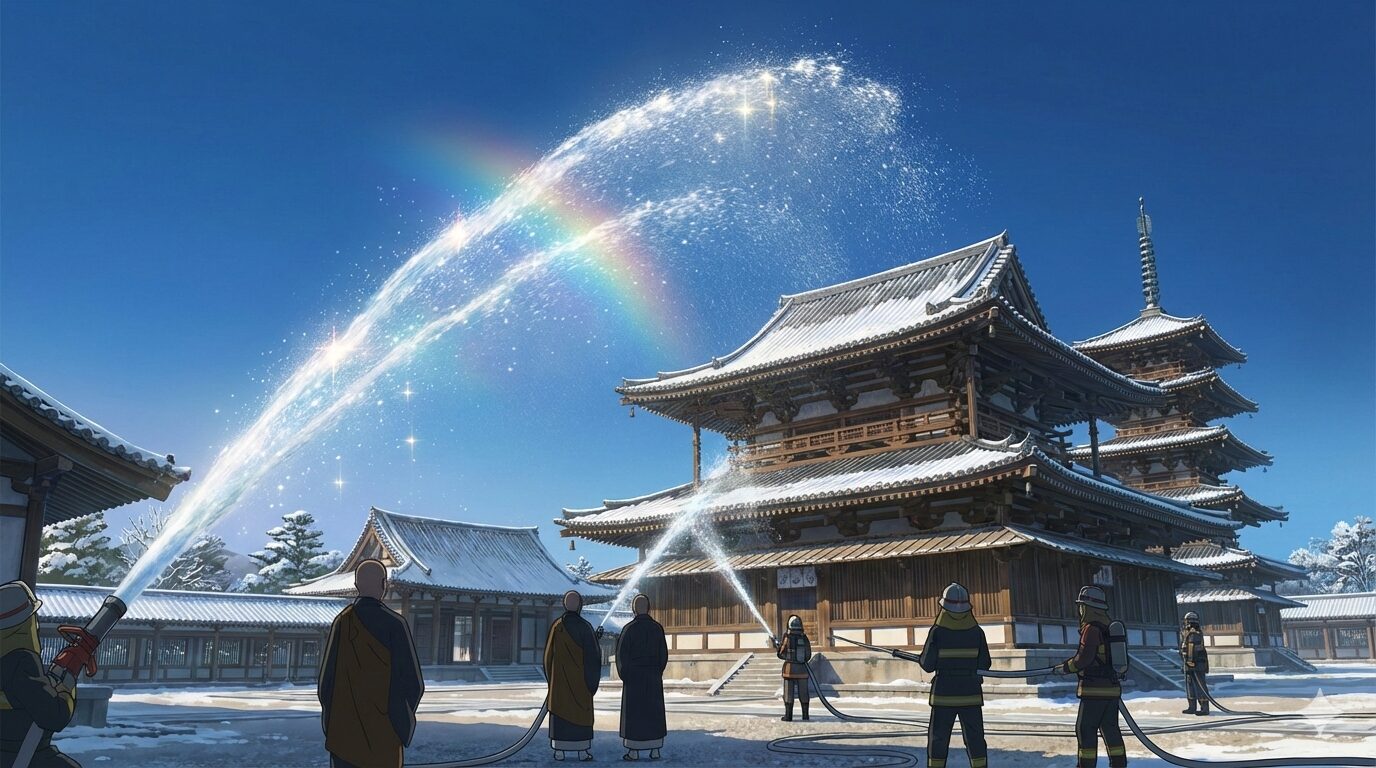
To deeply understand Japan, there is an element one cannot avoid: the fateful relationship between “wood” and “fire.” On January 26, Japan marks “Cultural Property Fire Prevention Day.” This is not merely a day for fire drills. It is a memorial to a great loss once faced by the Japanese people and a testament to their resolve to “protect beauty at all costs” that rose from the ashes.

January 26, 1949: The Tragedy of Horyu-ji Temple’s Main Hall
Let us turn back the clock to 1949. Horyu-ji Temple in Nara Prefecture is renowned as the world’s oldest surviving wooden structure. Early in the morning on this day, fire broke out in the temple’s heart, the “Kondō” (Main Hall).
The cause is believed to have been an electric heating pad used during the copying of wall paintings, which was accidentally left switched on. The fire spread in the blink of an eye, and the “Kondō Wall Paintings,” a National Treasure preserved for over 1,300 years since the Asuka period (7th century), were tragically damaged by the flames. These murals were treasures of Eastern Buddhist painting, comparable to those of the Ajanta Caves in India and the Dunhuang Mogao Caves in China.
This news shocked the Japanese public, who were in the midst of recovering from the devastation of World War II. A strong sense of self-reproach covered the nation: “We have turned the treasures inherited from our ancestors into ash in our own generation.”
The “Law for the Protection of Cultural Properties” Born from Loss
However, the Japanese people did not end with mere lamentation. This painful accident sparked a heated debate across the country about the need for a legal framework to protect cultural assets. The following year, in 1950, the “Law for the Protection of Cultural Properties” was enacted, becoming the foundation of Japan’s current cultural administration.
Then, in 1955, January 26—the day the Horyu-ji Main Hall was engulfed in flames—was designated as “Cultural Property Fire Prevention Day” as a reminder never to repeat the same mistake. Winter in Japan is the driest season, and the use of heating appliances increases, making it the time of year with the highest risk of fire. This designation was highly rational, both as a spiritual resolve and as practical risk management.
Cultural Property Fire Prevention Day in the Modern Era: Fusion of Tradition and High-Tech
Today, around January 26, large-scale fire drills are held at temples, shrines, castles, and museums across Japan. If you visit Kiyomizu-dera Temple in Kyoto or Todai-ji Temple in Nara during this period, you might witness monks and priests tucking up their robes and aiming giant water cannons to discharge water in unison.
These are not mere performances. Many of Japan’s cultural properties are made of wood and have thatched roofs—materials that could burn to the ground in minutes if ignited. Therefore, Japan’s cultural heritage sites are equipped with advanced fire prevention systems unparalleled in the world.
- Water cannons hidden to preserve the landscape
- High-sensitivity sensors that detect the flickering of flames
- Drencher systems that envelop entire buildings in a curtain of water
Maintaining traditional aesthetics while preventing fires with the latest technology—Japanese engineers continue to challenge this seemingly contradictory task.
- January 26, 1949: The Tragedy of Horyu-ji Temple’s Main Hall
- The “Law for the Protection of Cultural Properties” Born from Loss
- Cultural Property Fire Prevention Day in the Modern Era: Fusion of Tradition and High-Tech
- The Destiny of Wooden Architecture and Japanese Spirituality
- A Question for You
- 1月26日:日本の美を守るための誓い「文化財防火デー」
- 木造建築という宿命と日本人の精神性
- あなたへの問いかけ
The Destiny of Wooden Architecture and Japanese Spirituality
Why are Japanese people so afraid of fire, yet so passionate about fire prevention? It is because Japanese culture is constructed of “wood and paper.”
A Culture of Acceptance or Resistance?
Western buildings made of stone or brick may leave walls standing even after a fire. However, Japanese architecture turns to ash and vanishes. This “ephemerality” connects to the unique Japanese aesthetic of “Mono no Aware” (the pathos of things). Just as cherry blossoms fall, all shaped things eventually perish. This sense of impermanence flows at the base of the Japanese spirit.
There are systems like the “Shikinen Sengu” of Ise Jingu Shrine, where buildings are rebuilt every 20 years to maintain “eternity.” This approach prioritizes the inheritance of techniques and spirit over the preservation of the material itself.
However, the fire at Horyu-ji confronted Japan with the fear of “the loss of the original that can never return.” The brushstrokes of the 7th century, once lost, cannot have their souls revived, no matter how precisely they are restored. Cultural Property Fire Prevention Day is a day when human will challenges the resignation that “all things must pass,” declaring, “Even so, we will protect them.”
What We Can Do: Manners for Travelers
For travelers visiting Japan, ancient temples and shrines are fascinating tourist spots. But please know that they are extremely “fragile” entities. The strict “No Fire” rules in many important cultural property areas are not just rules, but a desperate wish to protect history.
A Question for You
What do you think is most important for protecting historical heritage?
Is it the latest fire extinguishing equipment? Is it strict laws?
I believe it is our “respect” and “imagination” as we look upon them. The power to imagine “what would happen if I smoked here” or “what would happen if this beautiful pillar turned to ash” serves as the strongest firewall.
What kind of historical heritage exists in your country? And what efforts are being made to protect them from disasters?
Please take a moment to think about cultural property protection in your own country.
Related Links & References
1月26日:日本の美を守るための誓い「文化財防火デー」
日本という国を深く理解しようとする時、避けて通れない要素があります。それは「木」と「火」の宿命的な関係です。1月26日、日本は「文化財防火デー」を迎えます。これは単なる防災訓練の日ではありません。かつて日本人が直面した大きな喪失と、そこから立ち上がった「美を守り抜く」という決意の記念日なのです。
1949年1月26日、法隆寺金堂の悲劇
時計の針を1949年(昭和24年)に戻しましょう。奈良県にある世界最古の木造建築群として名高い法隆寺。その中心である「金堂(こんどう)」から火の手が上がったのは、この日の早朝でした。
原因は、壁画の模写作業に使われていた電気座布団のスイッチの切り忘れとも言われています。火は瞬く間に燃え広がり、飛鳥時代(7世紀)から1300年以上にわたって守り伝えられてきた国宝の「金堂壁画」が、無残にも焼損してしまったのです。この壁画は、インドのアジャンター石窟寺院の壁画、中国の敦煌莫高窟の壁画と並ぶ、東洋仏教絵画の至宝でした。
このニュースは、敗戦から復興の途中にあった日本国民に深い衝撃を与えました。「私たちは、先人から受け継いだ宝物を、自分たちの代で灰にしてしまった」という強烈な自責の念が日本中を覆ったのです。
喪失から生まれた「文化財保護法」
しかし、日本人はただ嘆くだけでは終わりませんでした。この痛ましい事故をきっかけに、国全体で「文化財を守る法的枠組みが必要だ」という議論が沸騰しました。翌年の1950年、現在の日本の文化行政の根幹となる「文化財保護法」が制定されました。
そして1955年、法隆寺金堂が炎に包まれた1月26日を、二度と同じ過ちを繰り返さないための戒めの日として「文化財防火デー」と定めたのです。冬の日本は空気が乾燥し、暖房器具の使用も増えるため、一年で最も火災のリスクが高まる時期でもあります。この制定は、精神的な決意と、実質的なリスク管理の両面で非常に理にかなったものでした。
現代における文化財防火デー:伝統とハイテクの融合
現在、1月26日を中心とした期間には、日本全国の寺社仏閣、城郭、博物館で大規模な消防訓練が行われます。もしあなたがこの時期に京都の清水寺や奈良の東大寺を訪れたなら、僧侶や神職たちが法衣の裾をからげ、巨大な放水銃を構えて一斉放水する姿を目撃するかもしれません。
これらは単なるパフォーマンスではありません。日本の文化財の多くは木造であり、茅葺(かやぶき)屋根など、ひとたび火がつけば数分で全焼しかねない素材でできています。そのため、日本の文化財保護現場には、世界でも類を見ない高度な防火システムが導入されています。
- 景観を損なわないように隠された放水銃
- 炎のゆらぎを感知する高感度センサー
- 建物全体を水のカーテンで包み込むドレンチャー設備
伝統的な美観を維持しながら、最新のテクノロジーで火災を防ぐ。この矛盾とも言える課題に、日本の技術者たちは挑み続けています。
木造建築という宿命と日本人の精神性
なぜ、日本人はこれほどまでに火災に怯え、同時に防火に情熱を注ぐのでしょうか。それは、日本の文化が「木と紙」で構成されているからです。
「燃えること」を受け入れる文化か、抗う文化か
石やレンガで造られた西洋の建築物は、火災にあっても壁は残ります。しかし、日本の建築は灰になって消滅します。この「儚さ(はかなさ)」は、日本特有の美意識「もののあわれ」に通じます。桜が散るように、形あるものはいずれ滅びる。その無常観は日本人の精神の根底に流れています。
伊勢神宮の「式年遷宮」のように、20年ごとに建物を新しく作り変えることで「永遠」を維持するシステムもあります。これは、物質そのものの保存よりも、技術と精神の継承を重視する考え方です。
しかし、法隆寺の火災が突きつけたのは、「二度と戻らないオリジナルの喪失」への恐怖でした。一度失われた7世紀の筆致は、どんなに精巧に復元しても、魂までは蘇りません。文化財防火デーは、「形あるものは滅びる」という諦観に対し、「それでもなお、守り抜く」という人間の意志が抗いを挑む日なのです。
私たちにできること:観光客としてのマナー
日本を訪れる旅行者の皆さんにとって、古い寺社仏閣は魅力的な観光スポットでしょう。しかし、それらは非常に「脆い」存在であることを知っておいてください。多くの重要文化財エリアで「火気厳禁」が徹底されているのは、単なるルールではなく、歴史を守るための悲痛な願いなのです。
あなたへの問いかけ
歴史的な遺産を守るために、最も重要なのは何だと思いますか?
最新の消火設備でしょうか? 厳格な法律でしょうか?
私は、それらを見つめる私たちの「敬意」と「想像力」だと考えます。「ここでタバコを吸ったらどうなるか」「この美しい柱が灰になったらどうなるか」を想像する力こそが、最強の防火壁となるはずです。
あなたの国には、どのような歴史的遺産がありますか? そして、それを災害から守るために、どのような努力がなされていますか?
ぜひ、あなたの国の文化財保護についても考えてみてください。


コメント