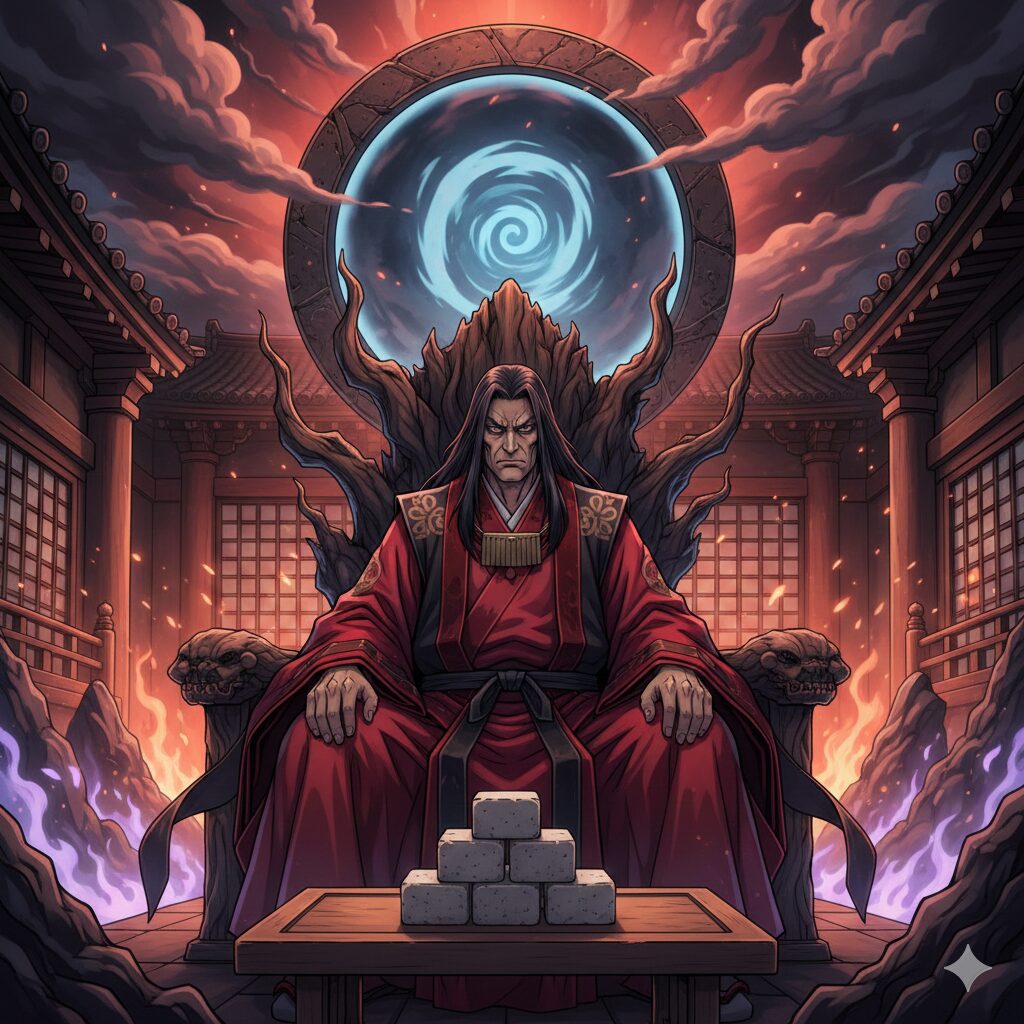
In the Japanese calendar, there exists a special day that modern people are beginning to forget, but which society once feared and revered. That day is January 16th. It is not merely a winter day. Known as the day when “the lid of Hell’s cauldron opens,” it is Enma Mairi (Visiting Enma) or Enma Saijitsu (Enma’s Festival Day).
There is a Japanese proverb that says, “Even the judgments of Hell depend on money.” In Japanese culture, the afterlife and the present world are connected with a strange sense of reality. However, this day is different. It is a day when the terrifying Great King Enma (Yama) takes a holiday, and even the demons of Hell rest their hands from torturing sinners. Why did the Judge of the Afterlife need a “holiday”?

Hatsu Enma (First Enma) and Hell’s Holiday: Historical Background
Enma Saijitsu occurs twice a year: “Hatsu Enma” on January 16th and the second on July 16th. On these days, it has long been believed that the jailers of Hell (the oni or demons) take a break from work, the lid of Hell’s cauldron is opened, and the dead are released from their torment.
This belief is deeply linked to “Yabuiri,” a holiday for servants in the Edo period. Apprentices and servants were allowed to return home only twice a year, on these exact dates: January 16th and July 16th. The underlying spirit of this event is rooted in the unique Japanese tendency for “personification” and “empathy”: if people working in this world take a rest, the demons working in Hell should also take a rest.
Who is Enma Daio (Great King Enma)?
The roots of Enma Daio lie in “Yama” of ancient Indian mythology. He was the first human to die and became the king of the land of the dead. As Buddhism traveled to China and then Japan, he absorbed influences from Taoism and became established as a judge-like figure.
In Japanese Buddhism, Enma is one of the “Ten Kings” (Ju-o) and is responsible for the judgment on the 35th day after death. It is said that his “Mirror of Truth” (Johari no Kagami) reflects all of the deceased’s deeds from their life. Lying is futile. That is why Japanese children are raised with the warning, “If you tell a lie, Enma will pull out your tongue.”
- Hatsu Enma (First Enma) and Hell’s Holiday: Historical Background
- Who is Enma Daio (Great King Enma)?
- How to Spend January 16th: Worship of Fear and Mercy
- Reading the Depths of Japanese Culture: “Forgiveness” Within Severity
- What Would You Say to King Enma?
- 地獄の王も休日が必要?1月16日「閻魔参り・閻魔賽日」の知られざる真実
- 1月16日の過ごし方:恐怖と慈悲の参拝
- 日本文化の深層を読む:厳しさの中にある「赦し」
- あなたなら、閻魔大王に何を語りますか?
How to Spend January 16th: Worship of Fear and Mercy
So, what do people do on this day? Historically, Tokyoites (Edo locals) and devout people today visit temples that enshrine statues of Enma. This is called “Enma Mairi.”
Famous locations include “Hojoin (Fukagawa Enma-do)” in Tokyo and “Senbon Enma-do (Injo-ji)” in Kyoto. Halls that are usually closed are opened, allowing visitors to pray to the vividly colored, terrifying, yet somehow charming statues of Enma.
The Reason for Offering Konjac
A unique custom during Enma Mairi is the offering of “Konjac” (Devil’s Tongue). This is said to symbolize “having no reverse side” (as Konjac is uniform throughout) or its role as a “body cleanser” (it was believed to remove sand/toxins from the body). Thus, the offering carries the prayer: “Please wash away my past lies and sins.”
Reading the Depths of Japanese Culture: “Forgiveness” Within Severity
The essence of Japanese culture that can be deciphered from Enma Saijitsu on January 16th is the mindset of “finding humanity even in absolute authority figures.”
In Western religious views, “Hell” or “The Devil” is often depicted as absolute evil or an opposing concept to the divine. However, Japan’s Enma Daio is different. He is also considered an incarnation of Jizo Bosattva, and behind his stern face lies deep compassion to save sentient beings. And above all, they too “want to rest because they are tired from working too much.”
By establishing a day when the lid of Hell opens, people softened the fear of the afterlife, performed memorial services for ancestors, and comforted themselves by superimposing their daily labor hardships onto the demons. This can be said to be an extremely advanced mental balance adjustment function created by people living in the strict disciplinary society of the Edo period.
What Would You Say to King Enma?
In modern society, we are constantly exposed to the “invisible mirrors” of social media and social evaluation. On January 16th, if you were to stand before Great King Enma and have your heart reflected in the Mirror of Truth, would you be able to look at it with your head held high?
Or, perhaps, are you blaming yourself too much? Even the demons of Hell take a day off. If you are feeling cornered by something right now, perhaps today is a day when it is acceptable to give yourself a “break.”
How do you face your own “sins” and “regrets”? And do you allow yourself time to forgive yourself?
Related Links
Reference (External Link):
Yama (Buddhism) – Wikipedia
Detailed explanation of the historical background and belief in King Yama (Enma).
Category Archive (Internal Link):
What’s Today’s Special Day Series
地獄の王も休日が必要?1月16日「閻魔参り・閻魔賽日」の知られざる真実
日本の暦には、現代人が忘れかけているものの、かつては社会全体が恐れ、そして敬った特別な日が存在します。1月16日。この日は単なる冬の一日ではありません。「地獄の釜の蓋が開く日」として知られる、閻魔参り(えんままいり)または閻魔賽日(えんまさいじつ)です。
「地獄の沙汰も金次第」ということわざがあるほど、日本文化において死後の世界と現世は奇妙なリアリティを持って繋がっています。しかし、この日は少し様子が違います。あの恐ろしい閻魔大王がお休みを取り、地獄の鬼たちさえも罪人を責め立てる手を休める日なのです。なぜ、死後の裁判官に「休日」が必要だったのでしょうか?
初閻魔と地獄の休日:歴史的背景
閻魔賽日は年に2回あります。1月16日の「初閻魔(はつえんま)」と、7月16日の「閻魔賽日」です。この日は、地獄の獄卒(鬼たち)も仕事を休み、地獄の釜の蓋が開いて、亡者たちも責め苦から解放されると信じられてきました。
この信仰は、江戸時代の奉公人たちの休日「藪入り(やぶいり)」と深くリンクしています。当時の丁稚(でっち)や奉公人は、家に帰ることが許されるのが年に2回だけ、この1月16日と7月16日でした。現世で働く人々が休むのだから、地獄で働く鬼たちも休むべきだ、という日本人特有の「擬人化」と「共感」の精神が、この行事の根底にあります。
閻魔大王とは何者か?
閻魔大王(えんまだいおう)のルーツは、古代インド神話の「ヤマ(Yama)」にあります。彼は人類で初めて死者となり、死者の国の王となりました。仏教に取り入れられて中国、そして日本へと伝わる過程で、道教の影響を受け、裁判官の姿として定着しました。
日本の仏教において、閻魔は「十王(じゅうおう)」の一人であり、死後35日目の審判を担当します。彼が持つ「浄張り鏡(じょうはりのかがみ)」には、死者の生前の行いがすべて映し出されると言われています。嘘をついても無駄です。だからこそ、子供たちは「嘘をつくと閻魔様に舌を抜かれる」と教えられて育つのです。
1月16日の過ごし方:恐怖と慈悲の参拝
では、この日、人々は何をするのでしょうか?かつての江戸っ子たち、そして現代の信仰深い人々は、閻魔像を安置している寺院へ参拝に行きます。これを「閻魔参り」と呼びます。
東京の深川にある「法乗院(深川ゑんま堂)」や、京都の「千本閻魔堂(引接寺)」などは特に有名です。普段は閉じられているお堂が開かれ、極彩色の恐ろしくもどこか愛嬌のある閻魔像を拝むことができます。
コンニャクをお供えする理由
閻魔参りの際、ユニークな風習として「コンニャク」をお供えすることがあります。これは「裏表がない(コンニャクには裏表がないとされる)」ことや、コンニャクが体の砂(毒素)を出す掃除屋とされることから、「過去の嘘や罪を洗い流してください」という願いが込められていると言われています。
日本文化の深層を読む:厳しさの中にある「赦し」
1月16日の閻魔賽日から読み解ける日本文化の本質は、「絶対的な権力者にも人間味を見出す」という精神構造です。
西洋の宗教観における「地獄」や「悪魔」は、しばしば絶対的な悪、あるいは対立概念として描かれます。しかし、日本の閻魔大王は違います。彼は地蔵菩薩の化身とも考えられており、厳しい顔の裏には、衆生を救いたいという深い慈悲を持っています。そして何より、彼らも「働きすぎて疲れるから休みたい」のです。
地獄の蓋が開く日を設定することで、人々は死後の恐怖を和らげ、同時に先祖供養を行い、自分たちの日々の労働の苦労を鬼たちに重ね合わせて慰めてきました。これは、厳しい規律社会であった江戸時代の人々が生み出した、極めて高度な精神的バランス調整機能(メンタルケア)だったと言えるでしょう。
あなたなら、閻魔大王に何を語りますか?
現代社会において、私たちはSNSや社会的な評価という「見えない鏡」に常に晒されています。1月16日、もしあなたが閻魔大王の前に立ち、浄張り鏡に自分の心が映し出されるとしたら、胸を張ってそれを見ることができるでしょうか?
あるいは、あなた自身が自分を責めすぎてはいませんか?地獄の鬼でさえ休む日です。もしあなたが今、何かに追い詰められているなら、今日は自分自身に「お休み」を与えてもいい日なのかもしれません。
あなたは、自分の「罪」や「後悔」とどう向き合いますか?そして、自分自身を許す時間を持っていますか?
関連リンク
参考情報(外部リンク):
閻魔 – Wikipedia
※閻魔大王の歴史的背景と信仰についての詳細な解説です。
カテゴリーアーカイブ(内部リンク):
What’s Today’s Special Day Series
コメント