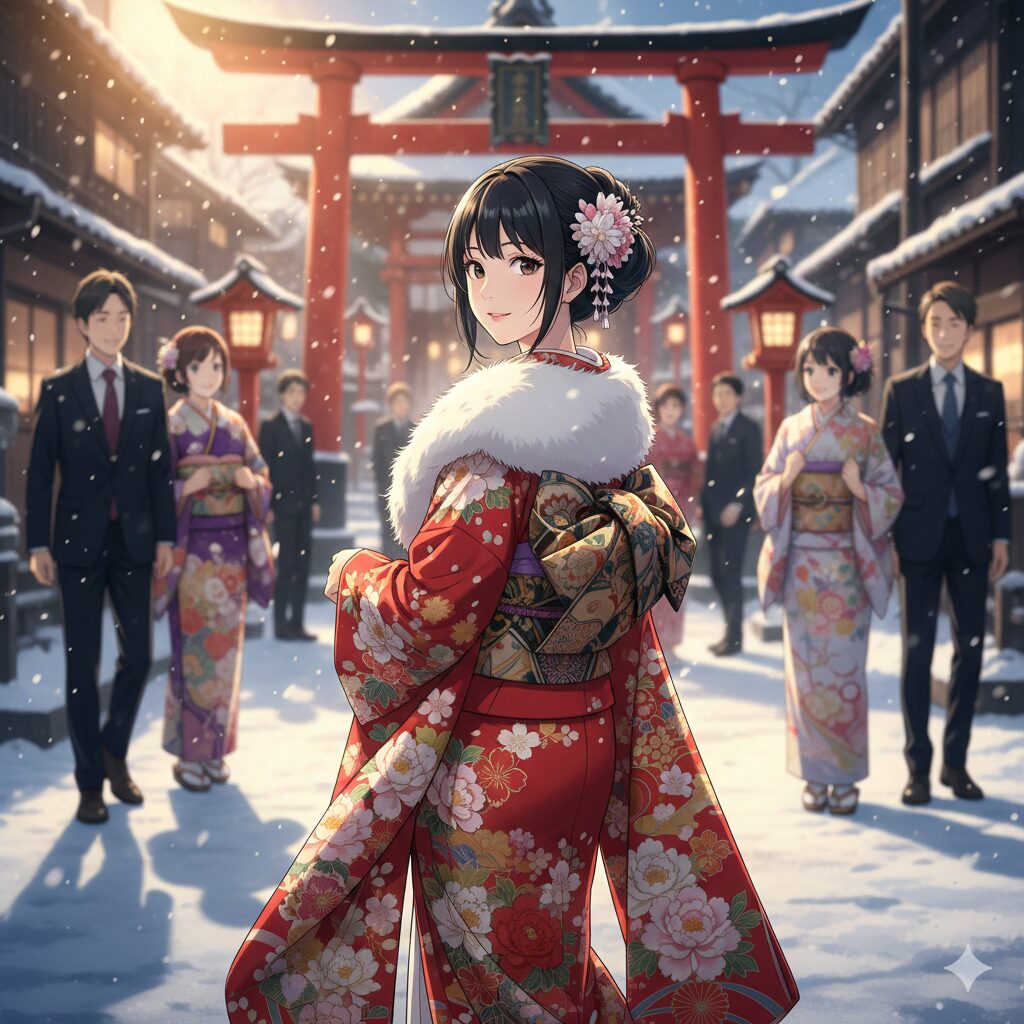
Japanese winters are harsh, but on the second Monday of January, the streets are suddenly bathed in vibrant colors. On this day, Japan celebrates “Coming of Age Day” (Seijin no Hi). Everywhere you look, young people dressed in gorgeous Long-sleeved Kimonos (Furisode), Hakama, and brand-new suits fill the town, bringing warmth and energy to the crisp winter air.
For many international readers, the kimono is recognized merely as “traditional costume,” but today is not just a fashion show. It is a vital rite of passage, handing young people their passport to adulthood in Japanese society.

Origins: From Samurai Rituals to a Modern Holiday
The roots of Coming of Age Day trace back far beyond modern times to the Nara and Heian periods. Japan once held a ceremony called “Genpuku.” In samurai society, boys around the age of 15 would change their hairstyles, discard their childhood names, and adopt adult names in a strict ritual. Similarly, women underwent a ceremony called “Mogi.”
The modern form of “Seijin no Hi” was established after World War II in 1948. The intention was “to congratulate and encourage youth who have become adults to live independently.” Originally fixed on January 15th, the date was moved to the second Monday of January in 2000 due to the “Happy Monday System” reform.
18 or 20? The Complexity Brought by Legal Reform
Here, from a programmer’s perspective, I must explain a “bug-like” complexity in the system. In April 2022, Japan’s Civil Code was revised, lowering the age of adulthood from 20 to 18. Logically, the Coming of Age Ceremony should now be held for 18-year-olds.
However, the reality is different. Most municipalities continue to hold the ceremony (Seijin-shiki) for 20-year-olds. This is because January for an 18-year-old is the peak season for University Entrance Exams, the most high-pressure period in a Japanese student’s life. This discrepancy between legal adulthood and the age of cultural celebration is a fascinating aspect of modern Japanese society in transition.
Furisode and Hakama: Meaning Behind the Momentary Brilliance
The stars of the day are undoubtedly the women in “Furisode.” The Furisode is the most formal kimono for unmarried women, and its long sleeves symbolize “shaking away bad luck” and “attracting good relationships.” Families often begin preparations a year or more in advance. Including dressing, hair and makeup, and professional photography, the cost can easily reach several thousand dollars.
On the other hand, the flamboyant “Hakama” worn by some men—sometimes resembling biker gang attire—is often featured in the media as a manifestation of local rebellious youth culture. While it may look chaotic to outsiders, for them, it is a performance to confirm bonds with peers and assert their presence in the local community.
Decoding Japanese Culture: Collectivism and Responsibility
What becomes visible through Coming of Age Day is Japan’s unique culture of “Kugiri” (demarcation). In Japan, life phases switch collectively: entrance ceremonies, graduation ceremonies, and company initiation ceremonies. Coming of Age Day is no exception; young people are celebrated as a cohort based on their school year, regardless of their individual birthdays.
This contrasts with the Western culture of celebrating individual maturity. In Japan, being “recognized as a member of society” is paramount. The style of the ceremony, where the mayor gives a speech and the youth listen, symbolizes their formal integration into the system of the local community.
However, with Japan’s aging population and declining birthrate, the number of new adults is decreasing every year. On their shoulders rests the heavy responsibility of sustaining the social security system for the elderly and maintaining the economy. Behind the glamorous kimonos lies a harsh reality they must face, and a quiet determination to overcome it.
A Question for You
Young Japanese people reuniting with old friends in colorful kimonos, wearing shy smiles. Their figures represent hope for the future.
I would like to end by asking you, the reader:
Does your country have a specific day when you are legally recognized as an “adult”? What rites of passage does your culture perform at that time?
If you could go back to being 20 years old today, what vow would you make to yourself?
Please take a moment to reflect on your own “moment of becoming an adult” while thinking about this beautiful Japanese holiday.
References & Links
- Cabinet Office, Government of Japan (Official Website)
- Check out more stories in “What’s Today’s Special Day Series”
1月12日:日本の「成人の日」が映し出す、若者たちの新たな門出と葛藤
日本の冬は寒さが厳しいですが、1月の第2月曜日だけは、街が突如として鮮やかな色彩に包まれます。この日、日本は「成人の日(Seijin no Hi)」を迎えます。あちらこちらで、華麗な振袖(Furisode)や袴(Hakama)、そして真新しいスーツに身を包んだ若者たちが溢れ、冷たい空気に熱気をもたらします。
多くの海外読者にとって、日本の着物は「伝統的な衣装」として認識されていますが、この日は単なるファッションショーではありません。これは、日本社会における「大人」へのパスポートを受け取るための、極めて重要な通過儀礼なのです。
成人の日の起源:侍の儀式から現代の祝日へ
成人の日のルーツは、現代よりもはるか昔、奈良時代や平安時代にまで遡ります。かつて日本には「元服(Genpuku)」と呼ばれる儀式がありました。これは武家社会において、15歳前後の男子が髪型を変え、幼名を捨てて大人の名前を名乗るという、非常に厳格な儀式でした。女性には「裳着(Mogi)」という同様の儀式が存在しました。
現代の形としての「成人の日」が制定されたのは、第二次世界大戦後の1948年です。「おとなになったことを自覚し、みずから生きぬこうとする青年を祝いはげます」という趣旨で、当初は1月15日に固定されていました。しかし、2000年の祝日法改正(ハッピーマンデー制度)により、現在は1月の第2月曜日に設定されています。
18歳か20歳か?:法律改正がもたらした複雑な現状
ここで、プログラマー的な視点で「バグ」のような複雑な事象を解説しなければなりません。2022年4月、日本の民法が改正され、成年年齢が20歳から18歳に引き下げられました。論理的に考えれば、成人式も18歳で行われるべきです。
しかし、現実は異なります。多くの自治体(Municipality)は、依然として20歳を対象に式典(Seijin-shiki)を開催しています。なぜなら、18歳の1月は、日本の高校生にとって大学入試(University Entrance Exams)の真っ只中であり、人生で最もプレッシャーのかかる時期だからです。法的な成人と、文化的な祝典の対象年齢が乖離しているこの現象は、過渡期にある現代日本社会の興味深い側面と言えるでしょう。
振袖と袴:一瞬の輝きに込められた意味
この日の主役は、間違いなく女性たちの「振袖」です。振袖は未婚女性の第一礼装であり、その長い袖には「厄を振り払う」「良縁を招く」という意味が込められています。この日のために、家族は1年前、あるいはもっと前から準備を始めます。着付け、ヘアメイク、写真撮影を含めると、その費用は数千ドルに及ぶことも珍しくありません。
一方、男性の一部が着用する派手な「袴」や、時には特攻服のような衣装は、地域ごとのヤンキー文化(rebellious youth culture)の現れとして、しばしばメディアで取り上げられます。これらは一見無秩序に見えますが、彼らにとっては仲間との絆を確認し、地域社会へ自分たちの存在を誇示するパフォーマンスの一種なのです。
この日から読み解く日本文化:集団主義と個人の責任
成人の日を通じて見えてくるのは、日本特有の「区切り(Kugiri)」の文化です。日本では、入学式、卒業式、入社式と、人生のフェーズが集団で一斉に切り替わります。成人の日もまた、個人の誕生日に関わらず、学年単位で一斉に大人として祝福されます。
これは、西洋的な「個人の成熟」を祝う文化とは対照的です。日本では「社会の一員として認められる」ことが重視されます。式典で市長が訓辞を述べ、若者たちがそれを聞くというスタイルは、彼らが地域社会というシステムに正式に組み込まれたことを象徴しています。
しかし、少子高齢化が進む日本において、新成人の数は年々減少しています。彼らの肩には、高齢者を支える社会保障制度や、経済の維持という重い責任がのしかかっています。華やかな着物の裏には、これから彼らが直面する厳しい現実と、それを乗り越えていこうとする静かな決意も隠されているのです。
あなたへの問いかけ
色とりどりの着物と、少し照れくさそうな笑顔で旧友と再会する日本の若者たち。彼らの姿は、未来への希望そのものです。
ここで、読者の皆さんに問いかけたいと思います。
あなたの国には、法的に「大人」と認められる明確な日はありますか? また、その時、あなたの文化ではどのような通過儀礼を行いますか?
もしあなたが今、20歳に戻れるとしたら、どのような誓いを立てるでしょうか。
ぜひ、あなた自身の「大人になった瞬間」を思い出しながら、日本のこの美しい祝日について思いを馳せてみてください。

コメント