Have you ever noticed the gigantic, muscular statues with terrifying expressions standing at the gates of Japanese temples? Those are the “Nio” (Guardian Kings). They glare fiercely to prevent enemies of Buddhism from entering, serving as symbols of overwhelming strength.
However, gods in Japanese folklore are not just frightening entities. They sometimes fail, use their wits, and act in surprisingly human ways. The story I will introduce today, “Nio and Dokkoi,” is exactly such a tale. It is a story filled with humor and surprise, often cited as the origin of why Japanese people shout “Dokkoisho” when lifting heavy objects. Let’s unravel this fascinating legend.

1. The Folktale: A Transoceanic Test of Strength
Long, long ago, a Nio known for his immense strength lived in a large temple in Japan. He had absolute confidence in his power, boasting, “There is no one in all of Japan who can match me.”
One day, the wind carried a rumor: “In the neighboring land (often referred to as China in folklore), there lives a man named ‘Dokkoi’ who possesses unimaginable strength.”
The Nio’s pride was ignited. “What? Someone stronger than me? Very well, I shall teach him a lesson and show the world who the true strongest being is.” Shouldering a long stone staff, the Nio waded across the ocean with his giant legs, heading straight for the neighboring country.
The Giant’s House and the Source of Fear
After a long journey, the Nio arrived at Dokkoi’s house. Unfortunately, the master of the house, Dokkoi, was out. Only his wife was home, guarding the residence.
The Nio looked around the house and felt a chill run down his spine. Everything inside was of a monstrous scale. The rice bowls were as big as temple bells, and the chopsticks looked like pillars.
“Hey, what is that?” the Nio asked, pointing to a gigantic iron plate in the corner of the yard. It had a jagged surface and was as massive as a mountain.
The wife answered calmly, “Oh, that? That is just the ‘radish grater’ my husband uses to prepare his breakfast.”
The Nio was thunderstruck. If that massive hunk of iron was merely a kitchen tool for grating radishes, how gigantic must Dokkoi be? There was no way he could win in a fair fight. Suddenly overcome with fear, the Nio decided to sneak away and flee back to Japan.
A Chase That Shook the World
As the Nio ran across the ocean back toward Japan, a thunderous roar came from behind. “Who entered my house without permission?!” The giant Dokkoi had returned.
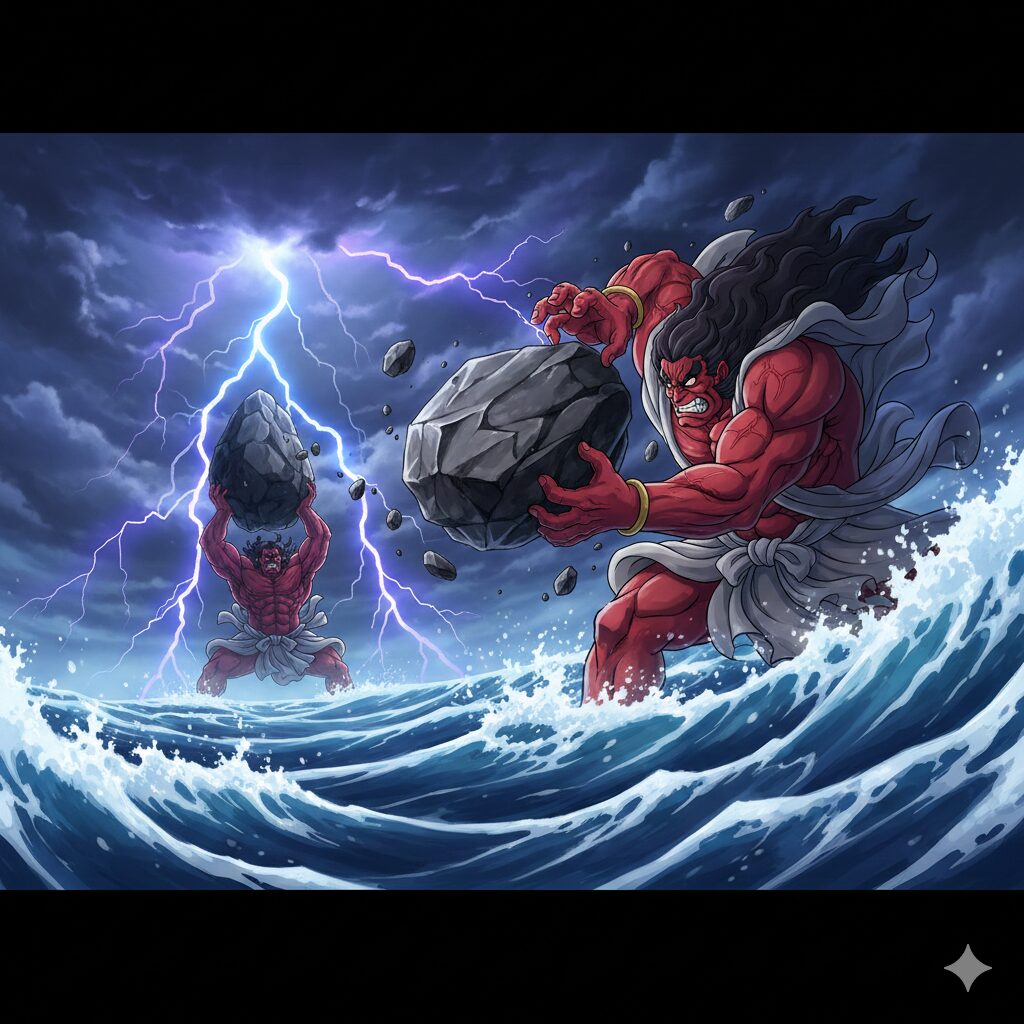
Spotting the fleeing Nio, Dokkoi pulled up a nearby small mountain and hurled it with incredible force. The mountain flew through the air with a terrifying howl.
But the Japanese Nio was not one to give up easily. He caught the flying mountain in mid-air and threw it back with all his might.
“Raaaargh!”
The mountains and rocks thrown by the two gods collided, creating sparks that turned into lightning. The sea raged, turning into a storm.
The Birth of a Phrase
Finally, Dokkoi hurled the largest rock yet. The Nio planted his feet firmly on Japanese soil and braced himself to catch it.
BOOM!
The rock landed in the Nio’s hands, but it was so heavy that his feet sank deep into the ground. His face turned bright red, his muscles bulged to their limit, and he squeezed a voice out from the depths of his belly.
“Dokkoi… sho!!!”
With that shout of spirit, the Nio managed to set the rock down on the ground. Thus, the Nio successfully protected Japan, but he acknowledged his rival’s strength and never lightly picked a fight again.
Since then, when Japanese people lift heavy things, they say “Dokkoisho,” borrowing the spirit and power the Nio displayed in that moment.
2. Analysis: Strength, Wits, and the Aesthetics of the “Bluff”
This story is not merely about physical prowess. It contains a very Japanese interpretation of “strength.”
First, note that the Nio fled after seeing the “radish grater.” Before engaging in direct combat, he assessed his opponent’s capability by observing their tools. This teaches the importance of observation. However, it also suggests that “bluffing” or perception can determine the outcome of a battle. Fear decided the winner before a single punch was thrown.
Furthermore, this story does not depict gods as perfect beings. They get jealous, feel fear, run away, and struggle. In Japanese folklore, gods and yokai possess very human emotions. This allows readers to feel a sense of familiarity with supernatural beings.
3. Cultural Background: Rokkon-Shojo and Nio
While the enemy in the story was named “Dokkoi,” looking at it from an etymological perspective adds deeper layers.
- Nio: Also known as Kongorikishi, they are guardian deities of Buddhism. They typically come in a pair: “Agyo” (mouth open) and “Ungyo” (mouth closed), symbolizing the beginning and end of the universe.
- Dokkoisho: The leading theory for the origin of this chant lies in the Buddhist term “Rokkon-Shojo.” It means to purify the six roots of perception (eyes, ears, nose, tongue, body, and mind).
In other words, this folktale transforms a “sacred Buddhist term” into popular entertainment in the form of a “strongman’s brawl.” Turning high-minded teachings into stories that common people can laugh at and enjoy is a testament to the flexibility and resilience of Japanese culture.
4. Questions for You
How did you feel reading this story?
When faced with an unknown, formidable rival, would you try to challenge them like the Nio? Or would you observe their tools and choose to retreat?
The next time you lift a heavy object, try shouting “Dokkoisho!” The power of the Japanese Nio might just lend you his strength.
Japanese folklore is full of unique and untold stories waiting to be discovered. Please enjoy exploring other tales as well.
Category: Japanese Folktale Series
Reference: Nio (Guardian Figures) – Wikipedia
最強の座をかけた神々の戦い:仁王とどっこい
日本の寺院の入り口に立つ、筋骨隆々とした恐ろしい形相の巨像を見たことがありますか?あれは「仁王(Nio)」と呼ばれる守護神です。仏教の敵が入ってこないように睨みをきかせている彼らは、力強さの象徴です。
しかし、日本の民話における神々は、ただ恐ろしいだけではありません。彼らは時に失敗し、時に知恵を使い、そして非常に人間味あふれる行動をとります。今回ご紹介する「仁王とどっこい」は、まさにそんな物語です。なぜ日本人が重い荷物を持ち上げるときに「どっこいしょ(Dokkoisho)」と叫ぶのか。その起源とも言われる、笑いと驚きの物語を紐解いていきましょう。
1. 昔話:海を越えた力自慢
昔々、日本のとある大きなお寺に、力自慢の仁王様が住んでいました。彼は自分の力に絶対の自信を持っており、「日本広しといえど、わしに敵うものはおらん」と胸を張っていました。
ある日、旅の風が噂を運んできました。「隣の国(唐土)には『どっこい』という、とてつもない力持ちがいるらしい」。
仁王様のプライドに火がつきました。「なんだと?わしより強い奴がいるだと?よし、ひとつ懲らしめて、世界一の力持ちが誰か教えてやろう」。仁王様は長い長い石の棒を担ぐと、なんとその足で海をザブザブと渡り、隣国へと向かったのです。
巨人の家と恐怖の正体
長い旅の末、仁王様は「どっこい」の家にたどり着きました。しかし、あいにく主人のどっこいは留守でした。家の中には、どっこいの妻が一人で留守番をしていました。
仁王様は家の中を見回して、背筋が凍りつきました。なぜなら、家の中にある道具がすべて規格外の大きさだったからです。茶碗は釣鐘のように大きく、箸はまるで柱のよう。
「おい、あれは何だ?」と仁王様が庭の隅にある巨大な鉄の板を指差して尋ねました。その板は表面がギザギザしており、山のように巨大でした。
妻は平然と答えました。「ああ、あれですか。あれはうちの主人が朝ごはんに大根をおろす時に使う『おろし金』ですよ」。
仁王様は愕然としました。あんな巨大な鉄の塊が大根おろし器だとしたら、それを使う「どっこい」という男はどれほどの巨人なのか。まともに戦って勝てるはずがない。仁王様は急に恐ろしくなり、こっそりと逃げ帰ることにしました。
世界を揺るがす追いかけっこ
仁王様が日本へ向かって海を走って逃げていると、後ろから轟音が響いてきました。「誰だ!わしの留守に勝手に上がり込んだのは!」。巨人のどっこいが帰ってきたのです。
どっこいは逃げる仁王様を見つけると、近くにあった小山を引き抜き、ものすごい力で投げつけました。山は唸りをあげて飛んできます。
しかし、日本の仁王様も負けてはいません。飛んできた山を空中でガシッと受け止めると、渾身の力を込めて投げ返しました。
「うおおおお!」
二人の神様が投げ合う山や岩がぶつかり合い、その衝撃で火花が散り、それが雷となりました。海は荒れ狂い、嵐となりました。
言葉の誕生
最後に、どっこいが今までで一番巨大な岩を投げつけました。仁王様は日本に足を踏ん張り、その岩を受け止めようと身構えました。
ズシーン!
岩は仁王様の手の中に収まりましたが、あまりの重さに仁王様の足は地面にめり込みました。仁王様は顔を真っ赤にし、全身の筋肉を隆起させ、腹の底から声を振り絞りました。
「どっこい…しょ!!!」
その気合とともに、仁王様は岩を地面に下ろしました。こうして仁王様はなんとか日本を守り抜きましたが、相手の強さを認め、二度と軽々しく喧嘩を売ることはしませんでした。
それ以来、日本では重いものを持つ時、仁王様のあの時の気合にあやかって「どっこいしょ」と言うようになったのです。
2. 考察:力と知恵、そして「ハッタリ」の美学
この物語は、単なる力自慢の話ではありません。ここには非常に日本的な「力の解釈」が含まれています。
まず注目すべきは、仁王様が「おろし金」を見て逃げ出した点です。直接戦う前に、相手の道具(生活用品)を見て相手の力量を推し量る。これは「観察眼」の重要性を説いています。しかし同時に、これは「見かけ倒し」や「ハッタリ」が勝負を決めることもあるという示唆でもあります。実際には戦っていないのに、恐怖心が勝敗を決めてしまったのです。
また、この物語は神様を「完璧な存在」として描いていません。嫉妬し、恐れ、逃げ出し、必死になる。日本の民話において、神や妖怪は非常に人間臭い感情を持っています。これにより、読者は超自然的な存在に対して親近感を抱くことができるのです。
3. 文化的な背景:六根清浄と仁王
物語の中では「どっこい」という名前の敵が登場しましたが、実際の語源学的な観点から見ると、これはさらに深みが増します。
- 仁王(Nio): 金剛力士とも呼ばれ、仏教の守護神です。口を開けた「阿形(Agyo)」と口を閉じた「吽形(Ungyo)」の一対で、宇宙の始まりと終わりを象徴しています。
- どっこいしょ(Dokkoisho): この掛け声の由来は、仏教用語の「六根清浄(Rokkon-Shojo)」にあるという説が有力です。六根(目、耳、鼻、舌、身、意)の迷いを断ち切り、清らかにすることを意味します。
つまり、この民話は「神聖な仏教用語」を「力持ちの喧嘩」という大衆的なエンターテインメントに変換して伝えているのです。高尚な教えを、庶民が笑って楽しめる形に変えて後世に残す。これこそが、日本文化の柔軟性と強さなのです。
4. あなたへの問いかけ
この物語を読んで、あなたはどう感じましたか?
未知の強敵に出会ったとき、あなたは仁王様のように一度は挑もうとしますか?それとも、相手の道具を見て冷静に撤退を選びますか?
次にあなたが重い荷物を持ち上げるとき、ぜひ「Dokkoisho!」と叫んでみてください。日本の仁王様のパワーが、あなたに宿るかもしれません。
日本の民話には、まだまだ知られざるユニークな物語が眠っています。他の物語もぜひ楽しんでください。
関連カテゴリー: Japanese Folktale Series
参考リンク: 金剛力士(仁王)について – Wikipedia
コメント