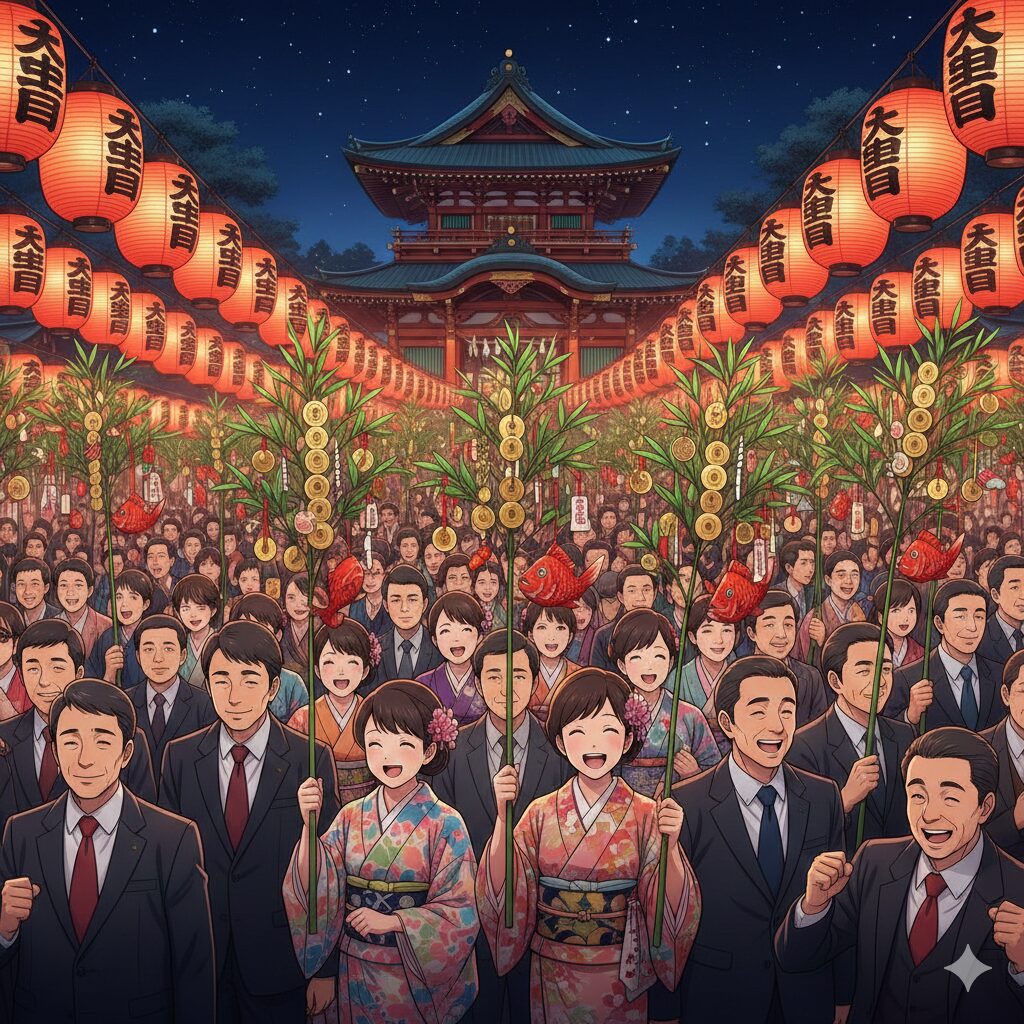
Just as the tranquility of the Japanese New Year begins to settle, a sudden and enthusiastic festival erupts in the Kansai region. This is “Toka Ebisu,” held primarily on January 10th.
This is not merely a religious event. It is a critically important ritual for kickstarting the business year, especially in Osaka and Hyogo, known as “merchant towns.” Why do Japanese businessmen wear Happi coats over their suits and rush to buy bamboo branches?
Today, we will unravel the secrets of “Ebessan,” the god of fortune, and the Japanese business philosophy hidden within this day.

- 1. What is Toka Ebisu?
- 2. Why Bamboo? The Secret of “Fuku-Zasa”
- 3. The Shocking Race: “The Lucky Men Run” (Fuku-Otoko)
- 4. Decoding Japanese Culture through Toka Ebisu: Fusion of Prayer and Meritocracy
- 5. To Our Readers
- 1. 十日戎(とおかえびす)とは何か?
- 2. なぜ「竹(笹)」なのか? 福笹の秘密
- 3. 衝撃のレース「福男選び(Lucky Men Run)」
- 4. 十日戎から読み解く日本文化:神頼みと実力主義の融合
- 5. 読者の皆様へ
1. What is Toka Ebisu?
Toka Ebisu is a festival dedicated to Ebisu, one of the Seven Lucky Gods. The festival spans three days: January 9th is called “Yoi Ebisu” (Eve of Ebisu), the 10th is “Hon Ebisu” (Main Ebisu), and the 11th is “Nokori Fuku” (Remaining Luck).
Notably, this festival carries overwhelming energy in Western Japan (Kansai region: Osaka, Hyogo, Kyoto) compared to Eastern Japan like Tokyo. In Kansai, people affectionately call the god “Ebessan.”
History and Origin: Nishinomiya Shrine and Ebessan
The head shrine of Toka Ebisu is Nishinomiya Shrine in Nishinomiya City, Hyogo Prefecture. Its history dates back to the Heian period.
Ebisu is widely believed to be “Hiruko,” the first child born to the creation gods Izanagi and Izanami in Japanese mythology. Originally worshipped as a god of fishing (bringing large catches from the sea), his role evolved with the times. As commerce developed in the Muromachi period, he became the guardian of markets and, eventually, the immensely popular god of “business prosperity.”
The Festival Highlight: “Bring the Bamboo for Business Prosperity!”
Upon entering the shrine grounds, you will hear a unique rhythmic chant playing on a loop:
“Shobai Hanjo de Sasa Motte Koi!”
This phrase has a double meaning: “If you bring the bamboo branch, I will make your business prosper,” and “If your business prospers, bring back offerings (like sake) as thanks.”
2. Why Bamboo? The Secret of “Fuku-Zasa”
Worshippers receive a bamboo branch called “Fuku-Zasa” at the shrine. Why bamboo?
- Evergreen: It stays green even in winter, symbolizing strength that doesn’t wither during a recession.
- Resilience: Bamboo bends but does not break, representing the merchant’s attitude of flexibility in overcoming hardships.
- Growth: The rapid growth speed of bamboo signifies the rapid expansion of business.
It is customary to have “Kitcho” (lucky charms) attached to this bamboo by chosen “Fuku-Musume” (Lucky Maidens). These charms include old gold coins (Koban), rice bales, sea bream, and magic mallets—all symbols of wealth and prosperity.
3. The Shocking Race: “The Lucky Men Run” (Fuku-Otoko)
Within Toka Ebisu, there is a crazy event that captures global media attention: the “Lucky Men Run” at Nishinomiya Shrine.
At 6:00 AM on January 10th, the moment the shrine’s main gate opens, thousands of men sprint 230 meters toward the main hall. The first three to arrive are certified as that year’s “Fuku-Otoko” (The Luckiest Men).
They receive no prize money. They run solely for the honor of being “Number One” and for a year’s worth of good luck. Athletes train for months for these few seconds. This offers a glimpse into the latent competitive instinct of Japanese people to “aim for the top” in a competitive society.
4. Decoding Japanese Culture through Toka Ebisu: Fusion of Prayer and Meritocracy
Here is the core analysis. Why do modern businessmen, who are supposed to be rational, flock to pray to gods? This reveals a unique Japanese spirituality.
Embodying “Do your best and leave the rest to Providence”
Most Japanese executives are not simply praying without action. They work desperately hard throughout the year. They entrust only the element of “luck,” which is beyond their control, to the gods. Toka Ebisu is not a place for lazy people to ask for easy money, but “a place where those prepared to fight come to fill in the final piece of the puzzle (luck).”
Functioning as a Community Hub
Toka Ebisu is also a massive networking event. Local businesses meet face-to-face, exchanging greetings for the new year. They drink sake at street stalls. This festival serves as a social hub that strengthens regional economic ties.
Economic Circulation through “Spending”
Interestingly, people spend significant amounts of money on Fuku-Zasa and Rakes (Kumade) to wish for business prosperity. There is a philosophy here of circulation: “By spending money, bigger money returns.” This reflects the aesthetic of Kansai merchants: being stingy alone won’t grow a business.
5. To Our Readers
Toka Ebisu on January 10th represents an energetic, slightly greedy, and deeply human side of Japan, quite opposite to the quiet “Zen” image often portrayed.
If you are in business, or if you are about to start a new challenge, why not immerse yourself in this enthusiasm? You will surely feel “something” beyond logical strategy.
How much do you believe in “luck” for your business or life success? Or do you believe it is all about ability?
Please let us know in the comments about customs for celebrating business luck in your country.
Related Links
- Nishinomiya Shrine Official Site (Head Shrine)
- Imamiya Ebisu Shrine Official Site (Famous Shrine in Osaka)
- What’s Today’s Special Day Series – More Japanese Special Days
1月10日:日本のビジネスマンが最も熱狂する日「十日戎」と商売繁盛の秘密
新年を迎えた日本の静けさが落ち着き始めた頃、関西地方では突如として熱狂的な祭りが幕を開けます。それが1月10日を中心に行われる「十日戎(Toka Ebisu)」です。
これは単なる宗教行事ではありません。日本の経済、特に「商人の町」として知られる大阪や兵庫における、ビジネスのスタートダッシュを決めるための極めて重要な儀式なのです。なぜ日本のビジネスマンは、スーツの上から法被(はっぴ)を着て、竹の枝を買い求めるのでしょうか?
本日は、福を呼ぶ神様「えべっさん」と、この日に隠された日本人の商売哲学について、詳細に紐解いていきます。
1. 十日戎(とおかえびす)とは何か?
十日戎は、七福神の一柱である「恵比寿(えびす)」様を祀るお祭りです。毎年1月9日を「宵えびす」、10日を「本えびす」、11日を「残り福」と呼び、3日間にわたって盛大に開催されます。
特筆すべきは、この祭りが東京などの東日本よりも、大阪・兵庫・京都といった西日本(関西地方)で圧倒的な熱量を持っている点です。関西では親しみを込めて恵比寿様を「えべっさん」と呼びます。
歴史と起源:西宮神社とえべっさん
十日戎の総本社は、兵庫県西宮市にある「西宮神社(Nishinomiya Shrine)」です。その歴史は古く、平安時代にまで遡ります。
恵比寿様は、日本の神話においてイザナギとイザナミの間に生まれた最初の神「ヒルコ」であるという説が有力です。海からやってきた福の神として、当初は漁業の神(大漁追福)として信仰されました。時代が進み、室町時代以降に商業が発達すると、市場の守り神、ひいては「商売繁盛」の神様として絶大な人気を誇るようになったのです。
祭りのハイライト:「商売繁盛で笹持って来い!」
神社の境内に入ると、独特のお囃子(BGM)が鳴り響いています。
「商売繁盛で笹持って来い!(Shobai Hanjo de Sasa Motte Koi)」
このフレーズは、「笹を持ってくれば商売を繁盛させてやろう」という意味と、「商売が繁盛したら、お礼に(酒などの供物を)持って来い」という二重の意味が含まれていると言われています。
2. なぜ「竹(笹)」なのか? 福笹の秘密
参拝者は神社で「福笹(Fuku-Zasa)」と呼ばれる笹を受け取ります。なぜ竹なのでしょうか?
- 常緑であること:冬でも青々として枯れないことから、不況に負けない強さを象徴しています。
- 弾力性:折れずにしなる性質は、苦難を柔軟に乗り越える商人の姿勢を表します。
- 成長力:竹の成長スピードの速さは、ビジネスの急成長を意味します。
この笹に、「吉兆(Kitcho)」と呼ばれる縁起物の飾り(小判、米俵、鯛、打ち出の小槌など)を、選ばれた「福娘(Fuku-Musume)」たちにつけてもらうのが習わしです。これらのアイテムは、富と繁栄の象徴そのものです。
3. 衝撃のレース「福男選び(Lucky Men Run)」
十日戎の中で、世界中のメディアが注目するクレイジーなイベントがあります。それが西宮神社の「開門神事福男選び」です。
1月10日の午前6時、神社の表大門が開かれた瞬間、数千人の男たちが本殿を目指して230メートルを全力疾走します。最初に本殿に到着した上位3人が、その年の「福男(Fuku-Otoko / The Luckiest Men)」として認定されます。
彼らは賞金をもらうわけではありません。ただ「一番福」という名誉と、1年間の幸運を手に入れるために走るのです。この数秒間のために、アスリートたちは何ヶ月もトレーニングを積みます。これは、競争社会における日本人の「一番を目指す」という潜在的な闘争本能を垣間見る瞬間でもあります。
4. 十日戎から読み解く日本文化:神頼みと実力主義の融合
ここからが本題です。なぜ、合理的であるはずの現代のビジネスマンが、こぞって神頼みをするのでしょうか?ここには日本独自の精神性があります。
「人事を尽くして天命を待つ」の体現
日本の経営者の多くは、ただ神に祈っているわけではありません。彼らは1年間、死に物狂いで働きます。そして、自分たちのコントロールが及ばない「運」の要素についてのみ、神に委ねるのです。十日戎は、怠け者が楽をして儲けようとする場ではなく、「戦う準備ができている者たちが、最後のピース(運)を埋めに来る場所」なのです。
コミュニティとしての機能
また、十日戎は巨大なネットワーキングの場でもあります。地元の企業同士が顔を合わせ、「今年もよろしく」と挨拶を交わす。屋台で酒を酌み交わす。この祭りは、地域経済の結びつきを強めるソーシャル・ハブとしての機能を果たしています。
「散財」による経済循環
興味深いことに、商売繁盛を願うために、人々は福笹や熊手(Rake)に多額のお金を使います。「お金を使うことで、大きなお金が返ってくる」という循環の思想がここにはあります。ケチなだけでは商売は大きくならない、という関西商人の美学がここにあります。
5. 読者の皆様へ
1月10日の十日戎は、静寂を好む「禅」のイメージとは対極にある、エネルギッシュで、少し強欲で、人間味あふれる日本の姿です。
もしあなたがビジネスをしているなら、あるいはこれから何か新しい挑戦をしようとしているなら、一度この熱気の中に身を投じてみてはいかがでしょうか? きっと、論理的な戦略以上の「何か」を感じ取ることができるはずです。
あなたは、自分のビジネスや人生の成功のために、どれくらい「運」を信じますか? それとも、すべては実力だと思いますか?
ぜひ、あなたの国の「ビジネスの幸運を祝う習慣」についてコメントで教えてください。
コメント