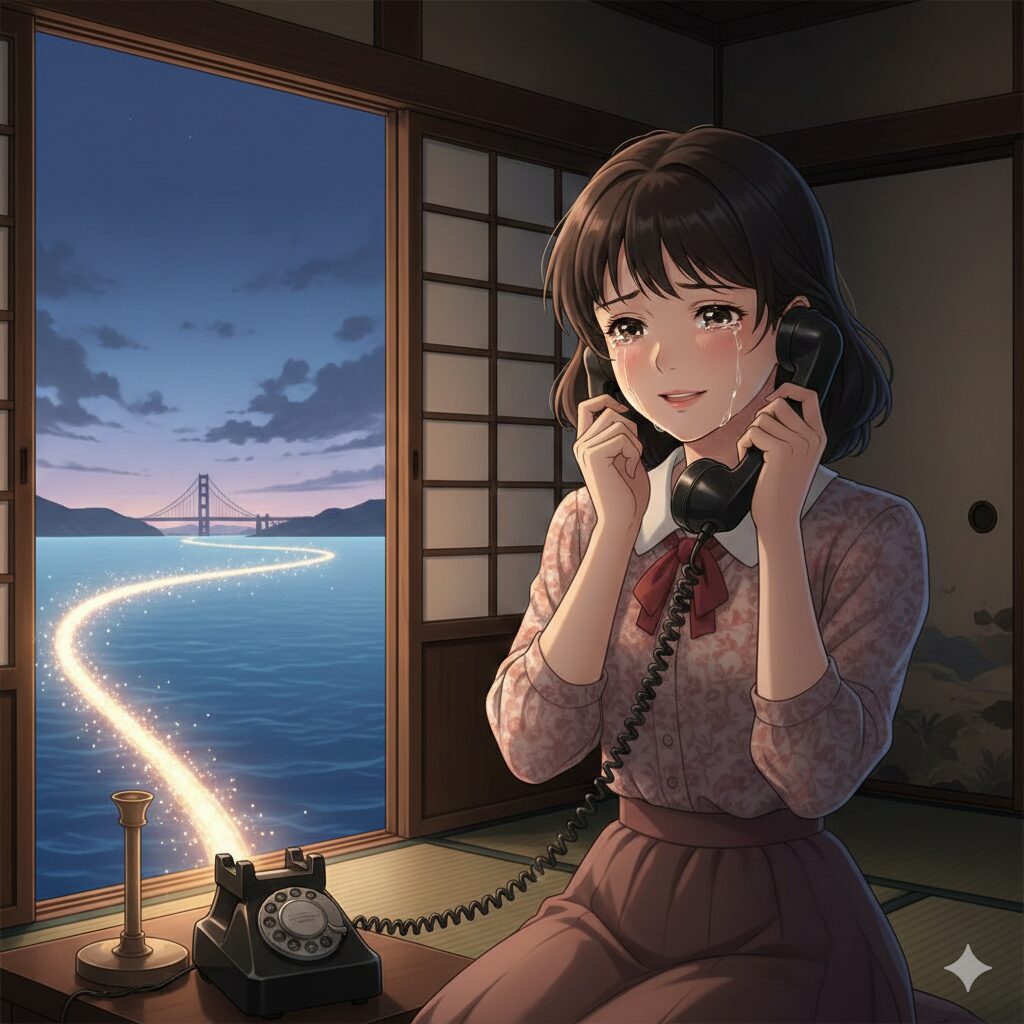
Thank you for your interest in Japan. Today, as a professional blogger and programmer, I want to take you on a deep dive into a pivotal moment in modern Japanese history—a day that reconnected a nation to the world.
January 4th is traditionally known in Japan as “Shigoto-hajime” (the first day of work), but on this day in 1948, something monumental happened: International telephone service between Japan and the United States was officially re-established. In an era where we can video chat globally for free with a single tap, let’s reimagine the immense weight carried by that “first phone line.”

1. A Turning Point in History: The 1948 Trans-Pacific Call
Reconnection from the Ashes
1948 was a tumultuous year for Japan. It had been less than three years since the end of World War II. The scars of air raids were still visible in Tokyo’s cityscape, and the people were struggling to rebuild under the occupation of the GHQ (General Headquarters).
Against this backdrop, the international telephone line between Tokyo and San Francisco opened on January 4th. This wasn’t just a technical achievement; it was a symbolic event marking Japan’s reconnection to the international community after years of isolation.
Astonishing Costs and Technical Hurdles
From a modern programmer’s perspective, the communication environment of that time was unimaginably analog and expensive.
- The Cost: The first 3 minutes cost approximately 3,000 to 4,000 Yen (rates varied by day).
- The Context: The starting monthly salary for a government official was around 2,900 Yen. This means a mere 3-minute conversation cost more than a fresh graduate’s entire monthly paycheck.
- The Tech: They used shortwave radio, not submarine cables. The connection was plagued by noise depending on the weather and ionospheric conditions—far from the crystal-clear audio we enjoy today.
Yet, this line was a “Line of Hope.” Businessmen aiming to restart trade, Japanese immigrants in the US, and stationed soldiers all clamored for access. That limited bandwidth was filled with voices desperate to connect, willing to pay a fortune to do so.
2. Decoding “Voice” and “Distance” in Japanese Culture
Kotodama: The Soul of Language
Japan has an ancient belief called “Kotodama” (the spirit of words). It is the idea that words hold a soul and that speaking them aloud can influence reality. While writing letters is a beautiful culture, delivering one’s physical “voice” held a special significance.
The reopening of the international line in 1948 was a ritual for families and lovers physically separated by the war to confirm each other’s survival through the “vibration of voice.” Japanese people love technology, but at the root, there is always a psychological desire for human warmth and “Kizuna” (bonds). This history is the origin of Japan’s evolution in communication tools, leading to pagers, “Galapagos phones,” and eventually LINE.
The Significance of January 4th
Interestingly, January 4th is the standard day for government offices and many companies to resume work. After spending the first three days of the New Year (Sanganichi) in quiet celebration with family, society begins to move again.
The fact that Japan opened its lines to the world on this specific day in 1948 can be interpreted as Japan’s own “Shigoto-hajime”—the day the nation ended its long pause of war and returned to the workplace of international society.
3. A Question for You: Rethinking the Value of Connection
Today, with a device in your pocket, you can see the face of a friend on the other side of the globe in seconds. But in that convenience, have we forgotten the preciousness of “hearing a voice”?
What were the “3 minutes of words” that people in 1948 wanted to convey, even if it cost them everything? Most likely, they were simple, powerful phrases: “Are you okay?”, “I love you,” or “Let’s meet again.”
I have a question for you:
“If a phone call cost as much as your monthly salary, who would you call, and what would you tell them?”
After reading this, instead of sending a text, why not try making a voice call to someone important to you? That action might be the best way to celebrate today’s anniversary.
References & Links
- Ministry of Internal Affairs and Communications (Japan)
- History of KDDI (International Telecommunications)
- Internal Link: What’s Today’s Special Day Series
1948年1月4日:太平洋を越えた「声」の架け橋と、日本の接続文化
日本に興味を持ってくれてありがとうございます。今日は、日本の現代史における非常に重要な「声」の記念日について、技術的側面と歴史的背景、そして文化的意義を深く掘り下げていきます。
1月4日は、多くの日本人にとって「仕事始め」の日ですが、1948年のこの日、日本とアメリカの間で国際電話が開通(戦後再開)した日でもあります。現代の私たちがスマートフォン一つで世界中と無料でビデオ通話ができる時代において、この「最初の一本の電話線」がどれほど重みを持っていたか想像してみてください。
① 歴史の転換点:1948年の日米国際電話開通
焼け野原からの再接続
1948年(昭和23年)という年は、日本にとって激動の時代でした。第二次世界大戦の終結からまだ3年足らず。東京の街並みには空襲の爪痕が色濃く残り、人々はGHQ(連合国軍最高司令官総司令部)の占領下で、必死に復興への道を歩んでいました。
そんな中、1月4日に東京とサンフランシスコの間で国際電話回線が開通しました。これは単なる技術的な開通ではなく、国際社会から断絶されていた日本が、再び世界と「接続」された象徴的な出来事でした。
驚愕の通話料金と技術的ハードル
現代のプログラマー視点で見ると、当時の通信環境は想像を絶するほどアナログで高コストでした。
- 通話料:最初の3分間で当時の日本円にして約3,000円から4,000円(平日・日曜で変動あり)。
- 当時の物価:公務員の初任給が約2,900円程度だった時代です。つまり、たった3分の通話に、新入社員の月給以上のコストがかかったのです。
- 技術:海底ケーブルではなく、短波無線を使用していました。天候や電離層の状態によってノイズが混じり、現在のクリアな音声とは程遠いものでした。
それでも、この回線は「希望のライン」でした。貿易の再開を目指すビジネスマン、アメリカへ渡った日系移民、そして進駐軍兵士たち。限られた回線には、莫大なコストを払ってでも伝えたい「声」が溢れていたのです。
② 日本文化から読み解く「声」と「距離」
「声」に宿る言霊(ことだま)
日本には古来より「言霊(ことだま)」という信仰があります。言葉には魂が宿り、口に出すことで現実に影響を与えるという考え方です。手紙(テキスト)も美しい文化ですが、肉声(ボイス)を届けることには、特別な意味がありました。
1948年の国際電話開通は、物理的に離れ離れになった家族や恋人たちが、互いの生存を「声の振動」で確認し合う儀式でもありました。日本人はテクノロジーを好みますが、その根底には常に「人間的な温かみ」や「つながり(Kizuna)」を求める心理があります。この国際電話の歴史は、後の「ポケベル」「ガラケー(Galapagos Phones)」そして「LINE」へと続く、日本のコミュニケーション・ツールの進化の原点と言えるでしょう。
1月4日というタイミングの妙
興味深いことに、1月4日は日本の官公庁や多くの企業の「仕事始め」です。正月三が日(1月1日〜3日)を家族と過ごし、静寂の中で新年を祝った後、社会が再び動き出す日です。
1948年のこの日、日本が世界に向けて回線を開いたことは、日本という国自体が「長い戦争という休止期間」を終え、国際社会という職場へ復帰するための「仕事始め」だったと解釈することもできます。
③ 読者の皆様へ:つながりの価値を再考する
今、あなたはポケットに入っているデバイスを使えば、地球の裏側にいる友人と数秒で顔を見て話すことができます。しかし、その利便性の中で、私たちは「声を聞くこと」の貴重さを忘れてはいないでしょうか?
1948年の人々が、月給のすべてを投げ打ってでも伝えたかった「3分間の言葉」は何だったのでしょうか。おそらく、「元気か?」「愛している」「また会おう」といった、シンプルで力強い言葉だったはずです。
あなたに問いかけたいことがあります。
「もし、通話料が月給と同じくらい高額だったとしたら、あなたは誰に、何を伝えるために電話をかけますか?」
この記事を読んだ後、大切な誰かに、メッセージではなく「音声通話」をかけてみてはいかがでしょうか。その行動こそが、今日の記念日を祝う最高の方法かもしれません。


コメント