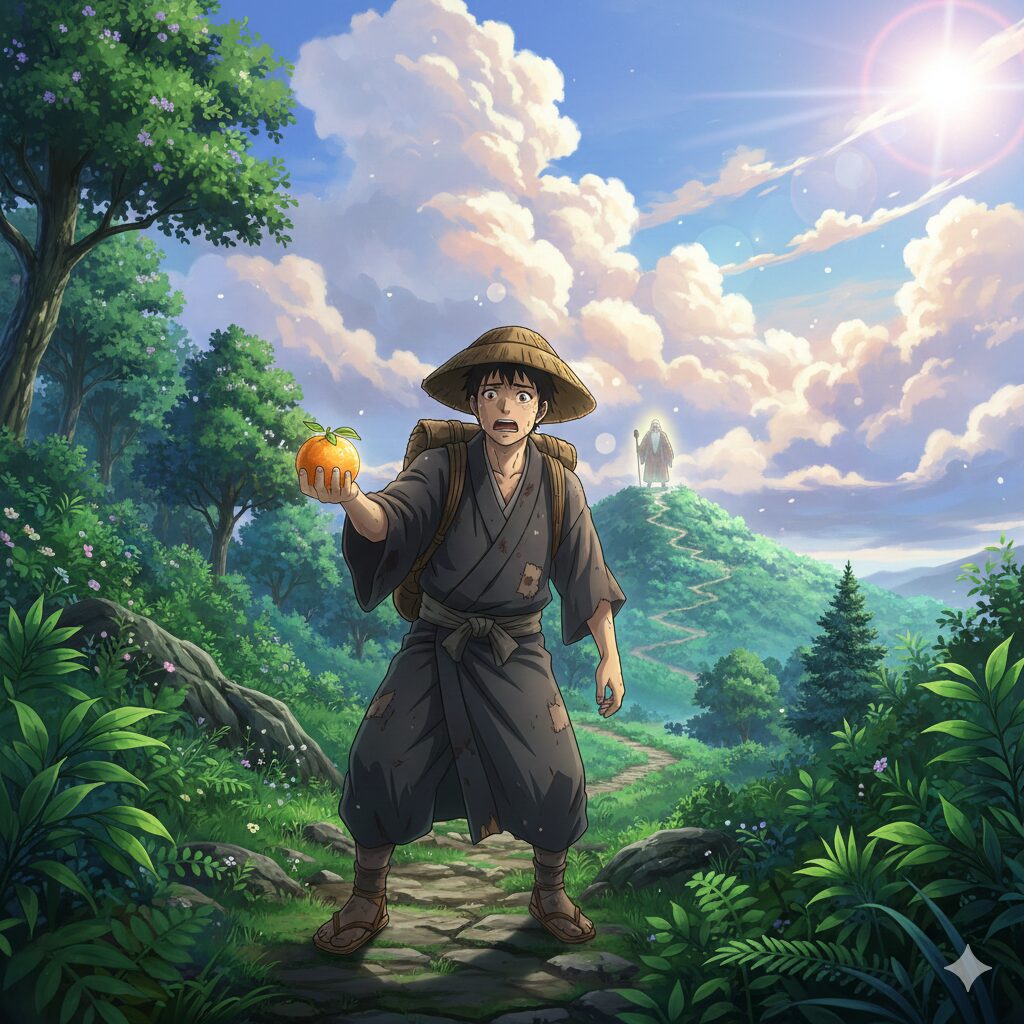

The Story: The Hermit’s Tangerine
Once upon a time, there lived a man who hated working more than anything else.
Every day, he would close the rain shutters, curl up in his futon, and think:
“Ah, I don’t want to work. I wish a fortune would just roll in from somewhere. Or maybe I’ll find a gold nugget on the street.”
One day, the man heard a rumor from an elderly neighbor: “A Sennin (Hermit Wizard) lives at the top of the high mountain. He has mysterious powers and can grant wishes.”
“This is it!”
The man jumped out of bed. He thought climbing a mountain to beg a hermit was far easier than working hard for a living.
Gasping for breath, the man climbed the steep mountain and finally reached the summit. There, sitting on a rock, was a Sennin with a long white beard.
The man bowed down, touching his head to the ground, and begged:
“Oh, Great Hermit! Please make me rich! Give me enough money so I can play for the rest of my life!”
The Sennin looked down at the man quietly and took out a single Mikan (Japanese tangerine) from his robe.
It was a glossy, beautiful, and delicious-looking tangerine.
“Listen carefully. Take this Mikan home. You must not eat it on the way. If you bring it all the way home, your wish will be granted.”
“Is that all?”
The man was skeptical, but he carefully put the Mikan in his kimono bosom and began to descend the mountain.
However, it was the height of summer. As he walked down, his throat became parched.
“I need water…”
There were no streams nearby. His mind became filled with thoughts of that juicy Mikan in his pocket.
“Just one bite… No, the Sennin said not to eat it.”
The man struggled with himself, but finally, he reached his limit.
“Forget it! Even if I don’t become rich, I can’t stand this thirst!”
He peeled the Mikan and stuffed the sweet and sour segments into his mouth.
“Ah, delicious! I’ve never tasted such a good tangerine!”
He devoured it in seconds, leaving only the few pieces of peel in his hands.
“Ah, I ate it. Oh well, I’ll just go ask him again tomorrow.”
The man stuffed the peels into his pocket and went home.
When he arrived, he took the peels out and threw them onto his table. Clink, clank! A high-pitched metallic sound rang out.
“What was that?”
Looking closely, the man saw that the tangerine peels he was about to throw away had turned into pure gold.
The man’s eyes widened, and he screamed.
“The peel turned into gold!? …Wait, that means the sweet, juicy flesh I just ate was all solid gold inside!!”
The man rolled around on the floor, clutching his stomach and crying tears of regret.
“What a waste! I ate a belly full of gold!”
But it was too late. All that remained in the man’s stomach was a feeling of fullness. The gold never returned.
Analysis: The Weakness of Human Patience
This story is not just a funny tale. It brilliantly illustrates the difficulty of “Delay Discounting” in human psychology. In psychology, there is the famous “Marshmallow Test.” Children are given one marshmallow and told, “If you wait 15 minutes without eating it, I will give you another one.” Some can wait, while others eat it immediately.
This man was clearly the type to eat the marshmallow (Mikan).
The Sennin didn’t lie. He said, “If you take it home, your wish will be granted.” In fact, even the peel alone became valuable gold. If he had overcome his desire and brought the Mikan home intact, both the peel and the fruit would have turned into gold, and he could have lived in luxury for the rest of his life.
However, the man prioritized his “current thirst (short-term desire).” This is a lesson that applies to us today. Investments, studying, dieting—we often choose “current comfort” over “future success.” It is easy to laugh at the man in this story, but could we really resist eating a juicy tangerine when our throats are parched?
Reading Japanese Culture: Hermits and Mountain Worship
The background of this story reveals the Japanese concepts of “Mountain Worship” and “Sennin.”
1. The Mountain as the “Other World”
In Japan, mountains have traditionally been treated not just as physical terrain, but as a sacred “Other World” inhabited by gods, spirits, and beings beyond human understanding. Climbing from the plains (daily life) to the mountain (the sacred realm) signifies accessing a spiritual domain. In Japanese folklore, wealth and power are often bestowed from “beyond the mountains” or “high up in the mountains.”
2. The Role of the Sennin
The concept of the Sennin originates from Chinese Taoism, but in Japanese folklore, they are depicted as hermits with supernatural powers who have renounced the world. They are not perfect like gods; they sometimes test humans or play tricks on them. This Mikan was a “test” of the man’s greed and patience.
3. Symbolism of the Mikan
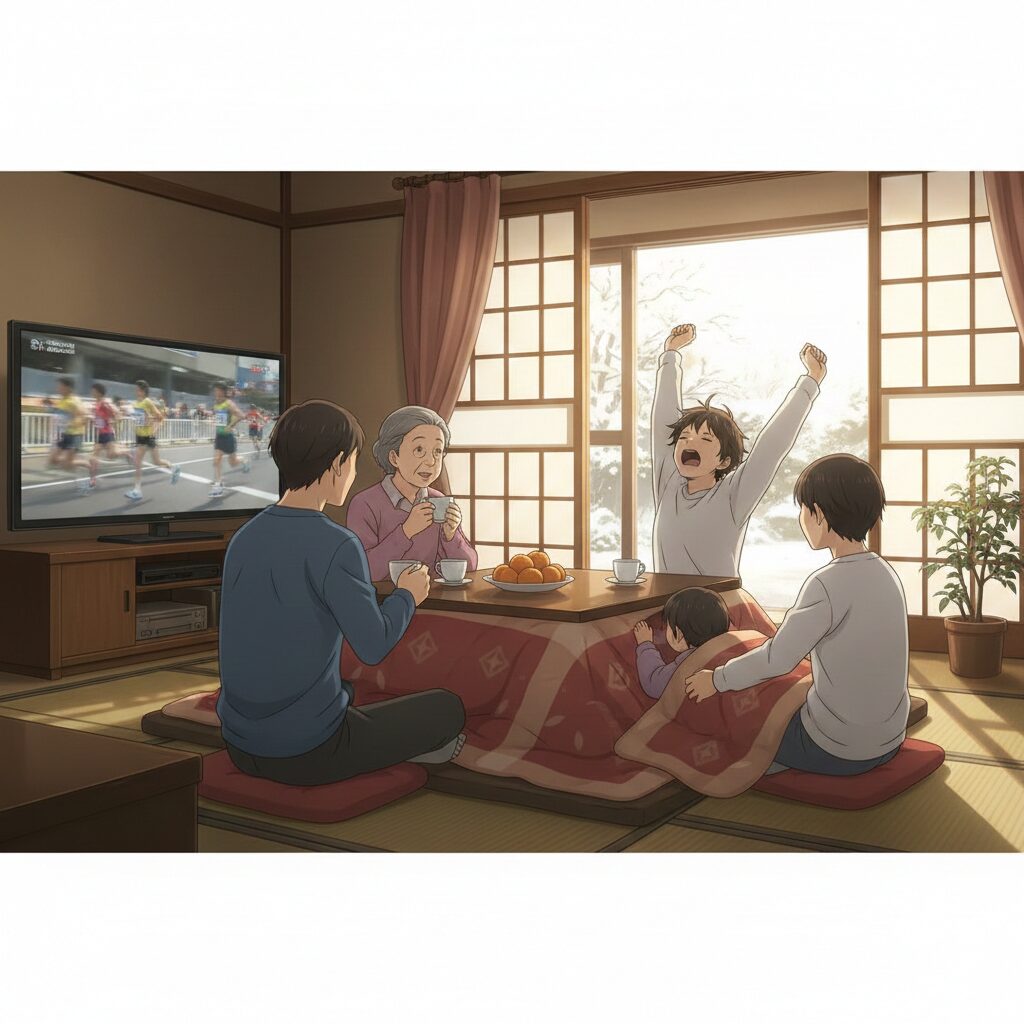
The Japanese Mikan (Satsuma mandarin) is a symbol of winter, a familiar fruit eaten while sitting under a Kotatsu (heated table). Its golden color naturally associates it with gold coins, making it the perfect motif for this story.
Would You Eat It?
If you were handed a “Magic Mikan” while dying of thirst, what would you do?
Can you swear you wouldn’t eat it? Or would you make an excuse like, “I’ll just save the peel,” and eat the rest?
The interesting part of this story is that the man didn’t end up with nothing. The peel turned to gold. In other words, because he couldn’t endure a little discomfort, he gained “a small fortune” but lost “massive wealth.”
Perhaps the irony of life is that “half-baked success” causes the most regret.
Is the “Mikan” in front of you something to be eaten now? Or is it gold to be taken home?
References & Related Links:
- Sennin (Wikipedia) – Explanation of the concept of the Hermit in Japan.
- Japanese Folktale Series Category – Read more Japanese folktales here.
日本の昔話には、派手な鬼退治や魔法の話だけでなく、人間の心理を鋭く突いた「落語」のような滑稽で少しほろ苦い物語が数多く存在します。今回ご紹介するのは『仙人みかん』というお話です。これは、誰もが一度は抱く「楽をしてお金持ちになりたい」という願望と、その結末を描いた物語です。
昔話:仙人みかんのあらすじ
むかしむかし、あるところに、働くことが大嫌いな男がいました。
男は毎日、雨戸を閉め切って布団にくるまり、こう考えていました。
「ああ、働きたくない。どこかから大金が転がり込んでこないものか。あるいは、道端に金塊でも落ちていないものか」
そんなある日、男は近所の老人から「高い山の頂上には仙人が住んでいて、不思議な力で願いを叶えてくれるらしい」という噂を耳にします。
「これだ!」
男は飛び起きました。苦労して働くより、山に登って仙人に頼むほうがよほど楽だと思ったのです。
男は息を切らして険しい山を登り、頂上にたどり着きました。すると、白い髭を長く伸ばした仙人が岩の上に座っていました。
男は土下座をして頼み込みました。
「仙人様!どうか私を金持ちにしてください!一生遊んで暮らせるだけの大金をください!」
仙人は静かに男を見下ろし、懐から一つの「みかん」を取り出しました。
それは、ツヤツヤと輝く、実においしそうなみかんでした。
「よいか、男よ。このみかんを家に持ち帰りなさい。決して途中で食べてはならぬぞ。家まで持ち帰れば、お前の願いは叶うであろう」
「たったこれだけで?」
男は半信半疑でしたが、みかんを大切に懐に入れ、山を降り始めました。
しかし、夏の暑い盛りのことです。山を降りるにつれて、男の喉はカラカラに乾いてきました。
「水が飲みたい……」
近くに小川はありません。男の頭の中には、懐に入れたあのみずみずしいみかんのことしか浮かばなくなりました。
「一口だけなら……いや、仙人は食べるなと言った」
男は葛藤しましたが、ついに我慢の限界が訪れました。
「ええい、ままよ!金持ちになれなくとも、この渇きには代えられん!」
男はみかんの皮をむき、甘酸っぱい果肉を口いっぱいに頬張りました。
「ああ、うまい!こんなに美味いみかんは初めてだ!」
男は夢中で食べ尽くし、残ったのは手元にある数枚の「皮」だけでした。
「ああ、食ってしまった。まあいい、また明日頼みに行けばいいさ」
男は皮をポケットに突っ込み、家に帰りました。
家に着き、ポケットから皮を取り出して机の上に放り投げると、「カローン、コローン」と金属のような高い音が響きました。
「なんだ?」
男がよく見ると、なんと捨てようとしたみかんの皮が、すべて「純金」に変わっていたのです。
男は目を見開いて叫びました。
「皮が金になった!?……ということは、俺がさっき腹に入れてしまったあの甘い中身は、全部『黄金の塊』だったのか!!」
男は腹を抱えて転げ回り、悔し泣きをしました。
「ああ、もったいない!俺は腹一杯の黄金を食べてしまったんだ!」
しかし、後の祭り。男のお腹に残ったのは満腹感だけで、黄金は二度と戻ってきませんでした。
考察:我慢できない人間の弱さ
この物語は、単なる笑い話ではありません。人間の心理における「遅延報酬(Delay discounting)」の難しさを見事に描いています。
心理学には「マシュマロ・テスト」という有名な実験があります。子供にマシュマロを1つ与え、「15分間食べるのを我慢したら、もう1つあげる」と伝えたとき、我慢できる子と食べてしまう子がいるというものです。
この男は、明らかにマシュマロ(みかん)を食べてしまうタイプでした。
仙人は嘘をついていません。「家まで持ち帰れば願いは叶う」と言いました。実際、皮だけでも相当な価値のある金になったのです。もし彼が欲望に打ち勝ち、みかんをそのまま持ち帰っていれば、皮も中身もすべて黄金となり、一生遊んで暮らせたことでしょう。
しかし、男は「現在の渇き(短期的な欲求)」を優先させました。これは現代の私たちにも通じる教訓です。
投資、勉強、ダイエット。私たちは「将来の大きな成果」よりも「今の小さな楽」を選んでしまいがちです。この物語の男を笑うことは簡単ですが、私たちは果たして、喉がカラカラの状態で目の前のみかんを我慢できるでしょうか?
日本文化を読み解く:仙人と山の信仰
この物語から読み取れる日本文化の背景には、「山岳信仰」と「仙人」の存在があります。
1. 山は異界である
日本において、山は単なる自然地形ではなく、神や精霊、そして人智を超えた存在が住む「異界」として扱われてきました。男が平地(日常)から山(非日常)へ登る行為は、神聖な領域へのアクセスを意味します。日本の昔話において、富や力はしばしば「山の向こう」や「山の上」から授けられます。
2. 仙人(Sennin)の役割
仙人は、中国の道教に由来する概念ですが、日本の昔話では「超能力を持つ世捨て人」として描かれます。彼らは神様のように完全無欠ではなく、時に人間に試練を与えたり、少し意地悪なテストをしたりします。今回のみかんも、男の強欲さと忍耐力を試すための「テスト」でした。
3. みかん(Mikan)の象徴
日本のみかん(ウンシュウミカン)は、冬の象徴であり、こたつに入って食べる親しみ深い果物です。また、鏡餅の上に載せる橙(ダイダイ)のように、「代々栄える」という縁起物としての側面も持ちます。黄金色のみかんは、視覚的にも「金貨」を連想させやすく、この物語のモチーフとして最適だったと言えます。
あなたなら、食べますか?
もしあなたが、喉がカラカラの状態で「魔法のみかん」を渡されたらどうしますか?
「絶対に食べない」と誓えますか?それとも、「皮だけ残せばいいや」と言い訳をして食べてしまいますか?
この物語の面白いところは、男が全くの無一文になったわけではない点です。皮は金になりました。つまり、「少しの我慢もせず食べた」結果、彼は「そこそこの小金」を得て、同時に「莫大な富」を失ったのです。
これは、「中途半端な成功」が一番悔しいという、人生の皮肉かもしれません。
あなたの目の前にある「みかん」は、今食べるべきものですか?それとも、持ち帰るべき黄金ですか?
参考文献・関連リンク:
- Sennin (Wikipedia) – 日本における仙人の概念についての解説(英語)
- Japanese Folktale Series Category – その他の日本昔話はこちらから読むことができます。

コメント