Happy New Year. It is January 3rd. This marks the final day of “San-ga-nichi,” the extremely significant three-day period of the Japanese New Year holidays.
For many Japanese people, this is not just a “day off.” It exists within a psychological gradation, starting from the solemn silence of New Year’s Day and gradually shifting towards a “rehabilitation” for the return to the real world. Today, I will thoroughly explore the historical and cultural significance of January 3rd and the Japanese spirituality that can be seen through it.
What is January 3rd? History and Customs
January 3rd, along with January 1st (New Year’s Day) and January 2nd, constitutes the “New Year’s San-ga-nichi.” Although it is not legally a national holiday, government offices and many companies treat it as a holiday, and society as a whole is still wrapped in the atmosphere of “Hare” (the extraordinary).
The Custom of “Mikka Tororo”
Have you ever heard the term “Mikka Tororo”? It is a custom remaining mainly in the Tohoku region and parts of Kanto, where people eat “Tororo-jiru” (grated yam soup) on January 3rd.
This has two meanings:
- Resting the Stomach: To soothe the stomach, which is exhausted from eating Osechi (traditional New Year foods) and drinking alcohol, with easily digestible grated yam.
- Prayer for Longevity and Health: Wishing for health and longevity, modeled after the long, stretching nature of the yam.
It represents the wisdom of our ancestors to reset the body at the end of the New Year’s feast. This is evidence that the modern concept of “detox” existed in Japan hundreds of years ago.
Hakone Ekiden: A Modern Japanese New Year Tradition
One cannot discuss the modern January 3rd without mentioning the return leg of the “Hakone Ekiden” (Tokyo-Hakone Round-Trip College Ekiden Race). Runners head from Tokyo to Hakone on January 2nd and return from Hakone to Tokyo on the 3rd.
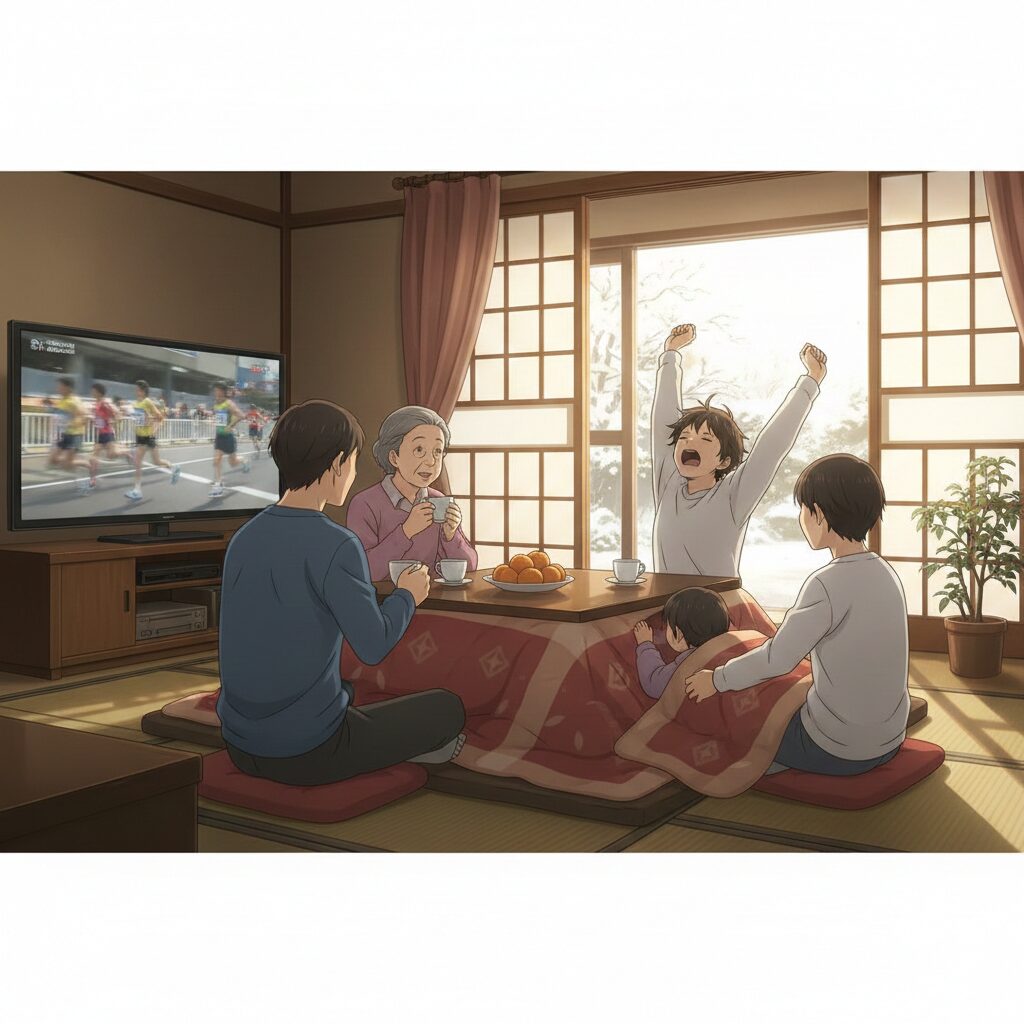
Why are Japanese people so enthusiastic about this long-distance relay race? It is because the Japanese aesthetic of “individual sacrifice and collective glory” is condensed here. Seeing students running to their limits to connect a single “Tasuki” (sash) brings tears to the eyes of Japanese viewers, who overlay their own lives and sense of belonging to organizations onto the runners. TV ratings reach nearly 30% every year, and watching the Ekiden while eating mandarins under a Kotatsu (heated table) has become a modern “ritual.”
Deep Dive into Japanese Culture: Transition from Hare to Ke
The essence of January 3rd lies in “Transition.”
Japanese culture has the concepts of “Hare” (sacred/extraordinary) and “Ke” (mundane/everyday). New Year’s is the ultimate “Hare.” However, one cannot remain in the state of Hare forever, as energy would be depleted (this is called “Kegare” – withering of spirit).
January 3rd is a preparation period to return to the everyday life of humans (Ke) from the sacred time spent with the gods.
The Last Chance for Hatsumode
People who could not visit a shrine on New Year’s Day or the 2nd flock to shrines on this day. Completing the visit within the San-ga-nichi is considered a kind of social etiquette. In the shrine precincts, Hamaya (demon-breaking arrows) and amulets are granted, and old amulets are returned. This is like a contract renewal: “liquidating the past and receiving a new future.”
A Question for You
January 3rd is both an end and a beginning. It is a mysterious day where complete rest mixes with the pressure of work or school starting tomorrow.
Does your country have a special meal eaten at the end of a long holiday, or a sports event that always takes place? Also, when returning from vacation to daily life, what rituals or mindsets do you use to switch gears?
How about adopting a habit of caring for your body, like Japan’s “Mikka Tororo”?
Please tell me in the comments how you end your holidays in your country. Sharing cultural differences is the first step to deepening mutual understanding.
Related Links
1月3日:静寂と喧騒の狭間。「三が日」のフィナーレを読み解く
あけましておめでとうございます。1月3日。日本の正月休みにおける非常に重要な区切り、「三が日(さんがにち)」の最終日です。
多くの日本人にとって、この日は単なる「休みの日」ではありません。元旦の厳かな静けさから始まり、少しずつ現実世界への「リハビリテーション」が始まる、心理的なグラデーションの中にあります。今日は、この1月3日が持つ歴史的、文化的意味合いと、そこから見えてくる日本人の精神性について、徹底的に深掘りしていきます。
1月3日は何の日?歴史と習慣
1月3日は、1月1日(元日)、1月2日と共に構成される「正月三が日」の最後の日です。法的には祝日ではありませんが、行政機関や多くの企業では休日とされており、社会全体がまだ「ハレ(非日常)」の空気に包まれています。
「三日とろろ」の風習
皆さんは「三日とろろ(Mikka Tororo)」という言葉を聞いたことがありますか? 東北地方や関東の一部を中心に残る風習で、1月3日に長芋や山芋をすりおろした「とろろ汁」を食べる習慣です。
これには2つの意味があります。
- 胃腸の休息:おせち料理やお酒で疲れ切った胃腸を、消化の良いとろろで労る。
- 長寿と健康の祈願:長く伸びる山芋にあやかり、健康と長寿を願う。
暴飲暴食が続く正月の最後に、体をリセットしようとする先人の知恵。これは現代の「デトックス」の概念が、数百年以上前から日本に存在していた証拠でもあります。
箱根駅伝:現代日本のお正月の風物詩
現代の1月3日を語る上で欠かせないのが「箱根駅伝(東京箱根間往復大学駅伝競走)」の復路です。1月2日に東京から箱根へ向かい、3日に箱根から東京へ戻ります。
なぜ日本人はこれほどまでに駅伝に熱狂するのでしょうか? それは「個の犠牲と集団の栄光」という、日本的な美学が凝縮されているからです。一本の「襷(たすき)」を繋ぐために限界まで走る学生たちの姿に、日本人は自らの人生や組織への帰属意識を重ね合わせ、涙します。視聴率は毎年30%近くを記録し、お茶の間でコタツに入り、ミカンを食べながら駅伝を見ることは、現代における「儀式」となっています。
日本文化の深層:ハレからケへの移行
1月3日の本質は「移行(Transition)」にあります。
日本文化には「ハレ(Hare = 非日常・神聖)」と「ケ(Ke = 日常・俗)」という概念があります。お正月は究極の「ハレ」です。しかし、いつまでもハレの状態にいることはできません。エネルギーが枯渇してしまうからです(これを「気枯れ=ケガレ」と言います)。
1月3日は、神様と共に過ごした神聖な時間から、人間としての日常(ケ)に戻るための準備期間です。
初詣のラストチャンス
元旦や2日に参拝できなかった人々が、こぞって神社へ向かうのもこの日です。三が日のうちに参拝を済ませることは、社会的なマナーの一種とも捉えられています。神社の境内では、破魔矢(Hamaya)やお守りを授与され、古い年のお守りを返納します。これは「過去を清算し、新しい未来を受け取る」という契約の更新のようなものです。
読者への問いかけ
1月3日という日は、終わりであり、始まりでもあります。完全な休息と、明日から始まる仕事や学業へのプレッシャーが混在する、不思議な一日です。
あなたの国には、長い休暇の最後に食べる特別な食事や、必ず行われるスポーツイベントはありますか? また、休暇から日常に戻る際、どのような儀式やマインドセットで切り替えますか?
日本の「三日とろろ」のように、体を労る習慣を取り入れてみるのはいかがでしょうか。
ぜひ、あなたの国の「休暇の終わらせ方」をコメントで教えてください。文化の違いをシェアすることは、互いの理解を深める最初の一歩です。
コメント