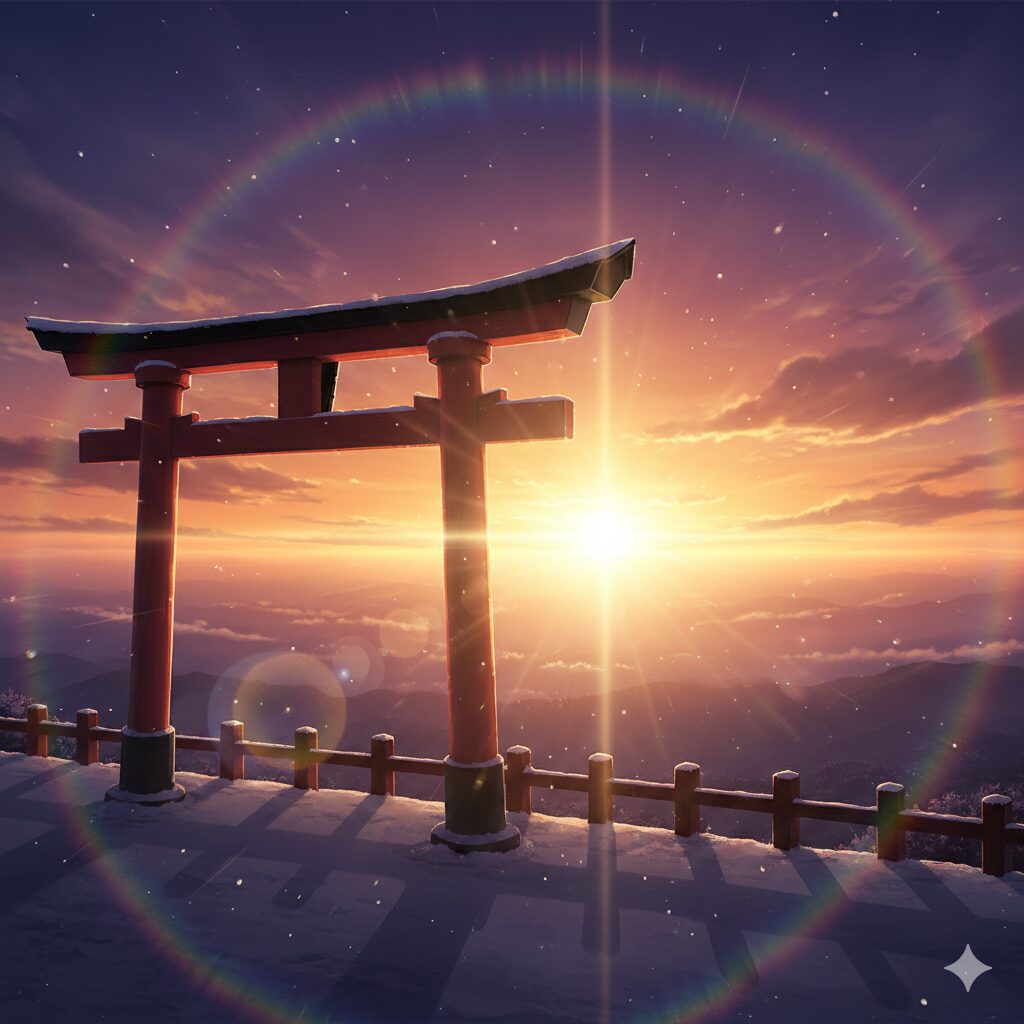
January 1st. While fireworks light up the skies around the world to celebrate the New Year, the Japanese archipelago is enveloped in a slightly different atmosphere. It is an air of “silence,” “solemnity,” and “rebirth.” In Japan, this day is called “Ganjitsu,” and it holds a deep spiritual significance that goes far beyond simply being the first day on the calendar.
Why do Japanese people listen to temple bells on New Year’s Eve and wait for the sunrise in the freezing cold? In this article, we will thoroughly explore the culture, history, and prayers embedded in “Oshogatsu” (New Year), which can be described as the soul of Japan.

1. What is Ganjitsu? History and the Legend of Toshigami-sama
“Ganjitsu” refers to the first day of the new year, January 1st. However, there is a similar term, “Gantan.” Do you know the difference? The character for “Tan” (旦) is a pictograph depicting the sun rising from the horizon. Therefore, Gantan refers only to the “morning of New Year’s Day,” while Ganjitsu refers to the entire day.
The protagonist of the Japanese New Year is not you, nor is it a party. It is a deity known as “Toshigami-sama.”
Since ancient times, it has been believed that on the morning of Ganjitsu, Toshigami-sama descends from the mountains to each household. This deity brings new souls (life force) and promises a bountiful harvest and happiness for the coming year. The reason Japanese people thoroughly clean their homes at the end of the year and set up “Kadomatsu” (bamboo pine decorations) at their gates is to prepare a pure home to welcome this god without them getting lost.
The Meiji Restoration and the Calendar Change
Historically, Japan used a lunisolar calendar until 1873 (Meiji 6). The New Year of the old calendar corresponded to late January to mid-February in the modern calendar, coinciding with the arrival of spring. Although the Meiji government adopted the Gregorian calendar, creating a slight discrepancy between the seasonal feeling and the date, the spiritual pillar of “celebrating a new beginning” has been passed down to the modern day without wavering.
2. Rituals and Symbols of Ganjitsu
Japan’s Ganjitsu is composed of numerous symbolic rituals. These are not mere events; every single one of them is imbued with a “wish.”
Hatsuhinode (First Sunrise)
Many Japanese people wake up before dawn on New Year’s Day and climb mountains, go to the coast, or ascend tall buildings. This is to worship the “Hatsuhinode.” It is believed that Toshigami-sama appears with the first sunrise, and by bathing in that light, one can absorb the energy of the new year into their body.
Hatsumode (First Shrine Visit)
Visiting a Shinto shrine or Buddhist temple during the first few days of the year is called “Hatsumode.” People give thanks for the safety of the past year and pray for peace in the new one. Famous shrines like Meiji Jingu in Tokyo or Fushimi Inari Taisha in Kyoto attract millions of visitors. The sight of people tossing coins and bowing twice, clapping twice, and bowing once symbolizes the nature of Japanese faith.
Osechi Ryori (Traditional New Year’s Food)
The special food eaten on Ganjitsu is “Osechi.” Packed in lacquered boxes called Jubako, each dish has a specific meaning.
- Kuromame (Black Soybeans): To be able to work diligently (“mame”) until one is tanned black.
- Kazunoko (Herring Roe): Wishing for the prosperity of descendants.
- Tazukuri (Candied Sardines): Wishing for a bountiful harvest.
- Ebi (Shrimp): Wishing for longevity until one’s back is bent like a shrimp.
These are also preserved foods, implying the meaning of “resting the fire god (resting from housework)” during the first three days of the New Year.
3. Decoding Japanese Culture: The Concept of Reset and “Hare”
The essence of Japanese culture that becomes visible through Ganjitsu is the concept of “Reset (Rebirth).”
If the Western New Year is a “celebration of continuity” culminating in countdown parties, the Japanese New Year is “interruption and rebirth through silence.” The Joya no Kane (108 bells) on New Year’s Eve is a ritual to erase human worldly desires one by one. And on the morning of Ganjitsu, we are reborn in a “pure white state.”
The Japanese greeting “Akemashite Omedetou” congratulates the fact that “the night has opened (ended) and new light is full.”
Furthermore, in Japanese folklore studies, there are concepts called “Hare” and “Ke.” “Ke” refers to the ordinary (daily life), and “Hare” refers to the extraordinary (festivals and rituals). Ganjitsu is the greatest day of “Hare.” We wear new clothes, eat special food, and do not work. We restore the depleted energy of daily life (Ke) on the day of Hare. This circulation system might be the secret to why Japanese people can continue to work diligently for so long.
4. A Question for You
We have introduced Japan’s Ganjitsu. How do you feel about this culture of welcoming a god with the sun and resetting oneself in silence?
What sounds and colors fill the New Year in your country? If you were to spend the next New Year’s Day in Japan, would you want to take a moment to clasp your hands in prayer in the cold, clear air, away from the hustle and bustle?
Although cultures may differ, the wish for “the new year to be a good one” is universal. We pray from Japan that a wonderful beginning visits you on the next January 1st.
References & Links
- Jinja Honcho – Official Website of Shinto Shrines
- What’s Today’s Special Day Series – More Japanese Anniversaries
静寂と再生の夜明け:日本の「元日」が持つ真の意味
1月1日。世界中で新しい年を祝う花火が打ち上げられる中、日本列島は少し異なる空気に包まれます。それは「静寂」と「厳粛」、そして「再生」の空気です。日本ではこの日を「元日(Ganjitsu)」と呼び、単なるカレンダーの最初の日以上の、深い精神的な意味を持たせています。
なぜ日本人は、大晦日の夜に寺の鐘を聞き、凍てつく寒さの中で日の出を待つのでしょうか?この記事では、日本の魂とも言える「お正月」の文化、歴史、そしてそこに込められた祈りについて、徹底的に掘り下げていきます。
1. 元日とは何か?歴史と歳神様の伝説
「元日(Ganjitsu)」は、新年の最初の日、つまり1月1日を指します。しかし、似た言葉に「元旦(Gantan)」があります。この違いをご存知でしょうか?「旦」という字は、地平線から太陽が昇る様子を象った象形文字です。つまり、元旦は「元日の朝」のみを指し、元日は1日全体を指すのです。
日本の正月の主役は、あなた自身でも、パーティーでもありません。「歳神様(Toshigami-sama)」という神様です。
古来より、元日の朝には、山から歳神様がそれぞれの家に降りてくると信じられてきました。この神様は、新しい魂(生きる力)と、その年の豊作や幸福をもたらす存在です。日本人が年末に大掃除をし、門松(Kadomatsu)を立てるのは、この神様を迷わせずに、清らかな家に招き入れるための準備なのです。
明治維新と暦の変更
歴史的に見ると、日本は1873年(明治6年)まで太陰太陽暦(旧暦)を使用していました。旧暦の正月は現在の1月下旬から2月中旬頃にあたり、春の訪れとほぼ同時期でした。明治政府がグレゴリオ暦を採用したことで、季節感と日付に多少のズレが生じましたが、「新しい始まりを祝う」という精神的支柱は、少しも揺らぐことなく現代に受け継がれています。
2. 日本人が元日に行う儀式と象徴
日本の元日は、数多くの象徴的な儀式で構成されています。これらは単なるイベントではなく、すべてに「願い」が込められています。
初日の出 (Hatsuhinode)
多くの日本人は、元日の夜明け前に起き、山頂や海岸、あるいは高いビルに登ります。「初日の出」を拝むためです。歳神様は初日の出と共に現れると信じられており、その光を浴びることで、新しい年のエネルギーを身体に取り込むことができるとされています。
初詣 (Hatsumode)
元日から数日の間に、神社や寺院へ参拝することを「初詣」と言います。昨年一年間の無事に感謝し、新年の平安を祈願します。東京の明治神宮や京都の伏見稲荷大社など、有名な神社には数百万人の人々が訪れます。賽銭を投げ入れ、二礼二拍手一礼をする姿は、日本人の信仰心の在り方を象徴しています。
おせち料理 (Osechi Ryori)
元日に食べる特別な料理が「おせち」です。重箱と呼ばれる漆塗りの箱に詰められた料理には、一つ一つ意味があります。
- 黒豆 (Kuromame): 真っ黒になるまで、マメ(勤勉)に働けるように。
- 数の子 (Kazunoko): ニシンの卵。子孫繁栄を願って。
- 田作り (Tazukuri): 五穀豊穣を願って。
- 海老 (Ebi): 腰が曲がるまで長生きできるように。
これらは保存食でもあり、「正月の三が日は火の神様を休ませる(家事を休む)」という意味も含まれています。
3. 日本文化の深層を読む:リセットと「ハレ」の概念
元日を通じて見えてくる日本文化の真髄、それは「リセット(再生)」の概念です。
欧米のニューイヤーが「カウントダウンパーティー」で盛り上がる「継続の祝祭」であるとするならば、日本の正月は「静寂による遮断と再生」です。大晦日の除夜の鐘(108回の鐘)は、人間の煩悩を一つずつ消し去る儀式です。そして元日の朝、私たちは「真っ白な状態」で生まれ変わるのです。
日本語の挨拶「あけましておめでとう(Akemashite Omedetou)」は、「夜が明けて、新しい光が満ちたこと」を祝福する言葉です。
また、日本民俗学には「ハレ(Hare)」と「ケ(Ke)」という概念があります。「ケ」は日常、「ハレ」は非日常(祭りや儀式)を指します。元日は最大級の「ハレ」の日です。新しい服を着て、特別な食事をし、仕事をしない。日常の枯渇したエネルギー(ケ)を、ハレの日に回復させる。この循環システムこそが、日本人が長く勤勉に働き続けることができる秘密なのかもしれません。
4. あなたへの問いかけ
ここまで、日本の元日について紹介してきました。太陽と共に神を迎え、静寂の中で自分をリセットするこの文化を、あなたはどう感じましたか?
あなたの国の新年は、どのような音や色で満たされていますか?もし、あなたが次の元日を日本で過ごすなら、喧騒から離れ、冷たく澄んだ空気の中で手を合わせる時間を持ちたいと思いますか?
文化の違いはあれど、「新しい年が良いものであるように」と願う心は世界共通です。次の1月1日、あなたにとって素晴らしい始まりが訪れることを、日本から祈っています。
コメント