In Japan, during the New Year holidays, on greeting cards, or in casual conversations about age, we often hear phrases like, “This is the Year of the Dragon,” or “I was born in the Year of the Ox.” But why were these twelve specific animals chosen? And why is the cat famously missing from the list? The story explaining these origins is more than just a fairy tale for children; it is a microcosm of human society, depicting diligence, wisdom, cunning, and carelessness.
Today, we will unravel “The Origin of the Twelve Zodiac Signs” (Juunishi), a story of a fierce race among animals that lies at the foundation of Japanese culture, and explore the Japanese spirituality revealed through it.

- Chapter 1: The Divine Decree and New Year’s Eve
- Chapter 2: The Dead Heat at Sunrise
- Chapter 3: Analysis – The Meaning of “Being First”
- Chapter 4: The Zodiac in Modern Japanese Culture
- Conclusion: How Would You Run the Race?
- 序章:時を刻む動物たちの伝説
- 第一章:神様の御触れと大晦日の決意
- 第二章:元旦のデッドヒート
- 第三章:考察と分析~「一番」の意味とは~
- 第四章:現代日本文化における十二支
- 終章:あなたならどう走る?
Chapter 1: The Divine Decree and New Year’s Eve
Long ago, before humans had calendars and lived only by the changing seasons, God (Kami-sama) issued a proclamation to the animals of the forest at the end of the year.
“Come to greet me on the morning of New Year’s Day. I will assign the first twelve to arrive as the generals (kings) of the year, each for one year, in the order of their arrival.”
This news traveled on the wind, crossing forests and reaching the ears of all animals. “I will be the first!” they all declared enthusiastically. However, their abilities varied greatly: some were fast, some were strong, and some were clever.
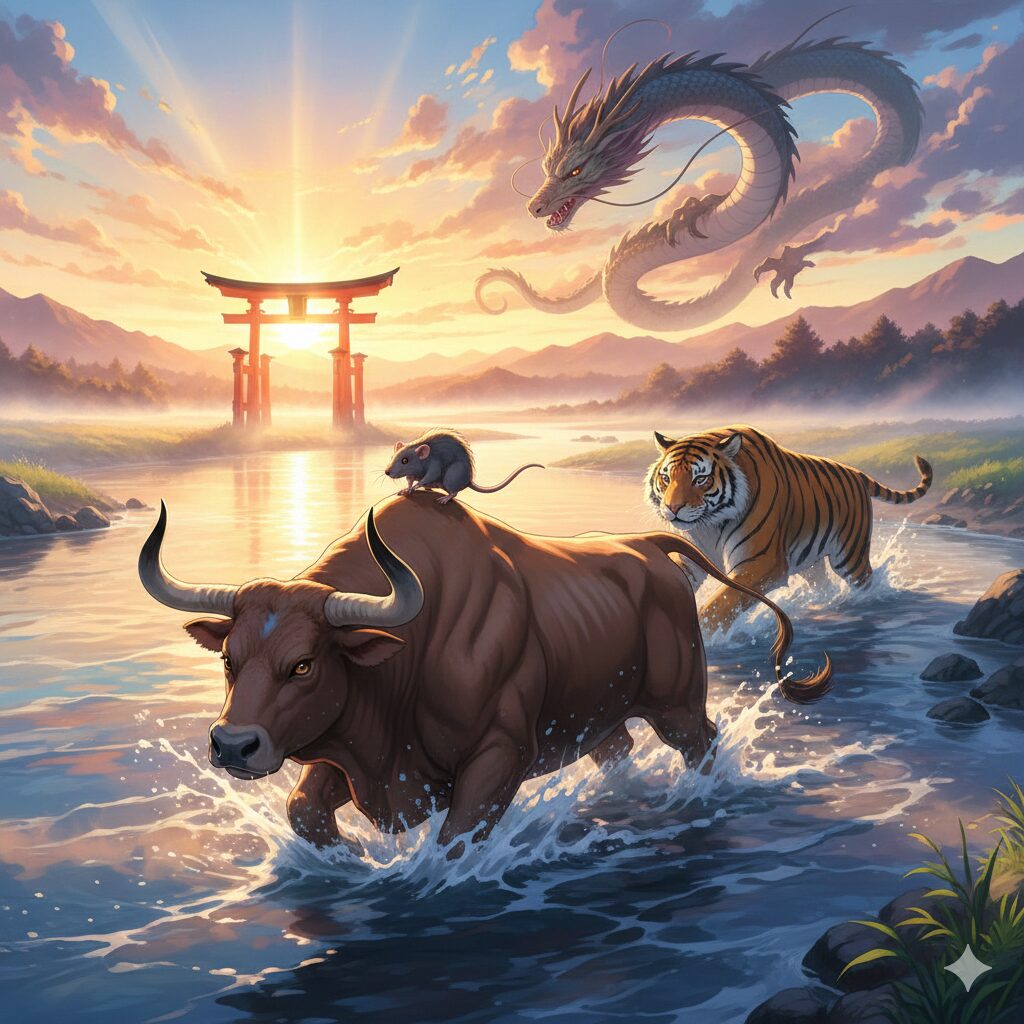
The Ox thought, “I walk slowly. If I wake up at the same time as everyone else, I will never win.” So, the Ox prepared while the stars were still twinkling in the night sky and set off earlier than anyone else. This diligence and foresight are the true essence of the Ox.
Meanwhile, the Rat was watching from the corner of the barn. “Perfect,” thought the Rat. “The Ox will clear the path for me.” The Rat quietly jumped onto the Ox’s back to hitch a ride. Whether the Ox noticed the extra weight or simply pretended not to, he continued to walk silently through the dark night road.
Chapter 2: The Dead Heat at Sunrise
As the eastern sky began to turn white, the gate of God’s palace came into view. The Ox was convinced of his victory and summoned his last bit of strength. However, just as the gate was about to open…
The Rat leaped nimbly from the Ox’s back and dashed into the gate first.
“The first arrival is the Rat!”
God’s voice echoed. The Ox sadly took second place. This determined the order of “Ne (Rat)” and “Ushi (Ox).”
Following them, the swift-footed Tiger rushed in with incredible momentum, taking third place. Next, the Rabbit, hopping across the stones, arrived fourth.
The Drama of the Dragon, Snake, Horse, and Sheep
The Dragon descended from the sky. Although the Dragon could fly and easily have been first, he had stopped along the way to make rain for people in trouble and lands suffering from drought. His arrival in fifth place highlighted his overwhelming power and kindness.
Behind him, the Horse was galloping. However, the Snake had been hiding, wrapped around the Horse’s leg. Just before the finish line, the Snake slithered out to take sixth place, startling the Horse, who finished seventh.
Out of the mist came the Sheep, the Monkey, and the Rooster. These three had worked together along the way, helping each other cross log bridges and navigate rough paths. God praised their teamwork and assigned them eighth, ninth, and tenth place, respectively.
The Final Rush and the Missing Cat
There were only two spots left. The Dog and the Boar arrived, quarreling fiercely as they ran. The Boar, true to his nature of reckless rushing, sprinted past God and had to hurry back, finishing twelfth. The Dog took eleventh place.
Thus, the Twelve Zodiac signs were decided.
But what happened to the Cat? The Cat had forgotten the date of God’s order and asked the Rat. The Rat, feeling mischievous, lied and said, “It’s the morning of January 2nd.” Believing this, the Cat slept curled up on New Year’s Day. When the Cat arrived in a hurry on the morning of the 2nd, it was already too late. Realizing he had been tricked, the Cat was furious and, to this day, is said to chase the Rat whenever he sees one.
Chapter 3: Analysis – The Meaning of “Being First”
This story holds deep meaning beyond a simple race for ranking.
- The Wisdom (or Cunning) of the Rat: The Rat compensated for his small size by leveraging the resources of another (the Ox). Whether this is seen as “unfair” or as a survival “strategy” depends on the reader’s values. In the business world, this kind of leverage is often highly rated.
- The Diligence of the Ox: The attitude of understanding one’s weakness (slowness) and starting the effort earlier than others. This symbolizes the “seriousness” and “diligence” that Japanese people consider a virtue. Although he didn’t come in first, his integrity makes him a beloved figure.
- The Virtue of the Dragon: The Dragon prioritized contribution to others (answering prayers for rain) over his own ranking. This reflects the spirit of “Noblesse Oblige.”
Chapter 4: The Zodiac in Modern Japanese Culture
This story is deeply reflected in modern Japanese culture.
1. Nengajo (New Year’s Cards)
In Japan, people send postcards depicting the year’s zodiac animal. This is not just a greeting but a ritual to pray for the recipient’s happiness by borrowing the power of that year’s animal.
2. Kanreki (60th Birthday)
The Zodiac combines with the “Ten Celestial Stems” to form a 60-year cycle. Reaching 60 years of age is called “Kanreki,” meaning returning to the zodiac of one’s birth year—symbolizing a rebirth as a baby.
3. Personality Assessment
Just as with blood types, Japanese people often discuss personality traits based on the zodiac, such as “People born in the Year of the Tiger are brave” or “Monkeys are dexterous.”
Conclusion: How Would You Run the Race?
The story of the Twelve Zodiacs is a microcosm of life. Are you the Rat type, who aims for the top by leveraging others’ power? Or are you the Ox type, who starts working harder and earlier than anyone else? Or perhaps you would choose the path of the Dragon, helping those in need even if it costs you a higher rank?
In a competitive society, “winning” and “how you win” are constant themes. After reading this ancient tale, which animal would you want to be as you pass through God’s gate?
Related Links & References
序章:時を刻む動物たちの伝説
日本の正月、年賀状、あるいは日々の占いや年齢の会話の中で、私たちは当たり前のように「今年は辰年だ」「私は丑年生まれだ」と口にします。しかし、なぜこの12種類の動物が選ばれたのか。なぜ猫はそこに含まれていないのか。その理由を語る物語は、単なる子供向けのお伽話の枠を超え、勤勉さ、知恵、そして油断といった人間社会の縮図を描き出しています。
今回は、日本文化の根底に流れる「十二支(干支)」の始まりの物語、動物たちの熾烈なレース「十二支の由来」を紐解き、そこから見えてくる日本人の精神性を探求します。
第一章:神様の御触れと大晦日の決意
はるか昔、まだ人間が暦を持たず、季節の移ろいだけを頼りに生きていた頃の話です。ある年の暮れ、神様は動物たちに向けてこのようなお触れを出しました。
「元日の朝、新年の挨拶に来なさい。一番早く来たものから順に十二番目までを、一年間ずつその年の大将(王様)にしてやろう」
この知らせは風に乗り、森を越え、すべての動物たちの耳に届きました。「自分が一番になってやる!」と意気込む動物たち。しかし、動物たちの能力は千差万別です。足の速いもの、力の強いもの、そして知恵の働くもの。
牛(ウシ)は考えました。「私は歩くのが遅い。みんなと同じ時間に起きていては到底勝てないだろう」。そこで牛は、まだ星が瞬く夜中のうちに支度を整え、誰よりも早く出発することにしました。この勤勉さと先を見越した行動力こそが、牛の真骨頂です。
一方、その様子を納屋の隅でじっと見ていたのが鼠(ネズミ)でした。「しめしめ、牛が道を作ってくれるぞ」。鼠はこっそりと牛の背中に飛び乗り、温かい背中で楽をして移動することにしたのです。牛は背中の重さに気づいたのか、それとも気づかないふりをしたのか、黙々と暗い夜道を歩き続けました。
第二章:元旦のデッドヒート
東の空が白み始め、神様の御殿の門が見えてきました。牛は一番乗りを確信し、最後の力を振り絞ります。しかし、門が開こうとしたその瞬間です。
牛の背中からちょろりと鼠が飛び降り、一目散に門の中へ駆け込みました。
「一番乗りは、鼠!」
神様の声が響き渡ります。牛は惜しくも二番となりました。これが「子(ね)」と「丑(うし)」の順番の決まり手です。
その後ろからは、足自慢の虎(トラ)が猛烈な勢いで駆け込んできました。虎は三番目。続いて、飛ぶように走ってきた兎(ウサギ)が四番目に入りました。
竜と蛇、馬と羊のドラマ
空からは竜(タツ)が舞い降りました。本来なら空を飛べる竜が一番になってもおかしくありませんが、竜は途中で困っている人々や干ばつに苦しむ大地に雨を降らせていたため、到着が遅れて五番目となりました。その圧倒的な力と優しさがにじみ出ます。
その後ろでは、馬(ウマ)が疾走していました。しかし、馬の足元には蛇(ヘビ)が巻き付いて隠れていたのです。ゴール直前で蛇がニョロリと前に出て六番目、驚いた馬が七番目となりました。
さらに霧の中からは、羊(ヒツジ)、猿(サル)、鶏(トリ)の三匹がやってきました。彼らは道中、互いに助け合い、丸木橋を渡り、険しい道を超えてきたのです。神様は彼らのチームワークを称え、到着順に八、九、十番としました。
最後の駆け込みと、来なかった猫
残る席はあと二つ。犬(イヌ)と猪(イノシシ)が激しく競り合いながらやってきました。猪は猪突猛進、勢い余って神様の前を通り過ぎてしまい、慌てて戻ってきて十二番目。犬は十一番目となりました。
こうして十二支が決定したのです。
さて、猫(ネコ)はどうしたのでしょう?実は猫は、神様のお触れの日付を忘れてしまい、鼠に尋ねていました。鼠は意地悪をして「一月二日の朝だよ」と嘘を教えたのです。猫はその言葉を信じ、元旦はこたつで丸くなって寝ていました。二日の朝に急いで行きましたが、時すでに遅し。騙されたと知った猫は激怒し、それ以来、鼠を見かけると追いかけ回すようになったと言われています。
第三章:考察と分析~「一番」の意味とは~
この物語は、単なる順位決定戦以上の深い意味を持っています。
- 鼠の知恵(あるいは狡猾さ): 鼠は自らの身体能力の低さを、他者(牛)のリソースを利用することで補いました。これを「卑怯」と見るか、生き残るための「戦略」と見るかは、読者の価値観に委ねられます。ビジネスの世界では、この鼠のようなレバレッジ(てこの原理)の思考が高く評価されることもあります。
- 牛の勤勉さ: 自分の弱点(足の遅さ)を理解し、人よりも早く努力を始める姿勢。日本人が美徳とする「真面目さ」「勤勉さ」の象徴です。結果的に一番にはなれませんでしたが、その実直さは十二支の筆頭格として長く愛されています。
- 竜の徳: 能力がありながら、他者への貢献(雨乞いへの応答)を優先して順位を落とした竜。これは「ノブレス・オブリージュ(高貴なる者の義務)」に通じる精神性を感じさせます。
第四章:現代日本文化における十二支
この物語は、現代の日本文化に色濃く反映されています。
1. 年賀状(Nengajo)
日本では新年に、その年の干支を描いた葉書を送り合います。これは単なる挨拶ではなく、その年の動物の持つ力を借りて、相手の幸福を祈る儀式でもあります。
2. 還暦(Kanreki)
十二支は「十干(じっかん)」と組み合わさり、60年で一巡します。60歳を迎えることを「還暦」と呼び、生まれた年の干支に戻る=赤ちゃんに戻って生まれ変わる、という意味でお祝いをします。
3. 性格判断
「寅年の人は勇敢だ」「申年の人は器用だ」といったように、日本人は血液型と同じくらい、干支による性格傾向を会話のネタにします。
終章:あなたならどう走る?
十二支の物語は、人生の縮図です。あなたは、他者の力を借りてでもトップを狙う鼠タイプでしょうか?それとも、誰よりも早く努力を始める牛タイプでしょうか?あるいは、困っている人を助けて順位を下げる竜のような生き方を選ぶでしょうか。
競争社会において「勝つこと」と「どう勝つか」は常に問われるテーマです。この古い物語を読み終えた今、あなたならどの動物として神様の門をくぐりたいと思いますか?
コメント