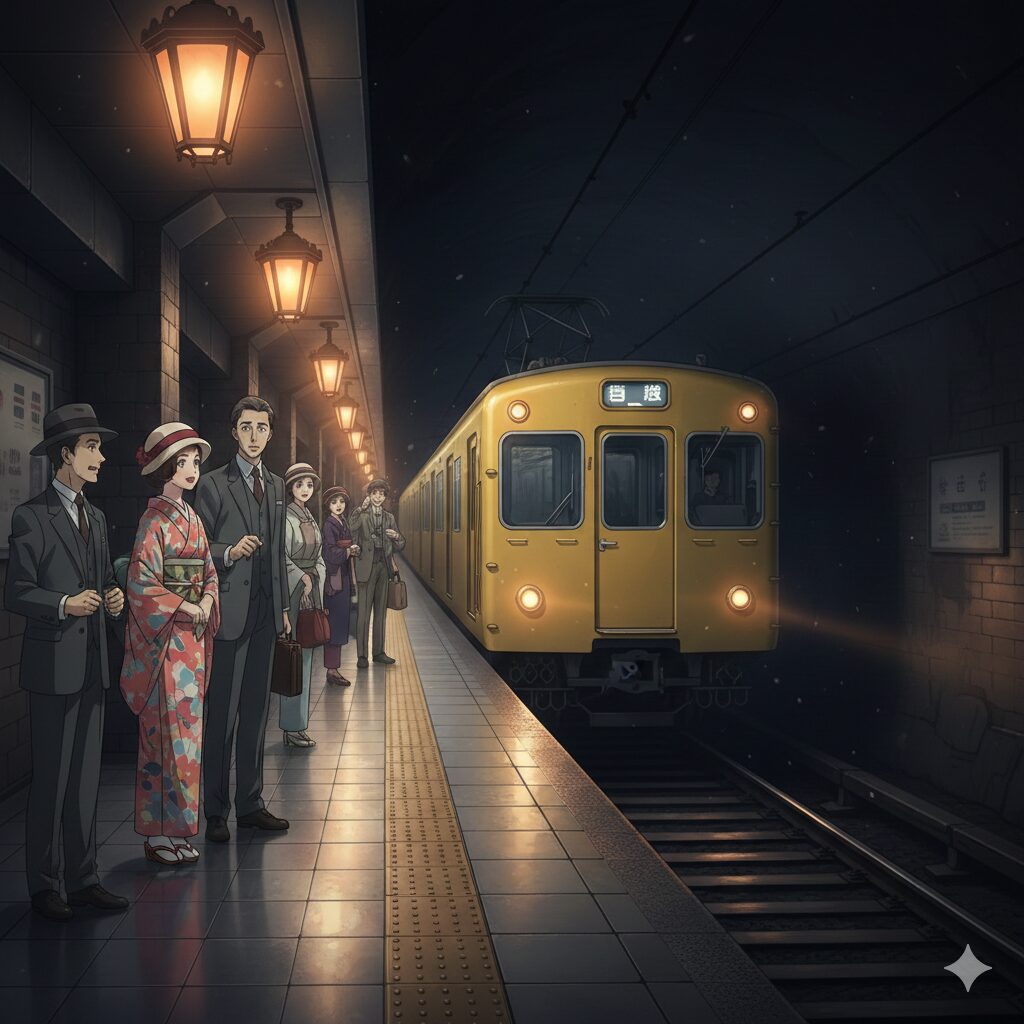
In Japan, December 30th is not just a day for New Year’s preparations. It is a monumental date in the history of Japanese transportation and Asian modernization. On this day in 1927 (Showa 2), the first subway in the Orient opened in Tokyo. Designated as “Subway Anniversary,” this day marks a singularity where Japanese cities began to evolve into their current, hyper-modern forms.

Historical Background: The Frenzy of 1927, Ueno to Asakusa
On December 30, 1927, Japan’s first subway began operations between “Ueno Station” and “Asakusa Station”—a distance of merely 2.2 kilometers. This line is now part of the modern Tokyo Metro Ginza Line. It was operated by the Tokyo Underground Railway Company.
The catchphrase at the time was ” The Only Underground Railway in the Orient.” To ride this novel vehicle, people formed long queues from early in the morning on opening day, with waiting times recorded at over an hour. The fare was 10 sen (roughly the price of a cup of coffee at the time), but crowds flocked to experience this “iron box running underground.”
Noritsugu Hayakawa: The Father of the Japanese Subway
We cannot discuss this day without mentioning Noritsugu Hayakawa. After visiting London in 1914 and being shocked by its developed underground network, he realized that Tokyo needed more than just streetcars. The surface traffic was becoming gridlocked, and urban functionality was reaching its limit.
Hayakawa challenged the prevailing belief that “Tokyo’s ground is too soft for subways.” He conducted thorough geological surveys and carried soil samples (sometimes using beans to demonstrate strata) to persuade investors. Furthermore, the Great Kanto Earthquake of 1923 served as a catalyst; underground structures suffered relatively less damage, spreading the perception that “underground is safer.”
Deciphering Japanese Culture Through the Subway
Beyond being a convenient mode of transport, the Japanese subway is a mirror reflecting the national character and social systems of Japan.
1. Punctuality and Precision
The primary reason Japan’s trains and subways are globally praised is their astonishing punctuality. Arriving and departing exactly on schedule is an “invisible contract” between the railway company and the passenger—a testament to trust. It is rare elsewhere in the world for a conductor to apologize over the intercom for a mere one-minute delay. This reflects the Japanese discipline of “not causing trouble for others” and strict adherence to promises.
2. Complexity and Order
Have you ever seen the Tokyo Subway Map? It looks like a piece of modern art, or perhaps a bowl of spaghetti. Different railway companies interconnect and cross deep underground. Yet, within this chaos exists perfect order. The station numbering systems, color-coded lines, and the etiquette of queuing perfectly on the platform symbolize the highly organized nature of Japanese society.
3. Silence and Public Manners
What surprises many visitors is the silence inside Japanese subways. People refrain from making phone calls or speaking loudly; many read, use their smartphones quietly, or sleep. This “maintenance of privacy in a shared space” is the wisdom required to coexist without stress in the overcrowded metropolis of Tokyo. The subway functions as a public space that doubles as a personal resting zone.
Impact on the Modern Era and Future
Starting from just 2.2 kilometers in 1927, the network has expanded to over 300 kilometers in Tokyo alone, boasting some of the highest passenger volumes in the world. With Wi-Fi access, multi-language support, and accessibility improvements, the evolution never stops. The “urban artery” that Hayakawa once dreamed of has now become the very heart of Japan.
A Question for You
Nearly 100 years ago, people in Japan saw hope and the future in the unknown vehicle called the subway. How does the transportation system in your country reflect its culture and history? And if you were dropped into the complex web of Tokyo’s subway, would you be able to enjoy that “labyrinth of order”?
On your next trip to Japan, skip the taxi and choose the subway. There, you will find a “Real Japan” that goes beyond the tourist spots.
References & Related Info
- Tokyo Metro Official Website – The official site to understand Tokyo’s current subway network.
- Japan Guide: Tokyo Trains & Subways – A detailed guide for travelers.
- What’s Today’s Special Day Series – Check out more special days in Japan here.
12月30日:地下鉄記念日(Chikatetsu Kinenbi)
日本の年末、12月30日は単なる新年の準備期間ではありません。日本の交通史、ひいてはアジアの近代化において記念碑的な日です。1927年(昭和2年)のこの日、東洋で初めての地下鉄が東京で開業しました。「地下鉄記念日」として制定されているこの日は、日本の都市が現在の形へと進化する「特異点」だったと言えます。
歴史的背景:1927年、上野ー浅草間の熱狂
1927年12月30日、現在の東京メトロ銀座線の一部である「上野駅」から「浅草駅」までのわずか2.2キロメートルの区間で、日本初の地下鉄が営業を開始しました。運営したのは東京地下鉄道株式会社です。
当時のキャッチコピーは「東洋唯一の地下鉄道」。この新しい乗り物に乗るために、開業初日は早朝から長蛇の列ができ、乗車待ち時間はなんと1時間以上にも及んだと記録されています。当時の運賃は10銭。コーヒー1杯と同程度の価格でしたが、多くの庶民がこの「地下を走る鉄の箱」に夢中になりました。
早川徳次:日本の地下鉄の父
この偉業を成し遂げた人物、早川徳次(Noritsugu Hayakawa)について語らずにこの日は語れません。彼は1914年にロンドンを訪れ、発達した地下鉄網に衝撃を受けました。当時の東京は路面電車が主要な交通手段でしたが、渋滞が激しく、都市機能の限界が近づいていました。
早川は「東京の地質は軟弱で地下鉄建設は不可能」という当時の常識を覆すため、徹底的な地質調査を行い、豆の入った地層標本を持ち歩いて投資家を説得しました。さらに、1923年の関東大震災において、地下構造物が比較的被害を受けなかったことも、地下鉄建設への追い風となりました。「地下の方が安全である」という認識が広まったのです。
日本の地下鉄から読み解く文化と精神性
単なる移動手段としての利便性を超え、日本の地下鉄は日本人の国民性や社会システムを映し出す鏡のような存在です。
1. 秒単位の正確さ(Punctuality)
日本の地下鉄・電車が世界で称賛される最大の理由は、その驚異的な正確さです。時刻表通りに到着し、発車することは、鉄道会社と乗客との間の「見えない契約」であり、信頼の証です。1分の遅れで車内アナウンスによる謝罪が行われる国は、世界でも稀でしょう。これは日本人の「他者に迷惑をかけない」「約束を守る」という規律正しさの表れです。
2. 複雑さと秩序(Complexity and Order)
現在の東京の地下鉄路線図(Tokyo Subway Map)を見たことがありますか?それはまるで現代アートのようであり、スパゲッティのようでもあります。異なる鉄道会社が相互に乗り入れ、地下深くで複雑に交差しています。しかし、その混沌の中には完璧な秩序が存在します。駅のナンバリングシステム、色分けされたライン、整列乗車のマナー。複雑なシステムを運用し、それを使いこなす乗客の姿は、日本社会の高度な組織力を象徴しています。
3. 静寂と公共のマナー(Silence and Manners)
日本の地下鉄に乗って驚くのは「静けさ」です。通話は控え、大声で話さず、多くの人が読書やスマートフォンを見たり、あるいは眠ったりしています。この「共有空間におけるプライバシーの維持」は、過密な都市東京でストレスなく共存するための知恵と言えるでしょう。地下鉄は、公共の場でありながら、個人の休息の場としても機能しているのです。
現代への影響と未来
1927年にたった2.2キロから始まった地下鉄は、現在、東京だけで総延長300キロを超え、世界最大級の輸送人員を誇ります。Wi-Fiの整備、多言語対応、バリアフリー化など、進化は止まりません。かつて早川徳次が夢見た「都市の動脈」は、今や日本の心臓部そのものとなっています。
あなたへの問いかけ
100年近く前、日本の人々は未知の乗り物である地下鉄に希望と未来を見ました。あなたの国の交通システムは、その国のどんな文化や歴史を反映していますか?そして、もしあなたが東京の複雑な地下鉄網の中に放り出されたら、その「秩序ある迷宮」を楽しむことができるでしょうか?
ぜひ、次回の日本旅行では、タクシーではなく地下鉄を選んでみてください。そこには、観光地以上の「リアルな日本」が走っています。
参考リンク・関連情報
- Tokyo Metro Official Website (English) – 現在の東京の地下鉄網を知るための公式サイト。
- Japan Guide: Tokyo Trains & Subways – 旅行者向けの詳細な利用ガイド。
- What’s Today’s Special Day Series – その他の日本の記念日についてはこちら。


コメント