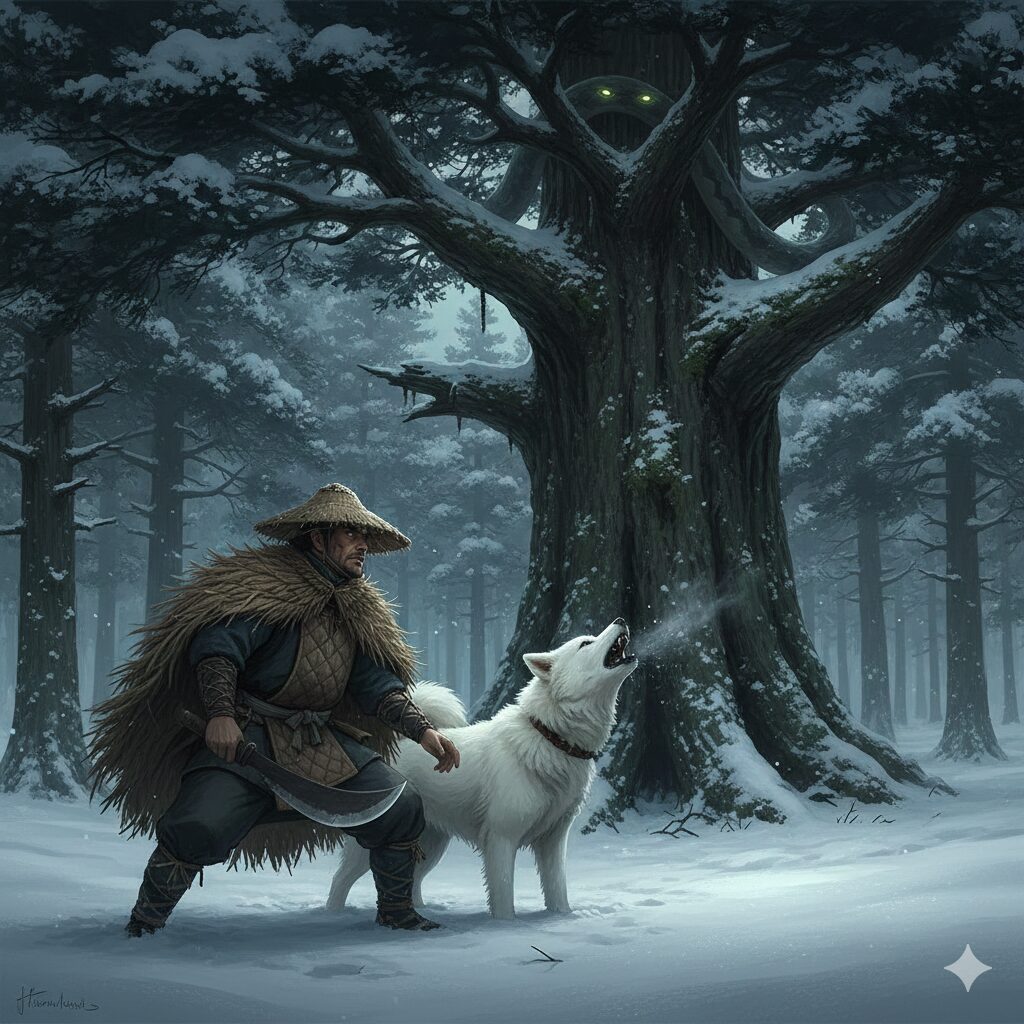
Deep within the ancient forests of Japan lie legends that are as beautiful as they are cruel. Today, I am sharing the story of a hunter and his beloved dog, “Taro-maru.” This is not just a story about an animal. It is a soul-shaking tragedy depicting absolute trust, fatal misunderstanding, and eternal regret.

1. The Story: The Last Moments of Tarot-maru
Long ago, in a snow-covered village in northern Japan, lived a skilled “Matagi” (traditional hunter) named Gonzo. He had a dog that never left his side. The dog’s name was “Taro-maru.”
Taro-maru was a white dog, fearless and sharp as a wolf. His intelligence rivaled that of humans; he could understand Gonzo’s intentions with just a glance. The villagers whispered, “Taro-maru might be a messenger of the Mountain God.” For Gonzo, Taro-maru was not merely a hunting dog but his only family and a part of his soul.
One late autumn evening, preparing for winter, Gonzo ventured deeper into the rugged mountains than usual. He headed towards a place called the “Swamp of the Giant Serpent,” an eerie area feared and avoided by villagers. Legends said a giant serpent that had lived for a hundred years lurked there as the master of the swamp.
Hiding in the shadow of a great tree by the swamp, Gonzo waited patiently for a deer to appear. The wind died down, and the forest fell into a deathly silence.
“Grrr… Woof! Woof! Woof!”
Suddenly, Taro-maru, who had been lying quietly at his feet, sprang up and began barking madly. His gaze was not fixed on the animal trail where the prey was expected, but somewhere above Gonzo’s head.
“Taro-maru, be quiet! You’ll scare the deer away!”
Gonzo scolded him in a whisper. But Taro-maru did not stop. Unlike his usual calm self, he bared his fangs and barked with a desperate, sorrowful voice. It sounded as if he was frantically trying to communicate something.
“Woof! Woof! Woof!!”
Frustrated by the ruined hunt and the shattered silence, Gonzo lost his composure. “You foolish dog! Can you not obey your master?”
Driven by a sudden fit of rage, Gonzo drew the machete from his waist and, in a moment of madness, cut off the head of his beloved Taro-maru with a single strike.
Fresh blood sprayed the air. But the story does not end here.
The severed head of Taro-maru did not fall to the ground. Instead, it flew high into the air, right above Gonzo’s head. It then clamped its jaws onto a branch of the giant tree directly behind Gonzo.
“Gyaaaaaah!”
A terrifying scream and a ground-shaking thud followed. When Gonzo turned around, he saw a giant serpent, as thick as a log, which had been poised to swallow him whole. Taro-maru’s severed head had bitten deeply into the serpent’s throat.
Taro-maru had realized the danger of the serpent about to ambush Gonzo and had been barking desperately to warn him. Even after losing his head, his will to protect his master remained, and he took the monster down with him.
The serpent writhed in agony with Taro-maru’s head still clamped to its throat, until finally, it stopped moving. Silence returned to the forest, leaving only the lifeless body of the faithful dog and the master who had committed a foolish, irreversible sin.
Gonzo collapsed in tears. “Forgive me, Taro-maru, forgive me…” His wails echoed through the mountains. It is said that Gonzo gave up being a hunter, became a monk, and spent the rest of his life praying for Taro-maru’s soul.
2. Analysis: Invisible Truths and Regret
This story goes beyond a simple tale of a faithful dog. It illustrates the limitations of human perception and the tragic breakdown of communication.
- Human Arrogance: Gonzo only trusted what he could see (the trail for the deer) and failed to notice the threat Taro-maru sensed (the serpent above). Humans often dismiss behaviors they don’t understand as “meaningless” or “rebellious.”
- Loyalty Beyond Death: The ending, where the dog saves his master even after decapitation, is supernatural. However, it represents the ultimate form of “On” (obligation) and selfless devotion found in Japanese spirituality.
3. Cultural Context: Matagi and Dogs
The background of this story lies in the unique Japanese hunting culture of the “Matagi.” For Matagi, dogs were not tools but equal partners essential for survival in the harsh nature.
Furthermore, in Japanese culture, animals are often depicted as messengers of gods. Taro-maru’s action can be interpreted as having the power to expel evil (the serpent). This story belongs to the same lineage of deep inter-species love seen in the modern story of Hachiko.
4. To Our Readers
If you were in Gonzo’s shoes, could you have trusted your dog’s erratic behavior? Do we, in our daily lives, dismiss the unspoken SOS of our loved ones as merely “annoying”?
The story of Taro-maru questions the difficulty and preciousness of “trust.” The next time you witness someone acting inexplicably, please remember the story of this white dog.
References & Related Links
【日本昔話】忠犬たろ丸の悲劇:なぜ彼は主人に殺されたのか?言葉なき絆と後悔の物語
日本の深い森の奥には、美しくも残酷な伝説が数多く眠っています。今日ご紹介するのは、一人の猟師とその愛犬「たろ丸」の物語です。これは単なる動物の話ではありません。信頼、誤解、そして永遠の後悔を描いた、魂を揺さぶる悲劇です。
1. 昔話:忠犬たろ丸の最期
昔々、日本の北国にある雪深い村に、権三(ごんぞう)という腕利きのマタギ(伝統的な狩人)が住んでいました。彼には片時も離れず行動を共にする一匹の犬がいました。名を「たろ丸」と言います。
たろ丸は真っ白な毛並みを持つ、狼のように精悍な犬でした。彼の賢さは人間顔負けで、権三が目配せをするだけでその意図を汲み取り、獲物を追い込むことができました。村人たちは「たろ丸は山の神様の使いかもしれない」と噂するほどでした。権三にとって、たろ丸は単なる猟犬ではなく、唯一無二の家族であり、魂の片割れのような存在だったのです。
ある秋の暮れのことです。権三は冬支度のため、いつもより深く、険しい山奥へと足を踏み入れました。そこは「大蛇の沼」と呼ばれる、村人が恐れて近づかない不気味な場所でした。古い言い伝えでは、百年生きた大蛇が主(ぬし)として潜んでいると言われていました。
沼のほとりの大木の陰に身を潜め、権三は鹿が現れるのをじっと待っていました。風が止み、森が死んだように静まり返ったその時です。
「ウーッ……ワン!ワン!ワン!」
それまで足元で静かに伏せていたたろ丸が、突然立ち上がり、狂ったように吠え始めたのです。その視線は、獲物が現れるはずの獣道ではなく、権三の頭上あたりに向けられていました。
「たろ丸、静かにしろ!鹿が逃げてしまうではないか!」
権三は小声で叱りつけました。しかし、たろ丸は止まりません。普段の冷静なたろ丸とはまるで別犬のように、牙を剥き出しにし、悲痛な声で吠え続けます。その声は、まるで何かを必死に訴えているようでした。
「ワン!ワン!ワン!!」
狩りの邪魔をされた苛立ちと、静寂を破られた焦りが、権三の冷静さを奪っていきました。「この馬鹿犬が!主人の命令が聞けぬのか!」
激情に駆られた権三は、腰に差していたナタを抜き放ち、あろうことか、愛するたろ丸の首を一太刀で切り落としてしまったのです。
鮮血が舞いました。しかし、物語はここで終わりません。
宙を舞ったたろ丸の生首は、地面に落ちることなく、そのまま権三の頭上高くへと飛び上がったのです。そして、権三の真後ろにある大木の枝に噛み付きました。
「ギャアアアア!」
凄まじい悲鳴と地響きが轟きました。権三が振り返ると、そこには丸太のように太い大蛇が、鎌首をもたげて今まさに権三を丸呑みにしようとしていたのです。たろ丸の首は、その大蛇の喉笛に深く牙を突き立てていました。
たろ丸は、権三を襲おうとしていた大蛇に気づき、必死に危険を知らせようとしていたのです。そして首だけになってもなお、主人を守るために大蛇を道連れにしたのでした。
大蛇はたろ丸の首に噛みつかれたまま悶え苦しみ、やがて動かなくなりました。森に再び静寂が戻りましたが、そこには変わり果てた愛犬の姿と、愚かな過ちを犯した主人だけが残されました。
権三はその場に泣き崩れました。「許してくれ、たろ丸、許してくれ……」彼の慟哭は、こだまとなって山々に響き渡りました。その後、権三はマタギを辞めて僧侶となり、生涯をかけてたろ丸の供養を続けたと伝えられています。
2. 考察:見えざる真実と後悔
この物語は、単なる「忠犬の美談」にとどまらず、人間の知覚の限界と、コミュニケーションの断絶を描いています。
- 人間の傲慢さ: 権三は自分の目に見える範囲(鹿が来る獣道)だけを信じ、たろ丸が感知していた脅威(頭上の大蛇)に気づけませんでした。人はしばしば、自分の理解の及ばない他者の行動を「無意味」や「反抗」と決めつけてしまいます。
- 命を賭した忠誠: 首を切り落とされてもなお主人を守るという結末は、超自然的ですが、日本の精神性にある「恩」や「滅私奉公」の究極系を示しています。
3. 日本文化への視点:マタギと犬
この物語の背景には、日本の独特な狩猟文化「マタギ」があります。マタギにとって犬は道具ではなく、厳しい自然の中で生き残るための対等なパートナーでした。
また、日本文化において動物はしばしば神の使いとして描かれます。たろ丸の行動は、神道的な視点で見れば、邪悪なもの(大蛇)を祓う破魔の力を持っていたとも解釈できます。この物語は、現代の「忠犬ハチ公」にも通じる、種を超えた深い愛の系譜に連なるものです。
4. 読者の皆様へ
もしあなたが権三の立場だったら、愛犬の異常な行動を信じることができたでしょうか? 私たちは日常の中で、大切な人の言葉にならないSOSを、「迷惑だ」と切り捨ててはいないでしょうか。
たろ丸の物語は、私たちに「信じること」の難しさと尊さを問いかけています。次にあなたが、誰かの不可解な行動を目にした時、この白い犬の話を思い出してみてください。
コメント