December 24th is known worldwide as Christmas Eve. While lovers head out to the city and families gather around roast chicken, few realize that this festive date marks a pivotal commemorative day in the history of Japanese education.
It is “School Lunch Commemorative Day” (Gakkou Kyushoku Kinenbi).
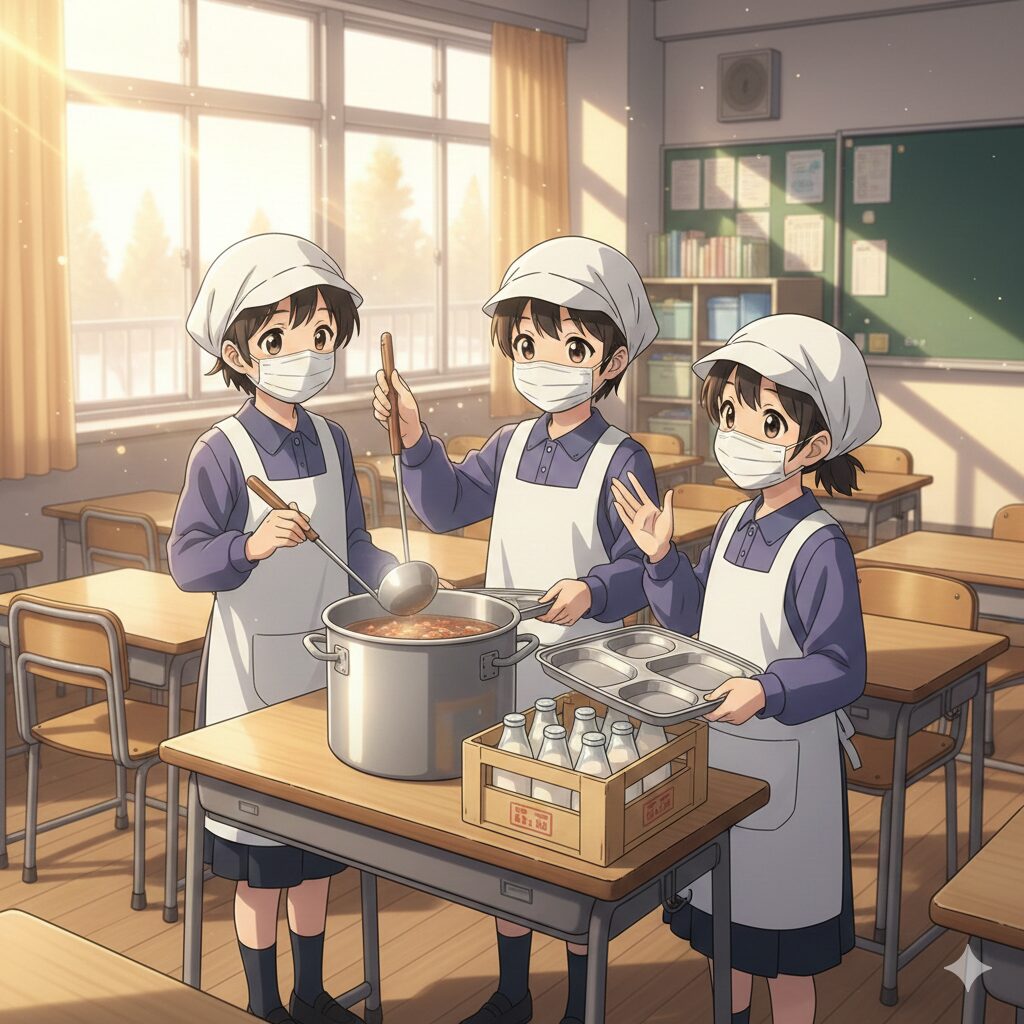
When Japanese people hear the word “Kyushoku” (school lunch), images of students in white aprons serving food, heavy crates of milk, and the unison chant of “Itadakimasu” (I humbly receive) in the classroom come to mind. In reality, the very first meal provided to save the lives and future of children in post-war devastated Japan was served on December 24, 1946.
Why did this day become a memorial day, and how did it evolve into Japan’s current culture of “Shokuiku” (Food Education)? We will unravel the depths of Japan’s unique school lunch system, which is far more than just food distribution.

1. Breaking Away from Starvation: The Truth of December 24, 1946
Post-War Food Shortages and LARA’s Aid
Immediately after World War II, Japan faced severe food shortages. Urban areas were burnt to the ground, logistics were stalled, and many children suffered from malnutrition. The physique of children attending National Schools (now elementary schools) at the time deteriorated significantly, raising alarms about the health crisis of the generation entrusted with the future.
The organization that saved this critical situation was “LARA” (Licensed Agencies for Relief in Asia), an American private relief organization. Receiving aid supplies such as skim milk and canned goods from LARA, the Ministry of Education, the Ministry of Health and Welfare, and the Ministry of Agriculture and Forestry collaborated to decide on the implementation of school lunches for children.
The Experimental Lunch on Christmas Eve
On December 24, 1946, experimental school lunches began in schools in Tokyo, Kanagawa, and Chiba prefectures. The menu on this day was simple by today’s standards, but for the children of that time, it was a feast.
Sample Menu from that time: Milk (skim milk), Tomato Stew
This marked the dawn of post-war school lunches. Later, this day was designated as “School Lunch Appreciation Day.” However, since Japanese schools typically enter winter break starting December 24th, actual events or “National School Lunch Week” usually take place one month later, from January 24th to 30th. Nevertheless, the historical origin undoubtedly lies on this Christmas Eve.
2. Eating from the “Same Pot”: The Educational System of Kyushoku
The biggest reason Japan’s school lunch system garners attention from abroad is that it is positioned not merely as “time for nutritional replenishment” but as “Time for Education (Shokuiku).”
The “Kyushoku Toban” System: A Primal Experience of Responsibility and Service
In Japanese elementary schools, the cafeteria style (where students choose what they like in a dining hall) is rare. Instead, the standard style is for everyone to eat the same meal in their classroom. Furthermore, the serving is done not by cafeteria staff, but by the students themselves.
This system, called “Kyushoku Toban” (Lunch Duty), assigns roles to students on a weekly rotation. Wearing white coats, hats, and masks, students carry heavy tableware and containers filled with food to the classroom and serve portions equally to all classmates. This condenses several Japanese values:
- Spirit of Equality: Regardless of wealth, everyone shares the same quality meal.
- Role and Responsibility: If one does not fulfill their duty (serving), the class cannot begin eating.
- Hygiene Awareness: Acquiring basic knowledge of handling food with clean attire.
- Gratitude: Greetings of “Itadakimasu” (before eating) and “Gochisosama” (after eating) to thank those who prepared and transported the food.
Menu Evolution and Nostalgia
Kyushoku is an essential topic when discussing generational theory in Japan. Japanese people in their 50s and older feel nostalgia for “Deep-fried Whale Meat” and the unique taste of “Skim Milk,” while those in their 40s and younger look back fondly on “Soft Noodles” and “Age-pan” (fried bread).
Modern school lunches have evolved even further, incorporating “Chisan Chisho” (local production for local consumption), international cuisines, and event-specific meals, offering a rich variety. The calorie and nutritional balance meticulously calculated by nutritionists make it one of the world’s leading healthy lunch models.
3. What is Lunchtime Like in Your Country?
On December 24th, while many in Japan enjoy Christmas cakes and chicken, in a corner of history exists the memory of warm stew that staved off hunger and sustained children’s lives.
Japan’s school lunch is not just about filling stomachs. It is a “living textbook” for learning cooperation, understanding gratitude for food, and building a healthy body. If you ever have the chance to visit a Japanese school, please take a look inside a classroom during lunch break. You will surely see little “Kyushoku Toban” serving soup with serious expressions.
I would like to ask you a question.
How is lunchtime spent in schools in your country? Is it a style where everyone eats the same meal in the classroom like in Japan, or is it a cafeteria style where you choose freely? And what kind of “education” do you feel is embedded there?
Food is culture itself. From the small window of school lunchtime, we might be able to see the society and values of that country.
Related Links & References
クリスマスイブの知られざる顔:日本の「学校給食」が始まった日
12月24日といえば、世界中がクリスマスイブで賑わう日です。恋人たちが街へ繰り出し、家族がチキンを囲むこの華やかな日の裏で、日本の教育史において極めて重要な記念日が制定されていることをご存知でしょうか。
それが「学校給食記念日」です。
多くの日本人が「給食」と聞いて思い浮かべるのは、割烹着を着た給食当番、重たい牛乳のケース、そして教室で一斉に手を合わせて言う「いただきます」の声でしょう。実は、戦後の荒廃した日本において、子どもたちの命と未来を繋いだ最初の一食が提供されたのが、1946年(昭和21年)の12月24日でした。
なぜこの日が記念日となり、現在の日本の「食育」文化へと昇華されたのか。単なる食事の配給ではない、日本独自の給食システムの深層を紐解いていきます。
① 飢餓からの脱却:1946年12月24日の真実
戦後の食糧難とLARAの支援
第二次世界大戦直後の日本は、深刻な食糧不足に陥っていました。都市部は焼け野原となり、物流は滞り、多くの子どもたちが栄養失調に苦しんでいました。当時の国民学校(現在の小学校)に通う児童の体格は著しく低下し、未来を担う世代の健康危機が叫ばれていました。
この危機的状況を救ったのが、アメリカの民間救援団体「LARA(Licensed Agencies for Relief in Asia:アジア救援公認団体)」です。LARAからの脱脂粉乳や缶詰などの支援物資を受け、文部省(現・文部科学省)、厚生省(現・厚生労働省)、農林省(現・農林水産省)が連携し、児童への給食実施を決定しました。
クリスマスイブの試験給食
1946年12月24日、東京、神奈川、千葉の3都県の学校で、試験的な給食が開始されました。この日のメニューは、今の私たちから見れば質素なものでしたが、当時の子どもたちにとってはご馳走でした。
当時の献立例: ミルク(脱脂粉乳)、トマトシチュー
これこそが、戦後学校給食の幕開けです。その後、この日を記念して「学校給食感謝の日」と定められました。ただし、現在日本の学校は12月24日より冬休みに入ることが多いため、実際に給食に関する行事や「全国学校給食週間」が行われるのは、1ヶ月後の1月24日から30日の間となっています。しかし、歴史的な起点は間違いなくこのクリスマスイブにあるのです。
② 「同じ釜の飯」が育む日本精神:給食という教育システム
日本の学校給食が海外から注目される最大の理由は、それが単なる「栄養補給の時間」ではなく、「教育の時間(食育)」として位置づけられている点にあります。
給食当番制度:責任と奉仕の原体験
日本の小学校では、カフェテリア方式(生徒が食堂で好きなものを選ぶ形式)ではなく、教室で全員が同じものを食べる方式が一般的です。そして、配膳を行うのは調理員ではなく、生徒自身です。
「給食当番」と呼ばれるこのシステムは、週替わりで生徒に役割を割り当てます。白衣、帽子、マスクを着用し、重い食器やおかずの入った食缶を教室まで運び、クラスメイト全員分を均等に盛り付けます。ここには、以下の日本的な価値観が凝縮されています。
- 平等の精神: 貧富の差に関係なく、全員が同じ質の食事を共にする。
- 役割と責任: 自分の仕事(配膳)を果たさないと、皆が食事を始められない。
- 衛生観念: 清潔な服装で食品を扱う基礎知識の習得。
- 感謝の心: 作ってくれた人、運んでくれた人への感謝を込めた「いただきます」「ごちそうさま」の挨拶。
メニューの変遷とノスタルジー
給食は、日本の世代論を語る上で欠かせないトピックです。50代以上の日本人は「鯨の竜田揚げ」や独特の風味があった「脱脂粉乳」を懐かしみ、40代以下は「ソフト麺」や「揚げパン」に郷愁を感じます。
現代の給食はさらに進化しており、地産地消(地元で採れた食材を地元で消費する)を取り入れたメニューや、世界の料理、行事食など、非常にバラエティ豊かになっています。栄養士が綿密に計算したカロリーと栄養バランスは、世界でもトップクラスの健康的なランチモデルと言えるでしょう。
③ あなたの国のランチタイムはどんな時間ですか?
12月24日、日本では多くの人がクリスマスケーキやチキンを楽しむ一方で、歴史の片隅には、飢えを凌ぎ、子どもたちの命を繋いだ温かいシチューの記憶が存在します。
日本の学校給食は、ただお腹を満たすだけのものではありません。それは、協調性を学び、食への感謝を知り、健康な体を作るための「生きた教科書」です。もしあなたが日本の学校を訪れる機会があれば、ぜひ昼休みの教室を覗いてみてください。そこには、小さな給食当番たちが真剣な眼差しでスープをよそう姿があるはずです。
ここであなたに問いかけたいと思います。
あなたの国の学校では、ランチタイムはどのように過ごしますか? 日本のように全員で同じものを教室で食べるスタイルでしょうか、それともカフェテリアで自由に選ぶスタイルでしょうか? そして、そこにはどのような「教育」が含まれていると感じますか?
食は文化そのものです。学校のランチタイムという小さな窓から、その国の社会や価値観が見えてくるのかもしれません。

コメント