Category: Japanese Folktale Series

- 📖 The Story of “Neko Danka” (猫檀家) – A Tale of Gratitude and Mystery
- 🤔 Deconstructing the Folktale: The Philosophy Behind “Neko Danka”
- 🌸 Reading “Neko Danka” Through the Lens of Japanese Culture
- ❓ A Question to Our Readers
- 🔗 External Links & Internal Category
- 📖 The Story of “Neko Danka” (猫檀家) – A Tale of Gratitude and Mystery
- 🤔 Deconstructing the Folktale: The Philosophy Behind “Neko Danka”
- 🌸 Reading “Neko Danka” Through the Lens of Japanese Culture
- ❓ A Question to Our Readers
- 🔗 External Links & Internal Category
📖 The Story of “Neko Danka” (猫檀家) – A Tale of Gratitude and Mystery
Once upon a time, in a quiet mountain village, there was a poor temple. The chief priest was a kind-hearted man who devoted himself to his ascetic practice while living a simple life. However, the temple’s finances were dire, the number of parishioners was sparse, and the priest was deeply worried about the increasingly dilapidated temple buildings.
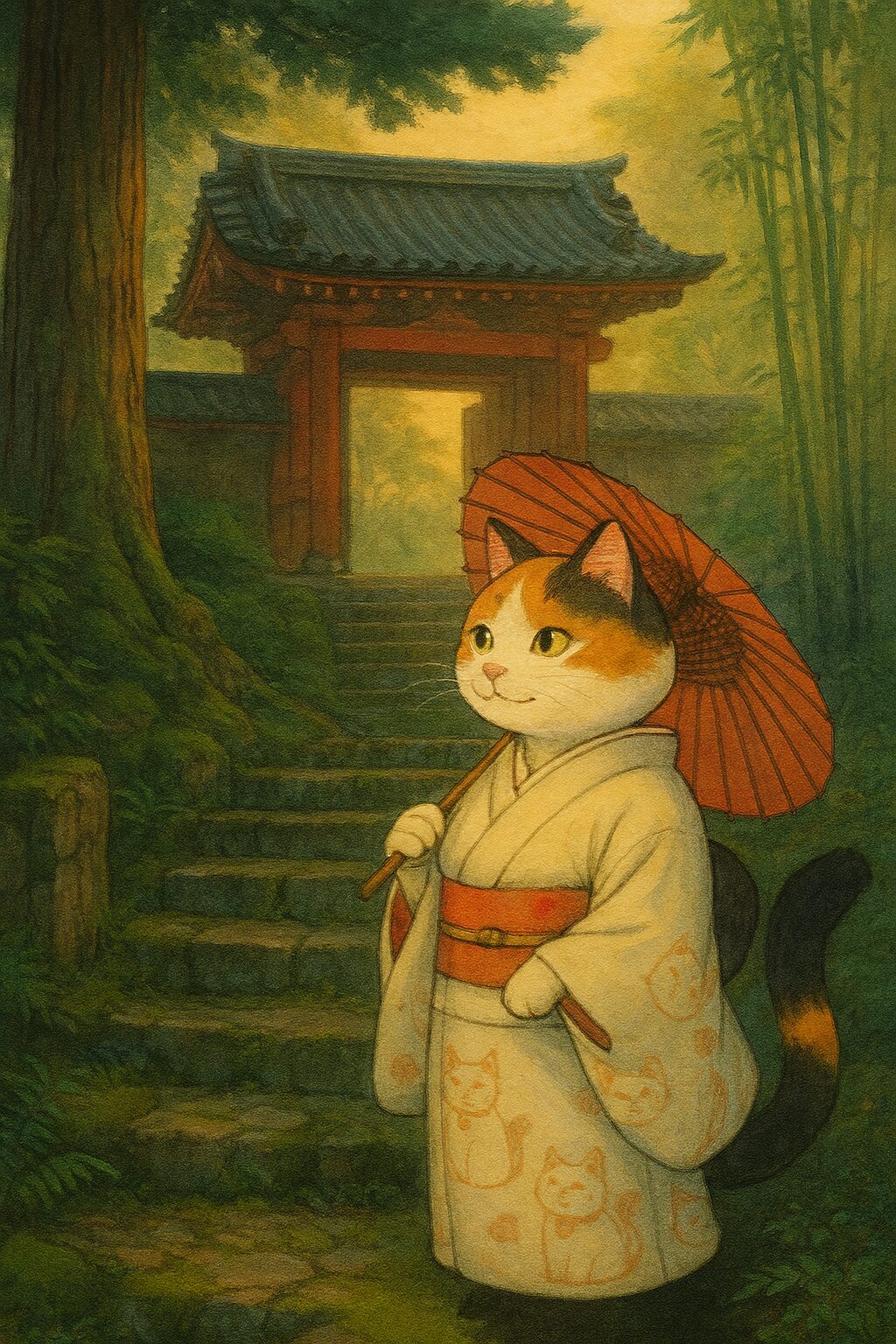
One day, a large **calico cat** was sitting slumped in front of the temple gate. The cat was emaciated and clearly weak. The priest took pity on the cat, shared his meager meal with it, and nursed it carefully. The cat quickly recovered its health and took up residence at the temple. The priest named the cat “Mike” and cherished it like family.
Some time after Mike came to the temple, a seemingly wealthy woman visited. She was a great cat lover, and upon seeing Mike, she was immediately captivated by its lovely appearance.
“Chief Priest, would you sell me this cat? I will raise it with great care in my mansion.”
The woman made the offer, but the priest refused, stating he could not exchange Mike for money. The woman then changed her mind:
“In that case, as long as this cat is at this temple, allow me to become a **Danka (Parishioner)** of this temple and support it.”
Though surprised by the unexpected turn of events, the priest accepted her offer. True to her word, the woman made large donations, and the dilapidated temple was splendidly repaired, gaining magnificent temple buildings. The number of parishioners gradually increased, and the temple regained its former vibrancy. People rumored that the temple flourished thanks to Mike, and they came to revere Mike as a **”Maneki-neko” (Beckoning Cat)**.
—
Time passed, and Mike died of old age. The priest grieved deeply and gave Mike a dignified funeral, just like a human, burying it within the temple grounds for all the service it had rendered.
However, after the funeral, the wealthy woman who had supported the temple suddenly stopped visiting.
The priest, puzzled, visited her mansion. When he inquired with the servants of the house, a surprising fact came to light:
“Our mistress had been suffering from a serious illness for some time, and she passed away a few days ago.”
The priest felt a strong **karmic connection** that the woman had passed away around the same time as Mike.
And then, an even more astonishing thing happened. As the servant was tidying up the kimono the woman wore just before her death, in preparation for setting up her grave, a **large amount of Mike’s fur was discovered** in the lining of the garment.
From this event, people became convinced that the true identity of the wealthy woman was **Mike itself**, transformed to repay the priest’s kindness. Mike had transformed into the wealthy woman to become a parishioner and revive the temple out of gratitude to the priest, and after its role was finished, it peacefully passed away in the guise of the woman.
To repay Mike’s benevolence, the temple continued to protect Mike’s grave and enshrine its spirit. The words **”Neko Danka” (Cat Parishioner)** were inscribed on Mike’s tombstone, and this story has been passed down through generations.
🤔 Deconstructing the Folktale: The Philosophy Behind “Neko Danka”
The story of “Neko Danka” is not one to be dismissed as merely a cat’s tale of gratitude. Deep within this narrative lies an **animistic** philosophy deeply intertwined with Japanese religious views, particularly **Buddhism** and **Shinto**.
1. Repaying Kindness and Giri-Ninjo (Obligation and Human Feeling)
In Japanese folktales, “repaying kindness (Ongaeshi)” is a critically important theme. The plot structure, where the rescued party offers a form of recompense, such as in *Tsuru no Ongaeshi* (The Crane’s Return of a Favor) or *Shita-kiri Suzume* (The Tongue-Cut Sparrow), reflects the ethical view that Japanese people have long cherished: **”Ninjō wa Hito no Tame Narazu” (Kindness is not just for others; it will eventually return to you as a good reward)**.
In “Neko Danka,” the priest’s impartial compassion returns as the greatest benefit: the temple’s revival. This presents a universal value: that actions driven by **”sincerity”**—not just superficial profit—bring true prosperity.
2. Animal Transformation and Spirituality
Animal transformations in folktales, particularly of animals like foxes (*kitsune*), raccoons (*tanuki*), and cats (*neko*), are often depicted as beings with **strong spiritual power**. These creatures transcend the boundaries between the mundane world and the spirit world, transforming into human forms to bring happiness or, sometimes, misfortune to humans.
In this story, the cat transforms into a wealthy woman and becomes the temple’s savior. This suggests that the cat is not merely a pet but an extra-human **guardian** within the temple’s **sacred space**. The description of the woman disappearing simultaneously with the cat’s death conclusively supports that the two were spiritually one, or that the woman was merely the cat’s **”temporary form.”**
3. The Temple and the Danka System
At the core of the story is the **”Danka System” (Parishioner System)**, a unique economic and social foundation of Japanese Buddhism. A Danka is a family lineage affiliated with a specific temple, supporting its finances. The survival of Japanese temples since the Edo period would have been impossible without this system.
The setting of a cat becoming a “Danka” is novel and humorous. Mike’s act of restoring the temple’s finances questions the **true nature of the relationship between a temple and its adherents** beyond material wealth. It conveys the message that genuine faith and support are honorable, regardless of one’s physical form.
🌸 Reading “Neko Danka” Through the Lens of Japanese Culture
The elements discernible in this folktale are deeply rooted in modern Japanese culture.
Cultural Relevance 1: The Origin and Spirit of the “Maneki-neko”
This folktale is also very famous as one of the many origin stories for the **”Maneki-neko” (Beckoning Cat)**, a widely recognized Japanese symbol of good fortune. It reveals that the Maneki-neko is not just a doll but a being embodying the spirit of **”repaying kindness”** and **”good fortune.”** Its raised paw, beckoning people, is a symbol of the **animal’s compassionate heart** that seeks to draw in good luck and assist people on their behalf, much like the Cat Parishioner.
Cultural Relevance 2: **Yaoyorozu no Kami** (Eight Million Gods) and Animism
Japan adheres to the concept of **”Yaoyorozu no Kami” (Eight Million Gods)**, which believes that deities or spirits reside in everything, from mountains and rivers to trees and animals. This is linked to the **Shinbutsu-shūgō** (syncretism of Shinto and Buddhism) philosophy, providing the foundation for tales where animals possess human-like emotions and repay kindness.
Mike in “Neko Danka” is depicted not just as a benefactor but as a presence close to the temple’s **guardian deity**. This strongly reflects the **Japanese perspective on nature**, which reveres animals and nature and shows gratitude for their blessings.
Cultural Relevance 3: The Boundary Between “Beast” and “Human”
In Western culture, humans and animals are clearly distinct, with the prevailing view often being that humans dominate the world. However, in Japanese folktales, animals transform into humans or form deep connections with them, making the **boundary between the two very ambiguous**.
Mike’s act of posing as a wealthy woman demonstrates the Japanese philosophy of coexistence: **”Even if appearances differ, hearts can connect.”** This is a value relevant to modern society, which promotes recognizing diversity and respecting different beings.
❓ A Question to Our Readers
What did you feel after reading the story of “Neko Danka”?
The chief priest’s pure kindness saved the temple in an unexpected way. If you were in the priest’s position, would you have been able to treat a single, skinny stray cat that wandered into your poor temple with such impartial kindness?
Furthermore, do you find the ending—where Mike transforms into a wealthy woman to repay her kindness—to be **”surprising”** or **”satisfying”**?
If you possessed a special power like Mike, to whom, and in what way, would you like to repay a kindness?
We welcome your thoughts and opinions!
🔗 External Links & Internal Category
External Reference Links
- **About Japanese Buddhism and the Role of Temples:**
Internal Category Link
- Japanese Folktale Series
🇯🇵 Japan’s Timeless Tales: The Intriguing Story of “Neko Danka” (The Cat Parishioner) and Japanese Culture
カテゴリー: Japanese Folktale Series
📖 The Story of “Neko Danka” (猫檀家) – A Tale of Gratitude and Mystery
かつて、とある静かな山里に、貧しい寺がありました。住職は、質素な生活を送りながらも、修行に励む心優しい人物でした。しかし、お寺の財政は厳しく、檀家もまばらで、荒れ果てていく堂宇を前に、住職は深く憂いていました。
そんなある日、寺の門前に一匹の大きな**三毛猫**が座り込んでいました。猫は痩せ細り、見るからに弱っています。住職は猫を不憫に思い、自分のわずかな食事を分け与え、丁寧に手当てをしました。猫はすぐに元気を取り戻し、寺に居着くようになりました。住職は猫を「ミケ」と名付け、家族のように可愛がりました。
ミケが寺に来てしばらく経った頃、寺に一人の裕福そうな女性が訪れました。彼女は大変な猫好きで、ミケの姿を見るやいなや、その愛らしい様子に心を奪われました。
「住職様、この猫を売ってはいただけませんか?私の屋敷で大切に育てます」
女性はそう申し出ましたが、住職はミケを金銭に代えることはできないと断りました。すると、女性は考えを変え、
「それならば、この猫がこの寺にいる間、私がこの寺の**檀家(だんか)**となり、お寺を支援させてください」
と申し出ました。
予想外の展開に驚きながらも、住職は彼女の申し出を受け入れました。女性は約束通り、多額の寄進を行い、荒れ果てていた寺は見事に修繕され、立派な伽藍を持つようになりました。檀家も徐々に増え、寺はかつての賑わいを取り戻しました。人々は、ミケのおかげで寺が栄えたのだと噂し、ミケを「**招き猫**」として崇めるようになりました。
—
時が経ち、ミケは老衰で亡くなりました。住職は深く悲しみ、これまで寺に尽くしてくれたミケを、人間と同じように手厚く葬り、寺の境内に墓を建てました。
すると、その葬儀の後、これまで寺を支援してくれていた裕福な女性が、パッタリと寺に来なくなってしまったのです。
住職は不思議に思い、彼女の屋敷を訪ねました。屋敷の使用人に尋ねると、驚くべき事実が判明しました。
「奥様は、以前から重い病を患っておられましたが、この数日の間に、お亡くなりになりました」
住職は、ミケが亡くなったのと同じ頃に女性が亡くなったことに、強い**因縁**を感じました。
そして、さらに驚くべきことが起こります。女性の墓を立てようと、その使用人が女性が亡くなる直前に着ていた着物を片付けていると、着物の裏地から、**ミケの毛が大量に発見された**のです。
人々は、この出来事から、裕福な女性の正体は、恩返しのために化けた**ミケ自身**であったと確信しました。ミケは、住職への恩を返すため、裕福な女性に化けて檀家となり、寺を再興させた後、自身の役目を終えて、女性の姿のまま、静かに息を引き取ったのです。
寺は、ミケの恩に報いるため、その後もミケの墓を手厚く守り、ミケの霊を祀り続けました。そして、ミケの墓石には、**「猫檀家」**という文字が刻まれ、この物語は代々語り継がれていったのです。
🤔 Deconstructing the Folktale: The Philosophy Behind “Neko Danka”
この「猫檀家」の物語は、単なる猫の恩返し物語として片付けられるものではありません。この物語の深層には、日本の宗教観、特に**仏教**と**神道**が深く関わる**アニミズム**的な思想が根付いています。
1. 恩返しと義理人情
日本の昔話において、「恩返し」は非常に重要なテーマです。鶴の恩返し、舌切り雀など、助けた相手から何らかの形で報いを受けるという構図は、**「情けは人のためならず(情けを掛けることは、巡り巡って自分にも良い報いが返ってくる)」**という、日本人が古来より大切にしてきた倫理観を反映しています。
「猫檀家」では、住職の分け隔てない慈悲の心が、寺の再興という最大の恩恵となって返ってきます。これは、表面的な利益ではなく、**「心」**の通った行いが、真の豊かさをもたらすという、普遍的な価値観を提示しています。
2. 動物の変身と霊性
昔話における動物の変身、特に狐(きつね)、狸(たぬき)、そして猫といった動物は、**強い霊力**を持つ存在として描かれることが多いです。これらは、現世と異界の境界を超越し、人間の姿に化け、時には人間に幸福を、時には災いをもたらします。
この物語では、猫が裕福な女性に化け、寺の救済者となります。これは、猫が単なるペットではなく、寺という**聖域**において、人知を超えた**守護者**としての役割を担っていることを示唆しています。猫が亡くなった際に、女性も姿を消すという描写は、二者が霊的に一体であった、あるいは女性こそが猫の**「仮の姿」**であったことを決定的に裏付けています。
3. 寺と檀家制度
物語の核心には、**「檀家(だんか)制度」**という、日本仏教独自の経済的・社会的基盤があります。檀家とは、特定の寺に所属し、その寺の経済を支える家系のことです。この制度なくして、江戸時代以降の日本の寺院の存続はありえませんでした。
猫が「檀家」となるという設定は、非常に斬新でユーモラスです。ミケが寺の財政を立て直すという行為は、物質的な豊かさ以上に、**寺と信徒の関係性の本質**を問い直しています。真の信仰心と支援の心は、人間の姿かたちに関わらず、尊いものであるというメッセージが込められています。
🌸 Reading “Neko Danka” Through the Lens of Japanese Culture
この昔話から読み取れる要素は、現代の日本文化にも深く根ざしています。
日本文化との関連性 1: 「招き猫」の起源と精神性
この昔話は、日本を象徴する幸運のシンボル**「招き猫(まねきねこ)」**の数ある起源譚の一つとしても非常に有名です。「招き猫」が単なる人形ではなく、**「恩返し」**と**「福徳」**の精神を体現する存在であることが分かります。手を上げて人を招くその姿は、「猫檀家」のように、人に代わって幸運を招き寄せ、人々を助けようとする**動物の慈悲深い心**の象徴なのです。
日本文化との関連性 2: **八百万の神々**とアニミズム
日本には、山、川、木、そして動物に至るまで、あらゆるものに神や精霊が宿るという**「八百万(やおよろず)の神」**の考え方があります。これは、神道と仏教が融合した**神仏習合**の思想とも結びつき、動物が人間のように感情を持ち、恩返しをするという物語の土壌となっています。
「猫檀家」におけるミケは、単なる恩人ではなく、寺の**守り神**に近い存在として描かれます。これは、自然や動物を畏敬し、その恵みに感謝する**日本人の自然観**を色濃く反映していると言えます。
日本文化との関連性 3: 「けもの」と「人間」の境界線
西洋文化では、人間と動物は明確に区別され、人間が世界を支配するという考え方が主流です。しかし、日本の昔話では、動物が人間に化けたり、人間と心を通わせたりすることで、**両者の境界線が非常に曖昧**になります。
ミケが裕福な女性として振る舞う姿は、**「姿かたちが異なっても、心は通じ合う」**という、日本の共生の思想を示しています。これは、多様性を認め、異なる存在を尊重する、現代社会にも通じる価値観です。
❓ A Question to Our Readers
この「猫檀家」の物語を読んで、あなたは何を感じましたか?
住職の純粋な優しさが、思わぬ形で寺を救いました。もしあなたが住職の立場であったなら、貧しい寺に迷い込んできた一匹の痩せた猫に対し、分け隔てなく親切に接することができたでしょうか?
また、ミケが裕福な女性に化けて恩返しをしたという結末は、あなたにとって**「驚き」**でしょうか、それとも**「納得」**でしょうか?
もしあなたが、ミケのような特別な力を持っていたとしたら、誰に、どのような恩返しをしたいと思いますか?
あなたの感想や考えを、ぜひ教えてください。
🔗 External Links & Internal Category
外部参照リンク
- **日本の仏教と寺の役割について:**
内部カテゴリーリンク
- Japanese Folktale Series
コメント