
December 16th: Japanese History, Culture, and the “Taisetsu” (Major Snow) Period
As the footsteps of winter become serious in December, the Japanese calendar reaches a significant milestone. Among these, the Twenty-Four Solar Terms (Nijūshi Sekki), based on the sun’s movements, are deeply rooted in Japanese life and culture. Beginning around December 7th is the third solar term of winter, **”Taisetsu” (大雪), or Major Snow.** While December 16th may fall within the Taisetsu period or just after it, the events and culture symbolizing this time are manifold.
1. The Profound Meaning of the Solar Term “Taisetsu”
“Taisetsu,” literally translating to **”time of heavy snow,”** is a seasonal marker indicating the full-scale arrival of winter. It is the time when mountains become covered in snow and snow begins to fall even in the plains. This not only signifies a change in weather but also expresses the ancient wisdom of the Japanese people living in harmony with nature and their delicate sensibility in perceiving the shift of seasons.
- End of Farm Work and Winter Preparations: By this time, most agricultural work concludes, and people seriously begin preparations to endure the severe winter. Various efforts, such as installing *Yukikakoi* (snow fences) and finding ways to protect against the cold, are made.
- Arrival of Winter Delicacies: As the cold deepens, seafood like *Buri* (Yellowtail) and crab reach their peak flavor, known as **”Shun” (旬)**. Traditional fishing methods unique to this season reach their height across Japan.
- “Taisetsu” as a Seasonal Word (Kigo): In the world of *Haiku*, “Taisetsu” is an important *Kigo* used to express the stillness and severity of winter, often depicting snow scenes and snow-related imagery.
2. Historical Events Related to December 16th
Although December 16th itself is not a specific national holiday, historical events and winter customs around this period are deeply intertwined.
- The Season of “Susuharai” (Soot Sweeping): It is a Japanese tradition to begin preparations for the New Year with the “Shōgatsu Kotohajime” (Start of New Year’s Preparations) on December 13th. The first task is *Susuharai*, or Soot Sweeping, which involves cleaning away a year’s worth of dust and soot—the modern “Ōsōji” (Great Cleaning). This series of actions often peaks around December 16th at many homes and temples/shrines. This is more than just cleaning; it has a strong religious significance as a sacred ritual to welcome the **”Toshigami-sama” (New Year’s God)** into a purified environment.
- The Aftermath of the Akō Rōshi Incident: Two days earlier, on December 14th, was the famous raid by the Akō Rōshi, the inspiration for the celebrated story *Chūshingura* (The Treasury of Loyal Retainers). The background to their heroic act was the rushed atmosphere of December, known as **”Shiwasu” (師走)**, and the biting cold, often with flurries of snow. The 16th is a time when the immediate aftermath of this event lingers, and the spirit of loyalty (*chūgi*) and samurai ethics (*bushidō*) is passed down among the people.
The Core of Japanese Culture: View of Nature and Lifestyle
What should we interpret from the date December 16th and the calendar period of “Taisetsu”? We can discern two major pillars of Japanese culture: **”Coexistence with Nature”** and **”Culture of Purification.”**
1. The Spirit of “Taisetsu”: Embracing the Power of Nature
During “Taisetsu,” Japanese people embrace the severity of nature while simultaneously finding blessings within it.
- Wisdom and Aesthetic Sense of Snow Country: In regions with heavy snowfall, especially in northern Japan and along the Sea of Japan coast, an aesthetic sense has developed to appreciate the tranquil, snow-covered landscape as **”Ginsekai” (銀世界), or Silver World**. Knowing that snow can be used to preserve food and that the melting snow nourishes the land, they hold both the wisdom to endure the severe winter and a feeling of gratitude.
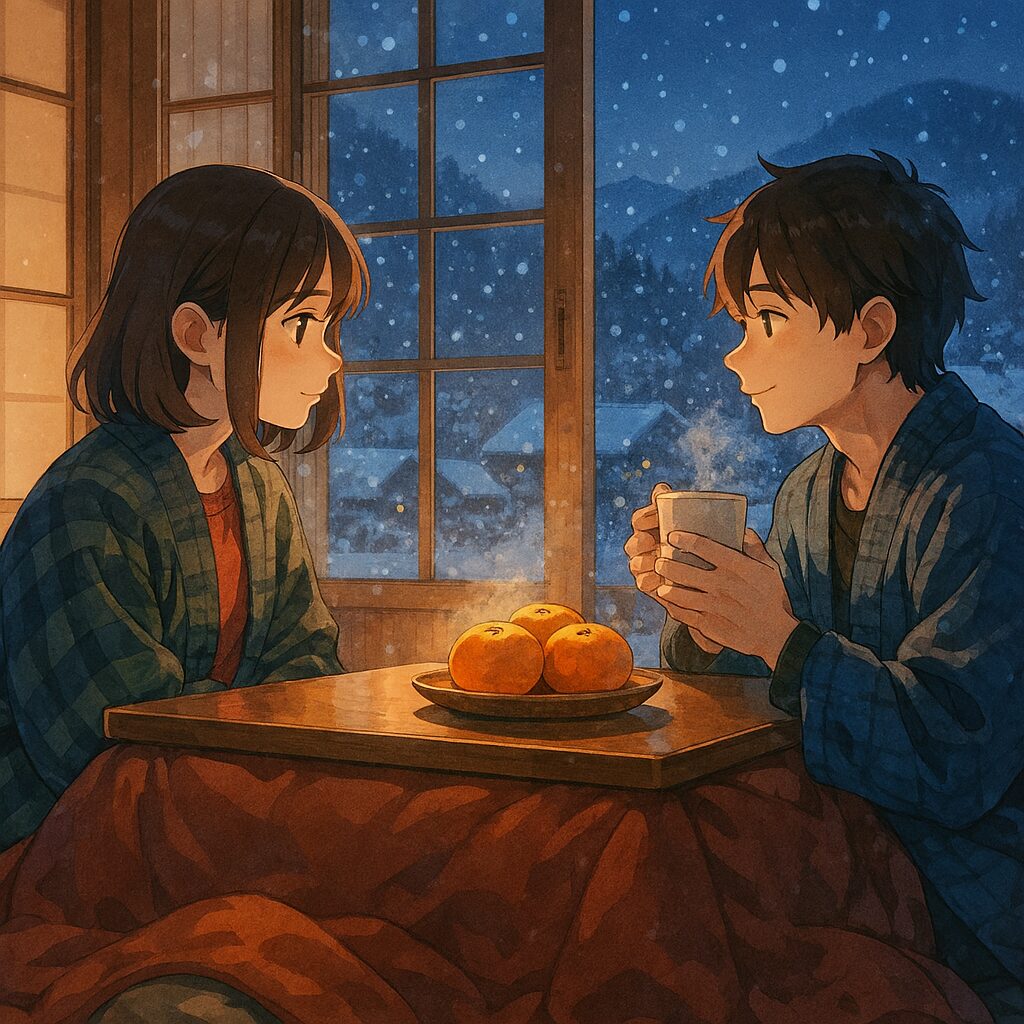
- “Yukimizake” and “Kotatsu”: Enjoying *Yukimizake* (雪見酒), slowly sipping Japanese *sake* in a warm spot while gazing out at the snowscape, is one of winter’s great pleasures. Furthermore, the **”Kotatsu”**, a traditional Japanese heating table, is a symbol of family togetherness where everyone gathers to talk. It serves as a spiritual anchor for overcoming the harsh winter.
2. The “Culture of Purification” for Welcoming the New Year
The series of year-end rituals, symbolized by *Susuharai*, carries more meaning than simple cleaning. In Japanese culture, which has roots in Shinto, it is highly important to purify oneself and the environment from **”Kegare” (穢れ), or defilement/pollution**, to welcome the gods.
- Detox for Objects and Mind: The year-end deep cleaning has a spiritual side: by washing away a year’s worth of dirt, one also cleanses the accumulated grime and misfortune from the heart. By welcoming the new year in an organized space, one is fully prepared for a fresh start. This culture connects to modern lifestyles like **”Danshari” (decluttering)** and **”Minimalism,”** reflecting the deep-seated Japanese spirit that seeks purity.
A Question to Our Readers
As an international reader, what are your thoughts after learning about the arrival of winter in Japan, especially the concept of the “Taisetsu” solar term?
How do you perceive the change of seasons in your own country, and what customs do you have to welcome them? How does the Japanese approach to embracing the harsh winter with both “purification” and “togetherness” appear to you?
If you were staying in Japan around December 16th, how would you like to experience the quiet, solemn atmosphere of this “Taisetsu” period? Would you choose the **”Yukimi Rotenburo” (snow-viewing open-air bath)** or the warmth of gathering under a *Kotatsu* to eat tangerines with your family?
Please share your impressions with us.
📚 External and Internal Links
External References
Internal Category Link
12月16日:白銀に包まれる日本の冬と「大雪」の深い意味を探る
12月16日:日本の歴史、文化、そして「大雪」
冬の足音が本格的になる12月、日本の暦は重要な節目を迎えます。その中でも、太陽の動きに基づいた二十四節気は、日本の暮らしや文化に深く根付いています。12月7日頃から始まるのが、冬の第三の節気「大雪(たいせつ)」です。厳密には、12月16日は大雪の期間中、あるいはその直後にあることが多い日ですが、この時期を象徴する出来事や文化は多岐にわたります。
1. 二十四節気「大雪(たいせつ)」の深い意味
「大雪」とは、読んで字のごとく**「大いに雪が降る頃」**を意味し、本格的な冬の到来を示す季節の指標です。山々は雪に覆われ、平地にも雪が降り始める時期とされます。これはただの天候の変化を指すだけでなく、古来より日本人が自然と共に生きる知恵と、季節の移り変わりを繊細に感じ取る感性を表しています。
- 農作業の終焉と冬支度: この時期までにほとんどの農作業が終わり、人々は厳しい冬を乗り切るための準備を本格化させます。雪囲いや、寒さから身を守るための様々な工夫がなされました。
- 冬の旬の到来: 寒さが深まることで、ブリ(鰤)やカニなどの海の幸が脂が乗り、最も美味しくなる**「旬(しゅん)」**を迎えます。日本各地で、この季節ならではの伝統的な漁が最盛期を迎えます。
- 季語としての「大雪」: 俳句の世界では、「大雪」は冬の静けさと厳しさを表現する重要な季語であり、雪景色や雪に関する情景を描く際に用いられます。
2. 12月16日にまつわる歴史的な出来事
特定の記念日ではない12月16日ですが、この時期に起こった歴史的な出来事や、冬の慣習が深く関わっています。
- 「煤払い(すすはらい)」の時期: 12月13日を「正月事始め」とし、新年を迎える準備を本格的に始めるのが日本の伝統です。その最初に行うのが、一年間の埃や煤を払い清める「煤払い」、現代の「大掃除」にあたります。この一連の動きが、12月16日頃には多くの家庭や寺社でピークを迎えます。これは、単に家をきれいにするだけでなく、**「年神様(としがみさま)」**を清らかな環境で迎えるための神聖な儀式としての意味合いが強いのです。
- 赤穂浪士討ち入りの準備: 少し遡った12月14日は、日本の歴史上で非常に有名な「忠臣蔵(ちゅうしんぐら)」のモデルとなった赤穂浪士による討ち入りがあった日です。彼らが討ち入りを決行した背景には、**「師走(しわす)」**と呼ばれる12月の慌ただしい雰囲気と、雪がちらつく厳しい寒さがありました。16日は、その直後の余韻が残る時期であり、人々の間で忠義や武士道の精神が語り継がれる頃です。
日本文化の核心:自然観と生活様式
12月16日という日付、そしてその頃の「大雪」という暦から、私たちは何を読み解くべきでしょうか。それは、**「自然との共生」**と**「清めの文化」**という、日本文化の二つの大きな柱が見えてきます。
1. 自然の力を受け入れる「大雪」の精神
「大雪」の時期、日本人は自然の厳しさを受け入れながらも、その中に潜む恵みを見出してきました。
- 雪国の知恵と美意識: 雪が多く降る地域、特に北日本や日本海側では、雪に埋もれることでできる静謐な雪景色を**「銀世界(ぎんせかい)」**として愛でる美意識が育まれました。また、雪を利用して食料を保存したり、雪解け水が豊かな大地を育むことを知っているため、厳しい冬を耐え忍ぶ知恵と感謝の念を同時に持っています。
- 「雪見酒(ゆきみざけ)」と「こたつ」: 窓の外に広がる雪景色を眺めながら、温かい場所で日本酒をちびちびと飲む**「雪見酒」**は、冬の醍醐味の一つです。また、日本の伝統的な暖房器具である**「こたつ」**は、家族が一つに集まり、語らい合う団欒の象徴であり、厳しい冬を乗り越えるための心の拠り所ともなっています。
2. 新年を迎えるための「清めの文化」
「煤払い」に象徴される一連の年末の行事は、単なる掃除以上の意味を持ちません。神道にルーツを持つ日本の文化では、**「穢れ(けがれ)」**を払い、清らかな状態にして神を迎えることが非常に重要視されます。
- モノと心のデトックス: 年末の大掃除は、一年間の汚れを落とすことで、同時に心についた垢や厄も払うという精神的な側面があります。整理整頓された空間で新年を迎えることで、新たな気持ちでスタートを切る準備が整うのです。この文化は、現代の**「断捨離(だんしゃり)」**や**「ミニマリズム」**といったライフスタイルにも通じる、日本人の根底にある清らかさを求める精神性の表れです。
読者の皆様への問いかけ
海外の読者であるあなたは、日本の冬の訪れ、特に「大雪」という暦の考え方に触れて、何を思いましたか?
あなたの国では、季節の変わり目をどのように感じ、どのような慣習で迎えますか?日本の人々が、厳しい冬を「清め」と「団欒」という二つの側面から美しく迎えようとする姿勢は、あなたの目にはどのように映るでしょうか。
もしあなたが12月16日頃に日本に滞在していたら、この「大雪」の時期の静かで厳かな空気をどのように体験してみたいですか?雪景色を眺めながら温泉に浸かる**「雪見露天風呂」**、それとも温かいこたつに入って蜜柑を食べながら家族と過ごす時間、どちらを選びますか?
ぜひ、あなたの感想を教えてください。

コメント