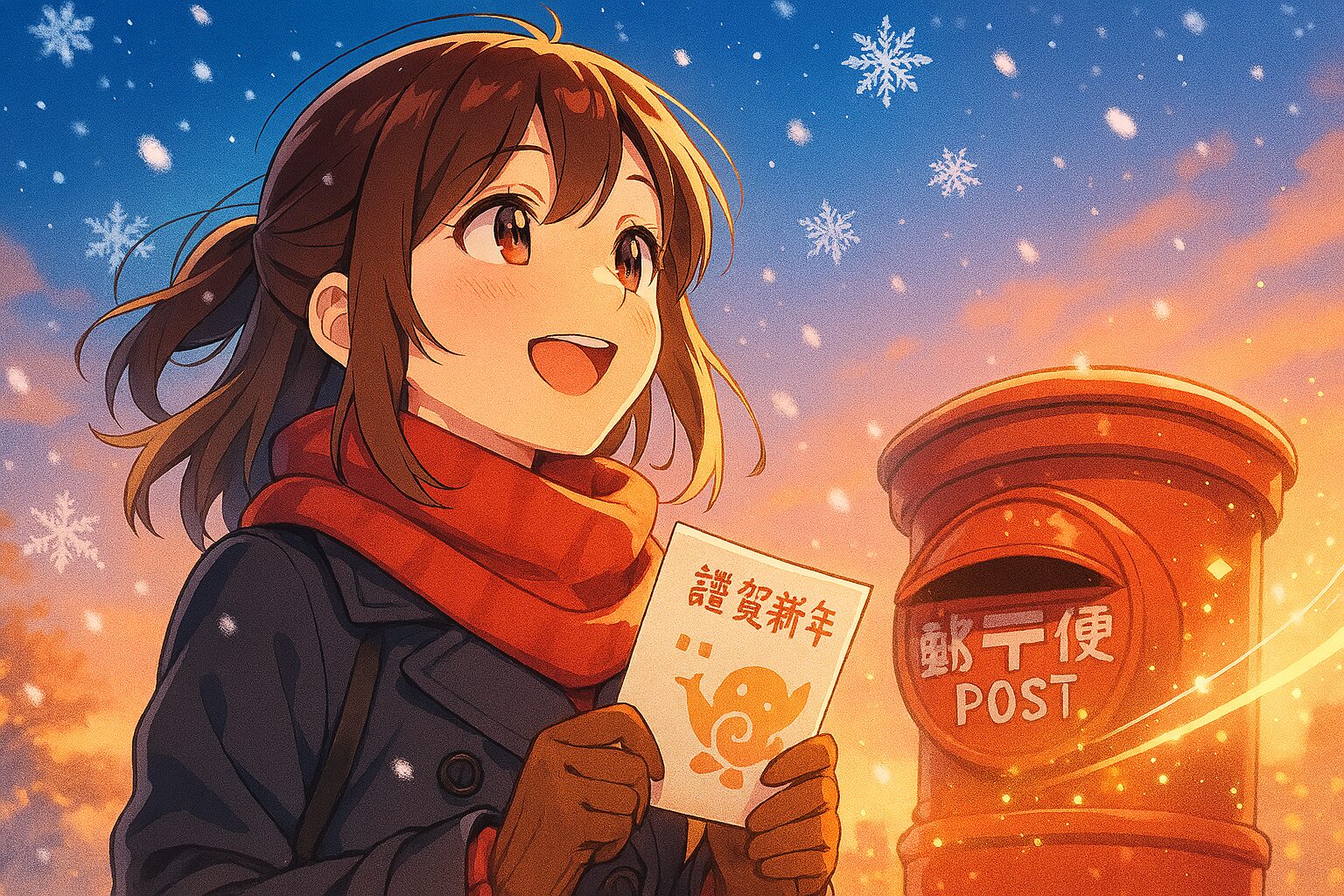
Japan has a large number of unique holidays and cultural milestones throughout the year. Among these, the “Start of New Year’s Post Special Handling Day” on December 15th is a deeply rooted tradition that symbolizes the end-of-year spectacle. The arrival of this day signals that it’s time for Japanese people to seriously begin preparing to welcome the New Year. It is not merely the start of a postal service; it is a profoundly important day that embodies the Japanese culture of “connection” and “gratitude.”

- 📅 Unraveling History and Culture: December 15th – The Special Handling Start Date
- 🕊️ Connection to Japanese Culture: Why the Obsession with January 1st Delivery?
- 🌍 A Question to Our Readers: What is Your Form of “Connection”?
- 📅 歴史と文化を紐解く:12月15日「年賀郵便特別扱い開始日」とは
- 🕊️ 日本文化との関連:なぜ元日配達にこだわるのか?
- 🌍 読者への問いかけ:あなたの「つながり」の形とは?
📅 Unraveling History and Culture: December 15th – The Special Handling Start Date
① Introduction to the Day: History, Culture, and Details
December 15th is the day when Japanese post offices formally begin accepting New Year’s cards, known as Nengajo (年賀状). Nengajo mailed during the approximately ten-day period from this day until December 25th are specially sorted and stored. This unique Japanese system ensures that they are all delivered simultaneously on New Year’s Day, January 1st.
⏳ Distant History: A System Established in the Meiji Era
This “special handling” system first began in the late Meiji era, specifically in 1899 (Meiji 32). At that time, the custom of Nenshi-mawari (年始回り), which involved visiting relatives and acquaintances in person for New Year’s greetings, rapidly spread throughout Japan with the popularization of the postcard.
The sheer volume of Nengajo concentrated during the year’s end nearly paralyzed the postal system. In response, the government introduced the New Year’s Post Special Handling System. This was done both to distribute the excessive burden and to fulfill the strong public desire for the cards to be delivered “on New Year’s Day.” Initially, the service was limited to a few designated post offices. However, due to the growing national demand, it was implemented nationwide by 1905 and legally established in 1906.
At the heart of this system lies the collective Japanese desire to “simultaneously deliver messages of gratitude and blessings to important people at the very start of the year.”
🎍 The Modern Form of Traditional Japanese “Nenshi-mawari”
The Nengajo culture is rooted in the tradition of Nenshi-mawari, the New Year’s ritual of physically visiting homes for greetings. In the modern age, where physical travel is often difficult, Nengajo continues to function as a medium for carrying out this traditional greeting ceremony easily and equally.
A Nengajo, often featuring handwritten text, family photos, or illustrations of the year’s Chinese zodiac animal, is more than just a means of communication. It is a warm “gift” that conveys a report of the past year’s events and wishes for the recipient’s health and happiness. The mailing period, which begins on December 15th, represents one of the most crucial “preparations of the heart” that Japanese people undertake at the close of the year.
🕊️ Connection to Japanese Culture: Why the Obsession with January 1st Delivery?
② What We Can Glean from the Day and Its Connection to Japanese Culture
From the seemingly bureaucratic name of the “Start of New Year’s Post Special Handling Day,” we can uncover the deep layers of Japanese culture.
✨ The Spirit of Emphasizing “Simultaneity” and “Milestones”
Why are Japanese people so insistent on the date of “Ganjitsu (元日), January 1st”? This insistence stems from the Japanese cultural spirit that places a strong emphasis on “simultaneity (Issei-sei)” and “milestones (Kugiri).”
- Milestone (Kugiri): Japanese people view the New Year as the most critical milestone for “resetting everything and making a fresh, clean start.” Receiving a barrage of messages of gratitude and future hopes on this “milestone day” is regarded as the ultimate blessing for a new beginning.
- Simultaneous Celebration: The simultaneous delivery of Nengajo on New Year’s Day allows the entire nation to share a common sense that “the New Year has begun.” This strengthens communal solidarity and is a vital element in heightening the fervor of the “Hare no Hi” (Day of Celebration).
🤝 The Spirit of “Omotenashi” (Hospitality) That Spares No Effort
This special system is upheld by the extraordinary effort of the people working in the postal service. The task of sorting and preparing the enormous volume of Nengajo accepted in just 10 days, from December 15th to the 25th, solely for a single delivery date—January 1st—is truly immense.
This is a tangible example of Japan’s “Omotenashi” (Hospitality) spirit, embodied at the national infrastructure level. It demonstrates a commitment to perfectly delivering the sender’s feelings for the recipient’s joy. The survival of this analog, labor-intensive culture in an increasingly digital world is proof that it holds an **irreplaceable value—the value of “Sincerity” (Magokoro)**.
🌍 A Question to Our Readers: What is Your Form of “Connection”?
③ Call to Action for Readers, ④ External and Internal Links
In today’s global society, the means of communication are incredibly diverse: email, social media, instant messengers… In an era where you can connect with anyone in the world instantly with a single click, how do you view the Japanese Nengajo—a form of analog communication that requires “time and effort”?
In many countries, it is common to send “Christmas Cards” or “Holiday Greeting Cards” around Christmas, often doubling as a New Year’s greeting. In contrast, Japan consciously maintains the unique Nengajo culture to celebrate “the welcoming of the New Year” itself, distinctly separate from cultural events like Christmas.
Do you have a most important, most heartwarming method for pausing once a year to reflect on your “connections” with loved ones? Have you ever felt the “weight” conveyed precisely because of the effort and time invested, as with the Japanese Nengajo, within your own country’s culture or daily life?
Take this December 15th as an opportunity to reconsider the form of “connection” you value and what you truly wish to convey to those important people in your life.
***
🔗 Related Information and External Links
- Japan Post – New Year’s Special Page (For the latest information)
- Information on sending Nengajo overseas (Japan Post International Mail)
Category
[Category: What’s Today’s Special Day Series]
🇯🇵 12月15日は何の日? 日本の心を伝える「年賀郵便特別扱い開始日」が告げる新年の準備
日本には、一年を通して数多くの独自の記念日や文化的な節目が存在します。その中でも特に、年末の風物詩として全国民の心に深く根付いているのが、12月15日の「年賀郵便特別扱い開始日」です。この日が来ると、「いよいよ今年も終わり、新しい年を迎える準備を本格的に始めなくては」という意識が日本人の中に高まります。単なる郵便サービスの開始日ではなく、これは日本人が大切にする「つながり」と「感謝」の文化を象徴する、非常に重要な日なのです。
📅 歴史と文化を紐解く:12月15日「年賀郵便特別扱い開始日」とは
① 何の日か紹介する記事:歴史、文化、詳細
12月15日は、日本の郵便局が年賀状の受け付けを正式に開始する日です。この日から12月25日までの約10日間に投函された年賀状は、特別に仕分け・保管され、なんと翌年1月1日の元旦に一斉に配達されるという、日本独自の特別な取り扱いが適用されます。
⏳ 遥かなる歴史:明治時代に確立された制度
この「特別扱い」の制度が初めて始まったのは、明治時代後期の1899年(明治32年)です。当時の日本で、新年の挨拶として遠方の人へ書状を送る「年始回り(ねんしまわり)」の風習が、郵便はがきの普及とともに爆発的に広まりました。
あまりにも大量の年賀状が年末に集中して投函されたため、郵便局の機能が麻痺寸前に陥る事態が発生。そこで政府は、この過剰な負担を分散しつつ、「元日に届ける」という人々の強い願いを叶えるために、この年賀郵便特別取扱制度を導入したのです。当初は一部の指定局のみでの取り扱いでしたが、国民の需要の高まりを受け、1905年には全国の郵便局で実施されるようになり、翌1906年には法的な制度として確立されました。
この制度の根底には、「一年の始まりに、大切な人たちへ感謝と祝福のメッセージを同時に届けたい」という、日本人の集合的な願いが強く込められています。
🎍 日本の伝統的な「年始回り」の現代的な形
年賀状の文化は、もともと年始に親戚や知人の家を直接訪問して挨拶を交わす「年始回り」という伝統に端を発しています。物理的な移動が困難な現代において、年賀状は、その伝統的な挨拶の儀式を、手軽かつ公平に実現するための媒体として機能し続けてきました。
手書きの文字や、家族写真、その年の干支のイラストなどを盛り込んだ年賀状は、単なる通信手段ではなく、一年間の近況報告と相手の健康と幸福を願う気持ちを伝える、温かい「贈り物」なのです。この12月15日から始まる年賀状の投函は、日本人が年の瀬に行うべき、最も重要な「心の準備」の一つと言えるでしょう。
🕊️ 日本文化との関連:なぜ元日配達にこだわるのか?
② その日から何を読み解き、日本文化との関連を紹介する記事
「年賀郵便特別扱い開始日」という、一見すると事務的な名称のこの日から、私たちは日本の文化の奥深さを幾層にもわたって読み解くことができます。
✨ 「一斉性」と「区切り」を重んじる精神
なぜ日本人は、これほどまでに「元日(1月1日)」という日付にこだわるのでしょうか。それは、日本文化が持つ「一斉性(いっせいせい)」と「区切り(くぎり)」を強く重んじる精神にあります。
- 区切り(けじめ): 日本人は、新年を「すべてをリセットし、清々しい気持ちで新たなスタートを切る」ための最も重要な区切りだと捉えます。この「区切りの日」に、日頃の感謝や今年の抱負を記したメッセージが一斉に届くことは、受け取る側にとって最高の門出の祝福となります。
- 一斉の祝祭: 年賀状が元日に一斉に届くことで、全国民が同時に「新年が始まった」という共通の感覚を分かち合います。これは、共同体としての一体感を強め、新年を祝う「ハレの日」の熱狂を高める重要な要素となります。
🤝 手間を惜しまない「おもてなし」の心
この特別な制度を支えているのは、郵便事業に携わる人々の尋常ではない努力です。12月15日から25日までのわずか10日間で引き受けた膨大な量の年賀状を、誤りなく、そして何よりも「1月1日」というたった一日のために仕分け、準備する作業は、想像を絶するものです。
これは、受け取る側の喜びのために、送り手の気持ちを完璧な形で届けようとする、日本の「おもてなし(Omotenashi)」の精神が、国のインフラレベルで具現化されている例と言えるでしょう。デジタル化が進む現代においても、このアナログで手間のかかる文化が生き残っているのは、そこに「真心」という代替不能な価値があるからに他なりません。
🌍 読者への問いかけ:あなたの「つながり」の形とは?
③ 読者への問いかけ、④ 外部リンク、内部リンク
現代のグローバル社会では、コミュニケーションの手段は多種多様です。メール、SNS、インスタントメッセンジャー…。ワンクリックで瞬時に、そして世界中の誰とでも繋がることができる時代に、日本の年賀状という「時間と手間をかける」アナログなコミュニケーションは、どのように映るでしょうか。
海外の多くの国々では、クリスマスの時期に「クリスマスカード」や「ホリデーグリーティングカード」を送り、新年への挨拶を兼ねることが一般的です。これに対し、日本は、クリスマスという文化的イベントとは別に、「新年を迎えること」そのものを祝うために、年賀状という独自の文化を大切に守り続けています。
あなたにとって、一年に一度、立ち止まって大切な人との「つながり」を見つめ直すための、最も重要で、最も心温まる方法はありますか? 日本の年賀状のように、手間と時間をかけるからこそ伝わる「重み」を、あなたの国の文化や日常の中で感じたことはありますか?
ぜひ、この12月15日という日を機に、あなたが大切にしたい「つながり」の形、そしてその人たちに何を伝えたいのかを、改めて考えてみてください。
***
🔗 関連情報・外部リンク
- 日本郵便 – 年賀特設ページ(最新の情報はこちらから)
- 海外に年賀状を送る際の情報(日本郵便 国際郵便)


コメント