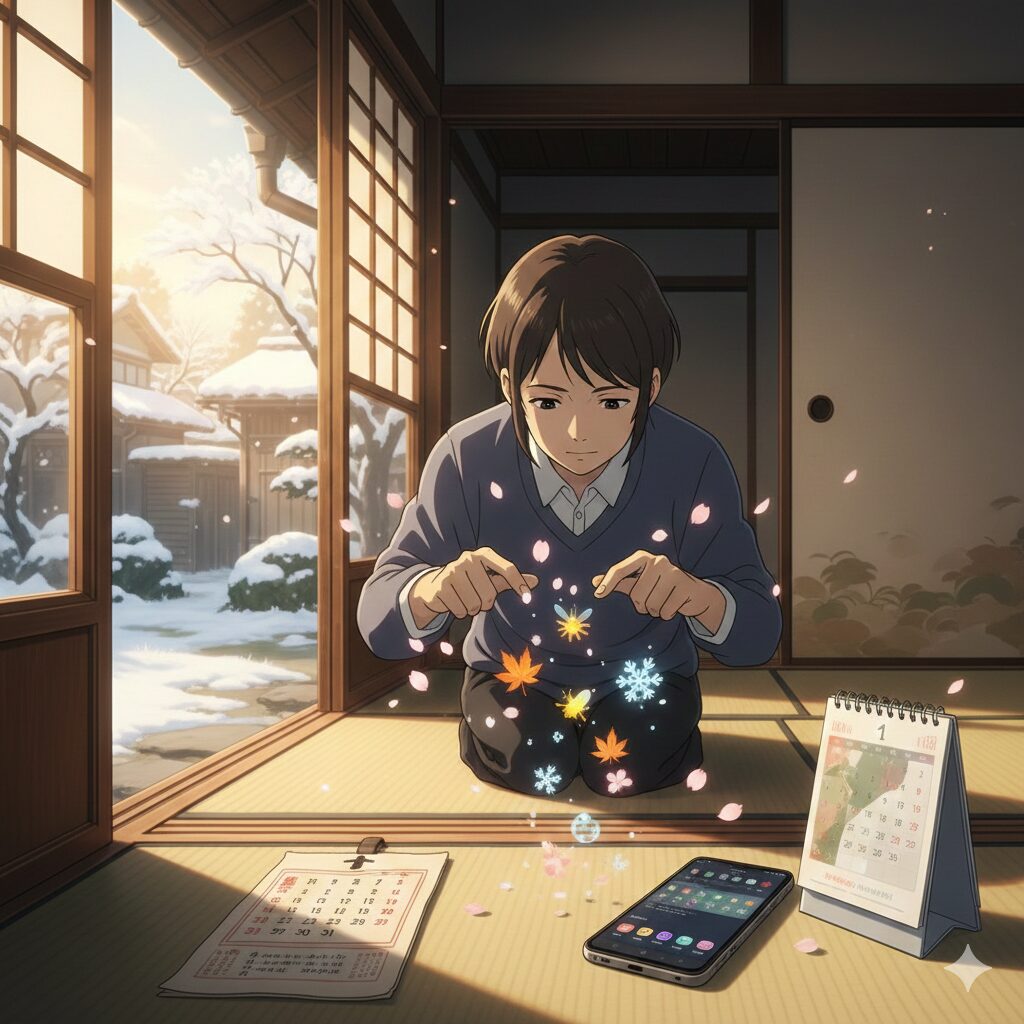
Category: What’s Today’s Special Day Series
The Japanese calendar is more than just a list of dates. It is a mirror reflecting Japanese culture and life itself, a fusion of ancient calendrical systems, the changing seasons, and modern technology. Every year, December 3rd is celebrated as “Calendar Day.” The date was chosen to commemorate an extremely important event in Japan’s history.

- Why December 3rd?
- History: The Evolution of “Time” in Japan
- Culture: Japanese Aesthetics and Practicality in the Calendar
- Interpretation: The Culture of “Harmony” as Seen Through the Calendar
- Conclusion: What Does “Time” Mean to You?
- 📚 Related Information
- なぜ12月3日なのか?
- 歴史:日本における「時」の定義の変遷
- 文化:カレンダーに込められた日本の美意識と実用性
- 読み解き:カレンダーから見る「調和」の文化
- 結び:あなたにとって「時」とは何か?
- 📚 関連情報
Why December 3rd?
The time was the beginning of the Meiji era, when Japan was embarking on its journey to become a modern nation. Up until then, Japan had used the Tenpō calendar (Tenpō-reki), a type of **lunisolar calendar** based on the phases of the moon. While this calendar was suitable for farming and traditional ceremonies, the shift to the **solar calendar (Gregorian calendar)**, which was the global standard, was essential for international trade and the rapidly progressing Westernization.
On November 9th, Meiji 5 (1872), the Grand Council of State issued an official decree, making the historic decision: “December 3rd of Meiji 5 shall be designated as January 1st of Meiji 6.” This decree westernized the Japanese calendar virtually overnight, with only about 20 days’ notice. “December 3rd, Meiji 5,” the dramatic day when the last day of the lunisolar calendar was followed immediately by the New Year’s Day of the solar calendar, is commemorated as “Calendar Day,” established by the National Calendar Publishers Cooperative Association in 1987. This day is a **symbol of Japan’s modernization**, showing its bold readiness to adapt its technology and systems to global trends while still respecting its ancient culture.
History: The Evolution of “Time” in Japan
The history of the Japanese calendar is a history of continuously improving calendrical systems introduced from the Chinese mainland.
1. Fusion of Ancient Calendars and Culture
Calendrical science is believed to have been brought to Japan around the Asuka period (6th century). Early calendars were closely tied to the **Twenty-Four Solar Terms (Nijūshi Sekki)** (such as Risshun/Beginning of Spring, Shunbun/Vernal Equinox, Geshi/Summer Solstice), which marked seasonal changes, and the **Seventy-Two Micro Seasons (Shichijūni Kō)**, which indicated the cycles of growth in flora and fauna. For an agrarian society, accurate seasonal prediction was a matter of survival, and the calendar was a crucial state secret held by the ruling power.
Elements of this ancient calendar remain vividly in modern Japanese culture. For instance, the **Five Seasonal Festivals (Gosekku)**—such as the Festival of Man (Nanakusa-no-Sekku) where people eat seven-herb rice porridge, and the Doll Festival (Jōshi-no-Sekku)—are still observed to purify ill fortune and wish for longevity and harvest at the turning points of the seasons. The calendar was not merely a tool for counting days but a **compendium of wisdom for living in harmony with nature.**
2. The Edo Period Commoner’s Calendar: Tenpō-reki
The **Tenpō calendar** used during the Edo period (17th–19th centuries) was a highly refined lunisolar calendar. It marked months according to the moon’s cycle (new moon to full moon) and inserted an **intercalary month (Uruu-zuki)** approximately every three years to adjust for the sun’s orbit (the seasonal drift).
The calendars of this era also included the **Rokuyō** (Roku-yō) system—a six-day cycle of fortune (Senshō, Tomobiki, Senbu, Butsumetsu, Taian, Shakku)—indicating the day’s luck and suitability for certain actions. Notably, **Taian** is considered the most auspicious day for all matters and remains an important factor in modern Japan when choosing a date for weddings or car deliveries. For common people, the calendar was a **sort of guidepost** that set the rhythm of daily life and determined actions.
3. The Meiji Calendar Reform: Enlightenment and Unification of Time Standards
And then came the dramatic reform of 1872. The transition to the solar calendar was more than a technical change; it signified **Japan’s entry into the global standard.** The previously ambiguous definition of “time” was unified with international norms. This reform instantly brought Japan’s seasonal sense in line with the rest of the world (it had been about a month behind) and facilitated the introduction of Western holidays and business customs.
This calendar reform symbolized the wave of **Bunmei Kaika (Civilization and Enlightenment)**, the active adoption of Western astronomy and measurement technologies. Japan rapidly advanced to world standards in calendrical technology, a fundamental pillar of society, in just a few decades.
Culture: Japanese Aesthetics and Practicality in the Calendar
Many different types of calendars exist in modern Japan, and all reflect distinct Japanese cultural characteristics.
1. Seasonal Colors and Annual Events
Even though Japan uses the Gregorian calendar, it **highly values a sense of the seasons**. Many calendars feature beautiful photographs of the four seasons: cherry blossoms in spring, fireworks in summer, autumn leaves, and snow in winter. Furthermore, traditional Japanese **annual events**—such as New Year’s (Shōgatsu), Setsubun (Bean-Throwing Festival), Obon (Ancestral Memorials), and Shichi-Go-San (Seven-Five-Three Festival)—are clearly marked, distinguishing them from simple holiday calendars in other countries.
This reflects the Japanese consciousness of deeply loving the transitions in nature and seeking to restore the rhythm of **”Hare and Ke”** (the extraordinary and the ordinary) in daily life. The calendar serves not only as a tool for planning the year but also as a **medium for reaffirming the beautiful seasons and events of Japan.**
2. Practicality and Design: Fusion of Technology and Art
The printing and binding techniques used for calendars also reflect Japan’s high-quality standards. From the paper quality and color palette to the fonts and design details, every aspect is refined to enhance user comfort.
From a programmer’s perspective, the evolution of modern calendars—especially **digital calendars** and **planners (Techo)**—is remarkable. Calendar applications created by Japanese IT companies often integrate traditional culture with the latest user interface (UI) by offering optional displays for Rokuyō or the old lunar calendar. The culture of the “hybrid planner,” which retains the benefits of handwriting while linking with digital tools, is also a unique evolution born from the practical nature of the Japanese people.
Interpretation: The Culture of “Harmony” as Seen Through the Calendar
By interpreting Calendar Day, we can see the concept of **”Harmony” (Wa)** that underlies Japanese culture.
1. Harmony of Old and New: Tradition and Innovation
The Meiji calendar reform was a symbol of “innovation” carried out over an extremely short period, yet Japan did not completely abandon the old lunisolar calendar. Even today, many regions and families still observe traditional events like Obon, the Lunar New Year, and Tanabata based on the old calendar dates. Furthermore, the aforementioned Rokuyō is still listed on many modern calendars.
This is evidence that the Japanese have consistently sought a delicate **harmony of “valuing the old while embracing the new.”** The calendar achieves this harmony by coexisting the **traditional rhythm of life (old calendar)** and the **international business rhythm (new calendar)** on a single page or screen.
2. Harmony with Nature: Emphasizing the Seasons
While Western calendars tend to prioritize the business cycle by marking Saturday and Sunday as the weekend, Japanese calendars inherit the tradition of emphasizing natural indicators like the **Twenty-Four Solar Terms** and the **Seventy-Two Micro Seasons**. The fact that the Vernal Equinox Day and Autumnal Equinox Day are highly valued national holidays also demonstrates reverence for nature.
This spirit of harmony with nature deeply influences Japanese animation and literature. The culture of perceiving the flow of time not just as a number but as **a narrative accompanied by the emotion of “seasonal change”** quietly lives on through the calendar.
Conclusion: What Does “Time” Mean to You?
Japan’s “Calendar Day” commemorates the **bold decisions and cultural flexibility** that marked Japan’s beginnings as a modern nation. It demonstrates how highly the Japanese people value the act of **”marking time”** and how they have seamlessly integrated technology and culture.
The calendar is a tool for planning the future, but also a record for looking back at the past. Now that you know the unique history of the Japanese calendar, **what does “time” or “a date” signify in your own country or culture?** What rhythm of your life and culture do you interpret from the calendar you see every day?
And if you plan to visit Japan, be sure to choose a “Taian” day according to the Rokuyō and experience the beauty of that harmony with a Japanese traditional events calendar in hand.
📚 Related Information
Internal Category Link
External Links
- National Diet Library – Japanese Calendar (Detailed information on the history of the Japanese calendar): https://www.ndl.go.jp/koyomi/
- Ministry of Education, Culture, Sports, Science and Technology – National Holidays (Information on Japanese national holidays): https://www.mext.go.jp/
📅 日本の「カレンダーの日」(12月3日):時を刻む文化と技術の交差点
Category: What’s Today’s Special Day Series
日本のカレンダーは、単なる日付の羅列以上のものです。それは、古代の暦法、季節の移ろい、そして現代のテクノロジーが融合した、日本の文化と生活そのものを映す鏡です。毎年12月3日は「カレンダーの日」として記念されています。この日付が選ばれた背景には、日本の歴史における極めて重要な出来事があります。
なぜ12月3日なのか?
時は明治時代初期。日本は近代国家への道を歩み始めていました。それまで日本で使われていたのは、月の満ち欠けを基にした「太陰太陽暦」の一種である天保暦(てんぽうれき)でした。この暦は農作業や伝統行事には適していましたが、国際的な取引や急速に進む西洋化に対応するためには、世界の主流である太陽の動きに基づいた「太陽暦(グレゴリオ暦)」への切り替えが不可欠でした。
そして、明治5年(1872年)11月9日、太政官布告により「明治5年12月3日をもって明治6年1月1日とする」という、歴史的な改暦の決定が下されました。この布告によって、わずか20日程度の準備期間で、日本の暦は一気に西欧化されたのです。この、太陰太陽暦の最後の日の翌日が太陽暦の元日になるという劇的な暦の変更が行われた「明治5年12月3日」を記念し、全国カレンダー出版協同組合連合会が1987年(昭和62年)に制定したのが「カレンダーの日」です。この日は、日本が古来の文化を尊重しつつ、世界の潮流に合わせて技術と制度を大胆に刷新した、近代化の象徴とも言える日なのです。
歴史:日本における「時」の定義の変遷
日本の暦の歴史は、中国大陸から伝わった暦法を独自に改良し続けてきた歴史でもあります。
1. 古代の暦と文化の融合
日本に暦法がもたらされたのは飛鳥時代(6世紀頃)とされています。初期の暦は、季節の変わり目を示す二十四節気(立春、春分、夏至など)や、動植物の成長サイクルを示す七十二候と密接に結びついていました。農耕社会にとって、正確な季節の予測は死活問題であり、暦は時の権力者が掌握する重要な国家機密でもありました。
この古代の暦は、現代の日本文化に色濃く残っています。例えば、七草粥を食べる「人日の節句」や、ひな祭りを行う「上巳の節句」などの五節句は、季節の変わり目(暦の節目)に穢れを祓い、長寿や豊穣を願う行事として今も受け継がれています。カレンダーは、単に日を数えるツールではなく、自然と調和して生きるための知恵の書だったのです。
2. 江戸時代の庶民の暦:天保暦
江戸時代(17世紀~19世紀)に使用された天保暦は、それまでの暦法をさらに洗練させた、非常に精密な太陰太陽暦でした。月の満ち欠け(新月〜満月)に合わせて月を区切り、約3年に一度、「閏月(うるうづき)」を挿入して、太陽の運行(季節のズレ)を調整していました。
この頃の暦には、日付の他に、その日の運勢や行動の吉凶を示す**六曜(ろくよう)**(先勝、友引、先負、仏滅、大安、赤口)が記されていました。特に「大安(たいあん)」は万事において吉とされる日で、現代でも結婚式や車の納車日などを選ぶ際に重要な判断材料となっています。庶民にとって、暦は日々の生活のリズムを作り、行動を決定づける一種の道標でした。
3. 明治の改暦:文明開化と時の基準の統一
そして、1872年の劇的な改暦です。太陽暦への移行は、単なる技術的な変更ではなく、日本の世界標準への仲間入りを意味しました。それまで曖昧だった「時」の定義が、国際的な基準に統一されたのです。この改暦によって、それまで約1か月遅れだった季節感が現代と同じになり、西洋の祝日やビジネス慣習が容易に導入されました。
この改暦は、西洋の天文学や計測技術を積極的に取り入れる**文明開化**の波を象徴しています。日本は、暦という社会の基盤となる技術において、わずか数十年で世界レベルへと躍進したのです。
文化:カレンダーに込められた日本の美意識と実用性
現代の日本には多種多様なカレンダーが存在しますが、そのどれもが日本の文化的な特性を反映しています。
1. 季節の彩りと年中行事
日本のカレンダーは、グレゴリオ暦を採用していながらも、**季節感を非常に大切にします**。多くのカレンダーには、春の桜、夏の花火、秋の紅葉、冬の雪といった、四季折々の美しい風景写真が使われます。また、正月、節分、お盆、七五三といった日本の伝統的な**年中行事**がしっかりと書き込まれており、海外の単なる休日カレンダーとは一線を画しています。
これは、日本人が自然の移ろいを深く愛し、生活の中に「**ハレとケ**」(非日常と日常)のリズムを取り戻そうとする意識の表れです。カレンダーは、一年の計画を立てるだけでなく、日本の美しい四季と行事を再確認するための媒体としての役割を果たしています。
2. 実用性とデザイン:技術と芸術の融合
カレンダーの印刷技術や製本技術も、日本の高い品質基準を反映しています。紙質、色合い、フォント、そしてデザインの細部に至るまで、使用者の快適さを追求しています。
プログラマーとしての視点で見ると、現代のカレンダー、特に**デジタルカレンダー**や**手帳(プランナー)**の進化は目覚ましいものがあります。日本のIT企業が生み出すカレンダーアプリケーションは、六曜表示や旧暦の表示をオプションで組み込むなど、伝統文化と最新のユーザーインターフェース(UI)を巧みに融合させています。また、手書きの良さを残しつつ、デジタルと連携させる「**ハイブリッド型手帳**」の文化も、実用性を重んじる日本人の気質が生んだユニークな進化です。
読み解き:カレンダーから見る「調和」の文化
カレンダーの日を読み解くことで、日本の文化の根底にある**「調和」(Harmony)**という概念が見えてきます。
1. 新旧の調和:伝統と革新
明治の改暦は、極めて短期間で行われた「革新」の象徴ですが、日本は古い太陰太陽暦を完全に捨て去ったわけではありません。現在でも、お盆や旧正月、七夕などの伝統的な行事は、旧暦の日付を基準に行われる地域や家庭が多く残っています。また、前述の六曜も未だに多くのカレンダーに掲載されています。
これは、日本人が**「古いものを大切にしつつ、新しいものを取り入れる」**という、絶妙な新旧の調和を常に図ってきた証拠です。カレンダーは、**伝統的な生活リズム(旧暦)**と**国際的なビジネスリズム(新暦)**を一つの紙面や画面上に共存させることで、この調和を実現しているのです。
2. 自然との調和:季節の重視
西洋のカレンダーは、土曜日と日曜日を週末として区切り、ビジネスサイクルを重視する傾向がありますが、日本のカレンダーは、**二十四節気**や**七十二候**といった自然の指標を重視する伝統を引き継いでいます。春分の日や秋分の日が国民の祝日として大切にされていることも、自然への敬意を表しています。
この自然との調和の精神は、日本のアニメーションや文学にも深く影響を与えています。時の流れを単なる数字としてではなく、**「季節の移ろい」という感情を伴う物語**として捉える文化が、カレンダーを通じて静かに息づいているのです。
結び:あなたにとって「時」とは何か?
日本の「カレンダーの日」は、日本が近代国家として歩み始めた際の、**大胆な決断と文化的な柔軟性**を記念する日です。それは、日本人がいかに「時を刻む」という行為を重要視し、技術と文化を融合させてきたかを示しています。
カレンダーは未来を計画するためのツールであると同時に、過ぎ去った過去を振り返るための記録でもあります。この日本独自の暦の歴史を知った今、あなたの国や文化において、**「時間」や「日付」はどのような意味を持っていますか?** あなたは、日々目にするカレンダーから、ご自身の人生や文化のどんなリズムを読み解きますか?
そして、もしあなたが日本に来る計画を立てるなら、ぜひ六曜で「大安」の日を選び、日本の伝統的な年中行事が記されたカレンダーを片手に、その調和の美しさを体験してみてください。
📚 関連情報
カテゴリー内部リンク
外部リンク
- 国立国会図書館 – 日本の暦(日本の暦の歴史に関する詳細情報): https://www.ndl.go.jp/koyomi/
- 文部科学省 – 国民の祝日(日本の祝日の情報): https://www.mext.go.jp/


コメント