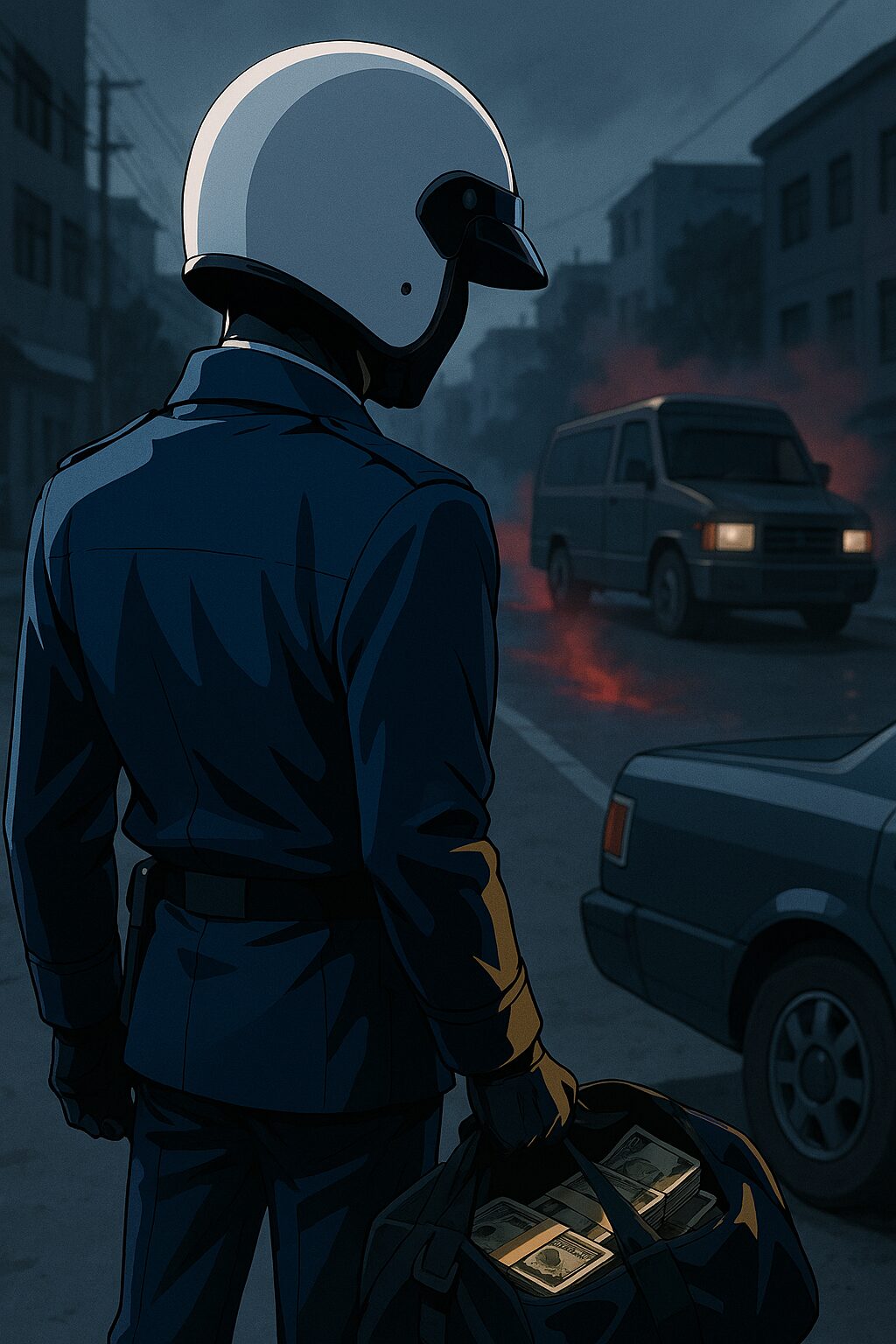

- 🤯 December 10, The Unprecedented Crime That Pierced Japan’s Heart: The Deep Story of the 300 Million Yen Robbery
- 🗾 What the 300 Million Yen Robbery Reveals: Its Connection to Japanese Culture During the High-Growth Era
- ❓ What Would You Do?: The Question Posed by an Eternal Mystery
- Related Links
- 🤯 12月10日、日本の心臓を貫いた未曾有の犯罪:三億円事件の深層
- 🗾 三億円事件から何を読み解くか:高度経済成長期の日本文化との関連
- ❓ あなたならどうしますか?:永遠の謎が問いかけるもの
- 関連リンク
🤯 December 10, The Unprecedented Crime That Pierced Japan’s Heart: The Deep Story of the 300 Million Yen Robbery
December 10, 1968 (Showa 43). This date marks the occurrence of an incident that is unavoidable when discussing modern Japanese society. It is the “300 Million Yen Robbery”, still remembered as the “Greatest Mystery” in Japanese criminal history. Due to an incredibly bold and ingenious scheme by a single “mastermind,” a staggering sum—approximately 300 million yen at the time, equivalent to several billion yen today—was brazenly stolen in broad daylight.
The 300 Million Yen Robbery is far more than just a simple theft case. The “era” in which it occurred, the subsequent nature of the “investigation,” and the public’s imagination surrounding the “perpetrator’s profile” have elevated this case from a mere crime record into a massive mirror reflecting the Japanese social psyche.
The scene of the crime was Fuchu City, Tokyo. A cash transport vehicle from the Nihon Shintaku Bank (now Mitsubishi UFJ Trust and Banking Corporation), Kokubunji Branch, was carrying approximately 294.3 million yen—the bonuses for employees of Tokyo Shibaura Electric (now Toshiba) factory—when it was stopped.
The culprit was a single man disguised as a police motorcycle officer.
The method was extremely sophisticated, much like a carefully crafted movie script:
- The Setup: The perpetrator took advantage of a prior, albeit false, bomb threat aimed at another bank branch manager’s home in the vicinity.
- Calm Approach: Stopping the armored car, the culprit told the bank employees inside, “The branch manager’s home was bombed. We received information that this car also has a bomb. I must inspect it.” This composed demeanor was the main factor that prevented the employees from becoming suspicious.
- Perfect Performance: The culprit crawled under the car, pretending to perform an inspection, and then suddenly opened the hood and lit a flare. Smoke rose with a shout of, “It’s going to explode!” This was a carefully calculated performance designed to induce panic among the bank employees.
- Bold Seizure: While the panicked bank employees fled, the culprit got into the driver’s seat himself and calmly drove off with the approximately 300 million yen in cash.
In this incident, the culprit stole a massive amount of cash without harming a single person. This was exceptional in Japanese criminal history and is one reason why it generated the image of a “smart crime” that continues to influence popular culture.
🗾 What the 300 Million Yen Robbery Reveals: Its Connection to Japanese Culture During the High-Growth Era
The 300 Million Yen Robbery transcends the boundary of a mere unsolved case, vividly reflecting the “contradictions” and “aspirations” held by Japanese society at the time.
1. An Era of “Disparity” and “Anti-Establishment”
When the incident occurred in 1968, Japan was in the midst of its High-Growth Economic Period. Cities were developing, and people’s lives were becoming richer. However, beneath the surface, anti-establishment movements intensified, led by young people who were left behind by the rapid economic development or who rebelled against the materialization of society.
The sum of 300 million yen was a “celestial number” for the average person at the time. It became a symbol of the aspiration for quick wealth and an antithesis to established authority and systems. The “smartness” of the crime—that the perpetrator “harmed no one”—aligned with the romanticized idea of a “satisfying blow against the establishment” held by the youth, leading to a phenomenon where the culprit was even heroized by some.
2. The Collapse of the “Japanese Safety Myth”
Post-war Japan, having achieved reconstruction, prided itself on its excellent public safety. However, the 300 Million Yen Robbery shattered that “Safety Myth.” The method, which exploited the trust in “authority” (a police motorcycle officer), instilled in people’s hearts a sense of distrust—”Don’t be fooled by appearances,” “You can’t trust anyone.” Following this incident, security for cash transport was dramatically overhauled.
3. The Japanese Fever for “Detective Fiction”
The incident was a “perfect crime” that reached the statute of limitations in 1975 (criminal prosecution) and 1988 (civil liability). This unsolved conclusion fueled the public’s imagination endlessly.
- Was the culprit a lone wolf or part of an organization?
- Where did the motorcycle used to impersonate the police officer come from?
- What did the unusually large number of relics left behind (police notebook, flares, fake police uniform, etc.) signify?
These mysteries became the motif for countless novels, films, dramas, and manga, profoundly influencing Japan’s mystery culture. The public participated in the search for the culprit through the media, and the incident evolved into a national entertainment, or perhaps a “Legend of Showa.”
❓ What Would You Do?: The Question Posed by an Eternal Mystery
The 300 Million Yen Robbery happened more than half a century ago, and the case itself is “legally” closed due to the statute of limitations. However, the “moral” resolution remains elusive.
This incident raises serious questions for us: What is “justice,” and how should an individual confront “social distortion”? If the perpetrator were someone close to you, what would you do?
- Pursue the truth and seek legal judgment
- Let time pass and keep the secret protected
The culprit of the 300 Million Yen Robbery, despite obtaining a huge sum of cash, has completely vanished without a trace of their subsequent life. If he/she had managed to live a “happy life” with the stolen money, would that be forgivable?
Japan’s eternal mystery will continue to challenge our ethics and social views. What “light” and “shadow” of Japan do you decipher from this incident? Please, take a moment to consider.
Related Links
- Tokyo Metropolitan Police Department – Traffic Safety Corner (Reference for considering Japanese police organization and social trust.)
https://www.keishicho.metro.tokyo.lg.jp/ - National Diet Library Digital Collection (Useful for searching historical records and social context from the time.)
https://dl.ndl.go.jp/
Category
What’s Today’s Special Day Series
💥【昭和の闇】三億円事件の衝撃:未解決事件が映し出す日本の光と影(12月10日の謎)
🤯 12月10日、日本の心臓を貫いた未曾有の犯罪:三億円事件の深層
1968年(昭和43年)12月10日。この日付は、現代の日本社会を語る上で避けて通れない、ある事件の発生日です。それは、日本犯罪史における「最大の謎」として今なお語り継がれる「三億円事件」。一人の「知恵者」による、あまりにも大胆で鮮やかな手口により、当時の貨幣価値で約3億円という巨額が白昼堂々、奪い去られました。
三億円事件は、単なる強盗事件として片付けられるものではありません。事件が起きた「時代」と、その後の「捜査」のあり方、そして「犯人像」を巡る人々の想像力が、この事件を単なる犯罪記録から、日本の社会心理を映し出す巨大な鏡へと昇華させました。
事件の舞台は、東京都府中市。日本信託銀行(現・三菱UFJ信託銀行)国分寺支店の現金輸送車が、東京芝浦電気(現・東芝)の工場従業員のボーナス約2億9430万円(当時の金額で、現在の価値に換算すると数十億円とも言われます)を積んで走行中でした。
犯人は、白バイ隊員に偽装した一人の男。手口は極めて巧妙で、まるで練りに練られた映画のシナリオのようでした。
- 偽装工作: 犯人は事前に、現場付近で起きた別の銀行の支店長宅を標的とした爆破予告事件(虚報)を利用しました。
- 冷静な接近: 現金輸送車を停止させた犯人は、車内にいた銀行員たちに対し、「支店長宅が爆破された。この車にも爆弾が仕掛けられているという情報が入った。点検しなければならない」と告げました。その落ち着き払った態度が、銀行員たちに疑いを抱かせなかった最大の要因です。
- 完璧な演技: 犯人は車体の下にもぐりこみ、点検作業のふりをした後、突然、車のボンネットを開け、発炎筒を焚きました。「爆発するぞ!」という叫び声と共に上がる煙。これは、車内の銀行員たちをパニックに陥れるための、計算され尽くした演出でした。
- 大胆な奪取: 銀行員たちが恐怖に駆られて逃げ出した隙に、犯人は自ら運転席に乗り込み、現金約3億円を乗せたまま、悠然と走り去ったのです。
この事件で、犯人は誰一人傷つけることなく、巨額の現金を奪いました。これは日本の犯罪史において異例であり、後の大衆文化にまで影響を与える「スマートな犯罪」というイメージを生み出してしまった一因でもあります。
🗾 三億円事件から何を読み解くか:高度経済成長期の日本文化との関連
三億円事件は、単なる未解決事件という枠を超え、当時の日本社会が抱えていた「矛盾」と「憧れ」を鮮明に映し出しています。
1. 「格差」と「反体制」の時代
事件が発生した1968年は、日本が高度経済成長の真っただ中にありました。都市は発展し、人々の生活は豊かになっていきましたが、その裏側で、急速な経済発展から取り残された人々や、社会の物質主義化に反発する若者たちによる反体制運動が激化していました。
三億円という額は、当時の一般庶民にとってはまさに「天文学的数字」であり、一攫千金への憧れと、既成の権力やシステムに対するアンチテーゼの象徴となりました。犯人が残した「誰も傷つけない」というスマートさは、当時の若者が抱いていた「体制への痛快な一撃」というロマンと重なり、一部でヒーロー視される現象すら生み出しました。
2. 「日本の安全神話」の崩壊
戦後の復興を成し遂げた日本は、治安の良さを世界に誇っていました。しかし、三億円事件は、その「安全神話」を木っ端微塵に打ち砕きました。白バイ隊員という「権威」への信頼を逆手に取った手口は、人々の心に「見かけに騙されてはいけない」「誰も信じられない」という不信感を植え付けました。この事件以降、現金輸送のセキュリティは劇的に見直されることになります。
3. 日本人の「探偵小説」への熱狂
事件は「完全犯罪」として成立し、1975年(公訴時効)、そして1988年(民事時効)を迎えます。この未解決という結末が、人々の想像力を無限に掻き立てました。
- 犯人は単独犯か、組織犯か?
- 白バイ隊員の偽装に使われたオートバイはどこから来たのか?
- 残された数多くの遺留品(警察手帳、発炎筒、偽装した警察官の服など)の異常な多さは、何を意味するのか?
これらの謎は、多くの小説、映画、ドラマ、漫画のモチーフとなり、日本のミステリー文化に計り知れない影響を与えました。人々はメディアを通して犯人捜しに参加し、事件は一つの国民的なエンターテイメント、あるいは「昭和の伝説」となっていったのです。
❓ あなたならどうしますか?:永遠の謎が問いかけるもの
三億円事件は、もう半世紀以上前の出来事であり、事件そのものは時効を迎えて「法的」には決着しています。しかし、「道義的」な決着は今もなおついていません。
この事件は私たちに、「正義」とは何か、そして「社会のひずみ」に個人がどう向き合うかという重い問いを投げかけています。犯人がもし、あなたにとって身近な人物であったなら、あなたはどうしますか?
- 真実を追求し、法の裁きを求める
- 時の流れに任せ、秘密を守り通す
三億円事件の犯人は、巨額の現金を手にしながら、その後の生活の足取りは全く掴めていません。もし彼/彼女が、奪ったお金で「幸福」な人生を送ったとしたら、それは許されるものなのでしょうか?
永遠に解けない日本のミステリーは、これからも私たちの倫理観、社会観を揺さぶり続けるでしょう。あなたがこの事件から読み解く、日本の「光」と「影」は何でしょうか。ぜひ、考えてみてください。
関連リンク
- 警視庁 – 交通安全コーナー(日本の警察組織と社会の信頼関係を考える上で参考になります。)
https://www.keishicho.metro.tokyo.lg.jp/ - 国立国会図書館デジタルコレクション(当時の事件報道や社会背景の資料検索に役立ちます。)
https://dl.ndl.go.jp/


コメント