
- 1. The Story of “The Tengu’s Cloak of Invisibility” (Tengu no Kakuremino)
- 2. Deep Analysis of “The Tengu’s Cloak of Invisibility”
- 3. Connecting the Tale to Japanese Culture
- 4. A Question for the Reader: What is Your “Cloak of Invisibility”?
- 5. Related Information and External Links
- 1. 昔話「天狗のかくれみの」の物語
- 2. 昔話「天狗のかくれみの」の深層考察
- 3. 物語から読み解く日本文化との関連
- 4. 読者への問いかけ:あなたの「かくれみの」は何ですか?
- 5. 関連情報と外部リンク
1. The Story of “The Tengu’s Cloak of Invisibility” (Tengu no Kakuremino)
Long ago, deep in the green mountains of Japan, lived a young man named Taro. Taro was honest and kind-hearted, but a little naive about the ways of the world. His village was surrounded by mountains where the Tengu, powerful beings with supernatural abilities, were said to dwell. The Tengu are revered and sometimes feared, playing a crucial role in Japan’s mountain worship.
One day, while gathering firewood in the mountains, Taro lost his way in a deep fog. As he felt helpless and lost, an old, small shrine appeared before him. Peering inside nervously, he heard an oddly grating yet authoritative voice coming from the seemingly empty shrine.
“You possess an honest heart. As a reward, I shall grant you this.”
The speaker was unseen. However, at Taro’s feet lay a tattered, cloth-like object. It was the Kakuremino, or “Cloak of Invisibility,” a secret treasure said to be possessed by the Tengu, which renders the wearer invisible to all.
Half-believing, Taro cautiously put on the cloak. To his astonishment, his body became transparent, and he truly vanished from sight! Taro couldn’t hide his excitement. With this incredible power in his hands, what did he first decide to do?
Taro initially intended to use the cloak to help people. However, being naive, he quickly became intoxicated by the immense power. At first, he acted like a righteous thief, secretly moving heavy loads for those in need in the village, or stealing rice from the wicked landlord’s storehouse to distribute to the poor.
Gradually, however, Taro’s heart began to twist. The complacent thought of “no one is watching anyway” numbed his moral compass. He started using the power for selfish desires and mischief—sneaking into village festivals to eat rare sweets from the side shows, and eventually, playing pranks on a beautiful maiden from the neighboring village.
One evening, Taro, cloaked in the Kakuremino as usual, snuck into a banquet held in the village chief’s mansion. He was reaching for expensive sake and delicacies, enjoying his invisible freedom, when suddenly the entire hall was engulfed in a blinding light.
“Foolish one!”
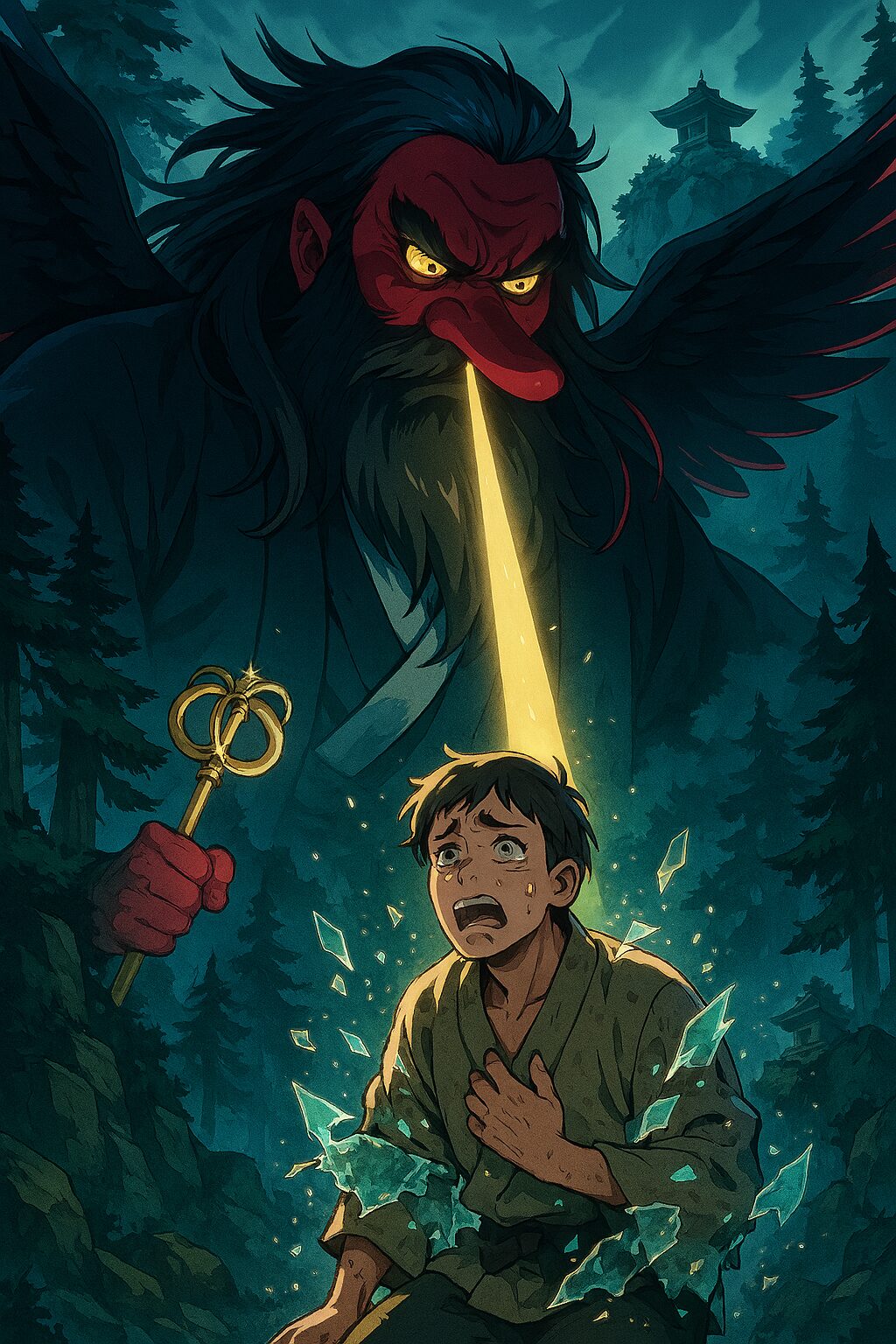
A roar like thunder echoed, and Taro found himself unable to move. Looking up, he saw a terrifying **Great Tengu (Daitengu)** standing on the ceiling, with a red face, a long nose, and immense wings spread out.
“Though your intention for the cloak was initially good, it was eventually swallowed by wicked desires. With such a heart, this divine power is nothing more than poison.”
The Great Tengu looked down at Taro with eyes full of anger, and with his staff, he instantly smashed the cloak.
The Kakuremino shattered into pieces, and simultaneously, the memories of all Taro’s misdeeds while wearing it streamed into the minds of the people around him. The villagers, realizing that Taro was the source of the mysterious events caused by the invisible presence, were filled with astonishment and fury.
Taro experienced the terror of “being watched” for the first time. The freedom of invisibility had simultaneously robbed him of his self-discipline, resulting in the complete loss of his reputation and trust.
The Great Tengu quietly stated:
“True power resides within the heart that governs its own actions. You must learn this.”
Then, the Great Tengu vanished. Stripped of the cloak and subjected to the cold stares of the villagers, Taro deeply regretted the gravity of his mistakes. It is said that he later left the village, chose a path of severe spiritual training, and was reborn as an honest man who never again succumbed to self-interest, dedicating himself to truly helping others.
This tale teaches us that **divine power or authority—the metaphorical “Kakuremino”—is a mirror that reflects the goodness or wickedness of the user’s heart.**
—
2. Deep Analysis of “The Tengu’s Cloak of Invisibility”
“The Tengu’s Cloak of Invisibility” is a Japanese folktale that profoundly questions **ethics and morality**. The charm of this story lies in how the protagonist Taro’s acquired ability—to become invisible—serves as the catalyst that exposes his true nature.
The Structure of Power, Acquisition, and Downfall
The power of the Kakuremino that Taro receives can be substituted for **authority, wealth, and anonymity** in modern society.
- Initial Good Deeds (The Righteous Thief): At first, Taro’s good intentions correctly guide his power. This symbolizes the pure impulse people have to “use it for good” when they gain a new power.
- Mid-story Deviation (Self-Interest): However, the situation of “no one is watching” stimulates the weakest part of human nature: desire and laziness. He uses the lack of surveillance to abandon self-discipline.
- Final Judgment (The Great Tengu): The judgment by the Great Tengu, a **transcendent being**, is not just punishment but a symbol of the **”Unseen Watcher.”** This represents the final judgment—be it from gods, Buddha, or one’s inner conscience—that one cannot escape. Japanese ethics uphold the concept of “Osama ga Miteiru” (The Sun God is watching), which teaches that one must always act correctly, even in private.
This story has a universal theme that deeply resonates with the modern danger of anonymity—especially the breakdown of ethics in internet society—where people assume “anything is permissible if unseen.”
—
3. Connecting the Tale to Japanese Culture
“The Tengu’s Cloak of Invisibility” strongly reflects Japan’s unique cultural background and spirituality.
A. Tengu Worship and Mountain Asceticism (Shugendō)
The **Tengu** are legendary creatures dwelling in the mountains, depicted as having divine power while also being arrogant and fond of tricking humans. The Tengu are closely associated with **Japanese Mountain Worship** and, specifically, **Shugendō** (the path of ascetic practice).
- The Sacredness of Mountains: In Japan, mountains are sacred places inhabited by gods and spirits, and they serve as sites for spiritual training. The Great Tengu’s judgment embodies the idea that **the severity of nature, or the sacred order of the mountains**, will not tolerate human arrogance.
- Training and Introspection: The ending, where Taro chooses a path of spiritual training, demonstrates the Japanese aesthetic of “rehabilitation.” It shows that a person who has made a mistake must confront themselves in a harsh environment and achieve spiritual growth through introspection (Han-sei).
B. The Public Eye and the Value of “Seken”
The core lesson of this tale—”Do not do bad things just because no one is watching“—is deeply rooted in the Japanese concept of **Seken** (society/the public).
- The Power of Seken: “Seken” is not merely society or a community; it refers to the unofficial social norms, including “others’ evaluations and gazes,” that strongly govern individuals. The moment Taro loses the cloak and is exposed to the cold stares of the villagers symbolizes the terror of “Murahachibu” (ostracism) or the “eyes of Seken,” one of the most severe forms of punishment in Japanese society. The public exposure of one’s actions is a matter so grave that it can shake the very foundation of an individual’s existence.
- Self-Discipline vs. External Control: In Japanese culture, “Self-Discipline” is highly valued—the ability to govern oneself even when unseen. Taro’s story emphasizes the importance of this self-discipline, teaching that control by one’s inner conscience, rather than external control (being watched by others), is the source of true strength.
—
4. A Question for the Reader: What is Your “Cloak of Invisibility”?
Taro’s story throws a powerful message to us living in the modern world, centuries later.
If you acquired the “Tengu’s Cloak of Invisibility,” what would you do first? Would the absolute freedom of invisibility guide you down the right path, or would it lead you to pursue your desires, just like Taro?
We, in the modern era, possess a form of “Cloak of Invisibility” through smartphones, the internet, and social media. Using anonymous accounts to criticize someone, pretending to be someone different online, or slacking off at work because no one is watching—these might be the transformed **power of the “Kakuremino.”**
When wielding power, what is it that governs you?
Taro ultimately admitted his mistake and rebuilt his life through his own efforts. After reading this tale, what do you reflect upon regarding your own code of conduct? And if you were in Taro’s place, how would you handle this powerful secret treasure, and how would you confront life’s difficulties? Please share your thoughts.
—
5. Related Information and External Links
[Internal Link]
[External Reference Links]
- The Origin and Evolution of Tengu
- Tengu – Encyclopedia Nipponica Note: The linked content is in Japanese but helps understand the cultural and religious background of Tengu.
👺 天狗のかくれみの:神秘的な日本の山々に息づく古の知恵と教訓
1. 昔話「天狗のかくれみの」の物語
遠い昔、緑深い日本の山奥に、太郎という若者が住んでいました。太郎は正直で心優しい青年でしたが、少しばかり世間知らずなところがありました。彼の住む村は、古くから天狗という強力な神通力を持つ存在が住むと言い伝えられる山に囲まれていました。天狗は時に恐れられ、時に信仰される、日本の山岳信仰において重要な役割を果たす存在です。
ある日、太郎は山で薪を集めていると、深い霧の中で道に迷ってしまいました。心細くなり、途方に暮れていると、目の前に古びた小さな祠が現れました。恐る恐る中を覗くと、誰もいないはずの祠から、妙に耳障りな、しかし威厳のある声が聞こえてきました。
「お前は正直な心を持っている。褒美としてこれを授けよう。」
声の主の姿は見えません。しかし、太郎の足元には、何やら薄汚れた布のようなものが落ちていました。それは、かくれみのと呼ばれるもので、身に着けると誰からも姿が見えなくなるという、天狗の持つとされる秘宝でした。
半信半疑ながらも、その「かくれみの」をそっと羽織ってみると、驚いたことに自分の身体が透明になり、本当に誰からも見えなくなってしまいました!太郎は興奮を隠せません。この驚くべき力を手に入れた彼は、最初に何を思ったでしょうか?
太郎は、このかくれみのを使って、人助けをしようと考えました。しかし、世間知らずな彼は、すぐにその強力な力に溺れ始めます。最初は、村で困っている人のために、こっそり重い荷物を運んだり、意地悪な地主の倉から米を盗んで貧しい人々に分け与えたりと、義賊のようなことをしていました。
しかし、次第に太郎の心は歪んでいきました。「どうせ誰も見ていないのだから」という甘い考えが彼の倫理観を麻痺させます。彼は、村の祭りで見世物小屋の珍しい菓子を勝手に食べたり、ついには隣村の美しい娘にいたずらをしたりと、私利私欲と悪戯にその力を使うようになってしまいました。
ある晩、太郎はいつものようにかくれみのを羽織り、村長の屋敷の広間で催されている宴会に忍び込みました。高価な酒やごちそうに手を伸ばし、透明な体で好き放題に振る舞っていると、突然、広間全体が強い光に包まれました。
「愚か者め!」
雷鳴のような轟音が響き渡り、太郎は身体が動かなくなりました。見ると、広間の天井に、真っ赤な顔に高い鼻を持ち、羽根を広げた恐ろしい姿の大天狗が立っていました。
「お前のかくれみのを使う心は、最初こそ善であったが、やがて邪な欲望に飲み込まれた。その心根では、この神通力は毒にしかならない。」
大天狗は怒りに満ちた目で太郎を見下ろし、持っていた杖で、かくれみのを一撃で叩き壊しました。
かくれみのは粉々に砕け散り、同時に、かくれみのを羽織っていた間の太郎の悪行が、周囲の人々の心に映像として流れ込みました。村人たちは、透明な存在による不思議な出来事の正体が太郎であったことを知り、驚きと怒りで騒然としました。
太郎は、初めて「見られている」ことの恐ろしさを知りました。誰にも見られないという自由は、同時に彼を律するものを失わせ、結果として彼自身の評判と信頼を完全に失わせたのです。
大天狗は静かに言いました。
「真の力とは、自らの行いを律する心の中に宿るものだ。お前はそれを学ばねばならない。」
そして、大天狗は姿を消しました。かくれみのを失い、村人たちの冷たい視線に晒された太郎は、自分の犯した過ちの重さを痛感し、深く反省しました。彼はその後、村を出て厳しい修行の道を選び、二度と私利私欲に走ることなく、本当に人のためになる行いをする誠実な人間に生まれ変わったと伝えられています。
この物語は、**神通力や権力という「かくれみの」は、使う者の心の善悪を映し出す鏡である**ことを私たちに教えているのです。
—
2. 昔話「天狗のかくれみの」の深層考察
「天狗のかくれみの」は、日本の昔話の中でも特に倫理観と道徳を深く問いかける作品です。この物語の魅力は、主人公・太郎が手に入れた「透明になる」という能力が、彼の本質を白日の下に晒すトリガーとなっている点にあります。
力の獲得と堕落の構造
太郎が手に入れたかくれみのの力は、現代社会における権力、富、そして匿名性といったものに置き換えることができます。
- 初期の善行(義賊): 最初のうちは、太郎の善意が力を正しく導きます。これは、人が新しい力を手に入れたときに抱く「良いことに使おう」という純粋な衝動を象徴しています。
- 中期の迷走(私利私欲): しかし、「誰も見ていない」という状況は、人間の最も弱い部分、つまり欲望と怠惰を刺激します。彼は監視の目がないことを利用し、自分を律することをやめてしまいます。
- 終局の審判(大天狗): 大天狗という超越的な存在による裁きは、単なる罰ではなく、「見えざる監視者」の象徴です。これは、神仏、あるいは自己の内なる良心といった、人が逃れることのできない最終的な審判を表しています。日本の倫理観では、「お天道様が見ている(Osama ga Miteiru)」という考え方があり、誰も見ていない場所でも、常に正しい行いをすべきという教えが根付いています。
この物語は、「見えなければ何でも許される」という現代的な匿名性の危険性、特にインターネット社会における倫理観の崩壊とも深く共鳴する普遍的なテーマを持っています。
—
3. 物語から読み解く日本文化との関連
「天狗のかくれみの」には、日本の独自の文化的背景と精神性が色濃く反映されています。
A. 天狗信仰と山岳信仰(Shugendō)
天狗(Tengu)は、山に棲む伝説上の生き物で、神聖な力を持つと同時に、傲慢で人間をからかう存在としても描かれます。天狗は、日本の山岳信仰、特に修験道(Shugendō)と密接に関連しています。
- 山の神聖性: 日本において山は、神々や精霊が住まう特別な場所であり、修行の場でした。大天狗が裁きを下す場面は、自然の厳しさ、あるいは山の神聖な秩序が人間の傲慢さを許さない、という思想を体現しています。
- 修行と内省: 太郎が最後に修行の道を選ぶ結末は、過ちを犯した人間が、厳しい環境の中で自己と向き合い、内省(Han-sei)を通じて精神的な成長を遂げるという、日本文化における「立ち直り」の美学を示しています。
B. 公共の目と「世間」の価値観
この物語の核となる教訓は、「誰にも見られていないからといって、悪いことをしてはいけない」という、日本の**世間(Seken)**という概念に深く根差しています。
- 世間(Seken)の力: 「世間」とは、単なる社会やコミュニティではなく、「他人からの評価や視線」を含む、個人を強く律する非公式な社会規範を指します。かくれみのを失った太郎が村人たちの視線に晒される瞬間は、日本の社会において最も重い罰の一つである「村八分(Murahachibu)」や「世間の目」の恐ろしさを象徴しています。自分の行いが公になること(晒されること)は、個人の存在基盤を揺るがすほどの深刻な事態なのです。
- 自律と他律: 日本文化では、他人に見られていなくても自らを律する「自律」が強く求められます。太郎の物語は、この自律の重要性を強調し、他律(他人の目による監視)ではなく、内なる良心による制御こそが真の強さであると教えています。
—
4. 読者への問いかけ:あなたの「かくれみの」は何ですか?
太郎の物語は、数百年を経た現代に生きる私たちにも、非常に強いメッセージを投げかけています。
もしあなたが「天狗のかくれみの」を手に入れたとしたら、最初に何をしますか? 誰にも見られないという絶対的な自由は、あなたを正しい道に導くでしょうか、それとも太郎のように欲望のままに突き進ませるでしょうか?
現代の私たちは、スマートフォン、インターネット、そしてソーシャルメディアという形で、ある種の「かくれみの」を手にしています。匿名のアカウントで誰かを非難したり、オンラインで現実とは違う自分を装ったり、あるいは仕事で誰も見ていないからと手を抜いたり。これらは、形を変えた**「かくれみの」の力**かもしれません。
力を使うとき、あなたを律するものは何ですか?
太郎は最終的に、過ちを認め、自らの力で人生を立て直しました。この物語を読んだあなたは、自身の行動規範について、何を考えますか。そして、もしあなたが太郎の立場だったら、どのようにこの強力な秘宝を扱い、どのように人生の困難に立ち向かうでしょうか。あなたの考えをぜひ聞かせてください。
—
5. 関連情報と外部リンク
【内部リンク】
【外部参考リンク】
- 天狗の起源と変遷
- 天狗 – 日本大百科全書(ニッポニカ) 注: リンク先のコンテンツは日本語ですが、天狗の文化的・宗教的背景を理解するのに役立ちます。


コメント