Category: Japanese Folktale Series

- Introduction: Welcome to a Lesser-Known Japanese Tale
- ① The Story of “The Peony and the Mouse”
- ② Examining the Folktale “The Peony and the Mouse”
- ③ Connecting the Folktale to Japanese Culture
- ④ A Question for the Reader
- はじめに:知られざる日本の物語へようこそ
- ① 昔話「ぼたんの花とねずみ」の物語
- ② 昔話「ぼたんの花とねずみ」を考察する
- ③ 昔話から読み解く日本文化との関連
- ④ 読者への問いかけ
Introduction: Welcome to a Lesser-Known Japanese Tale
Hello everyone. As a programmer and a blogger, I’m dedicated to sharing the ancient wisdom and aesthetic sensibility cultivated in this Far Eastern island nation. To truly grasp Japanese culture, it’s essential to look beyond the superficial images of “Samurai” and “Geisha” and delve into the folktales (mukashibanashi) rooted in the lives of ordinary people.
Today, I introduce you to “The Peony and the Mouse (Botan no Hana to Nezumi),” a relatively minor yet profoundly insightful story that prompts us to reflect on wealth, vanity, and the true nature of beauty and humility. Through this tale, you’ll feel the Japanese people’s cherished state of mind and their gaze toward nature. Let’s journey to ancient Japan.
① The Story of “The Peony and the Mouse”
The Great Peony that Boasted of Splendor
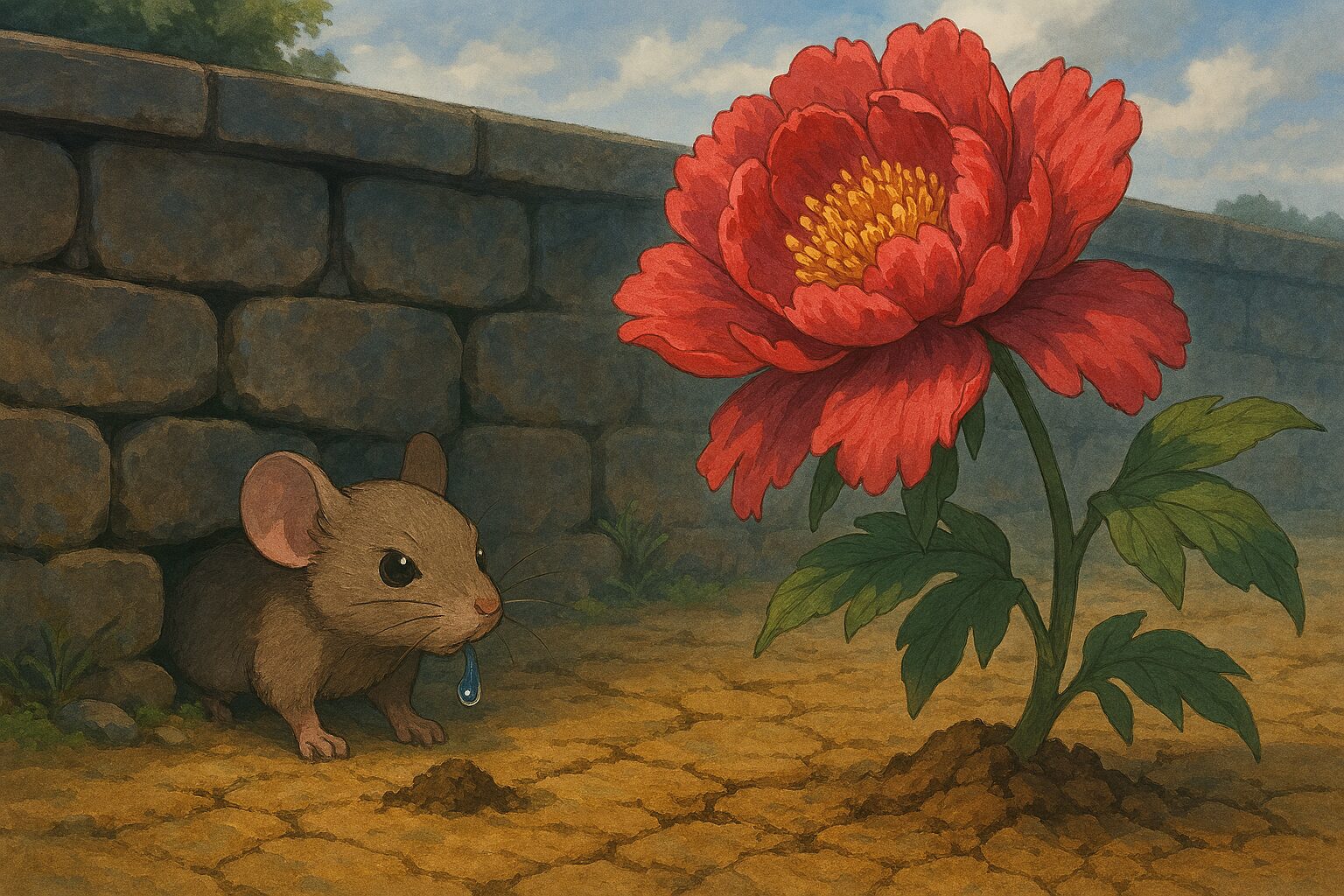
Once upon a time, in the garden of a wealthy estate in a quiet village, bloomed a truly magnificent **peony (botan)** flower. Its color was a deep, vivid crimson, its petals layered countless times, like the luxurious robes worn by royalty. Everyone who saw its beauty was breathless, praising it as “a flower rarely seen in the world.”
The peony was absolutely convinced it was the most beautiful being in the world.
“Oh, look at me. This elegance, this majestic presence. I must be the master of this garden, nay, the very symbol of beauty in this world. It is only natural that people should kneel before me and praise me.”
Each time the wind swayed it, the peony blossomed even bigger and more ostentatiously, as if to flaunt its beauty. Its arrogant attitude led it to look down on the small flowers quietly blooming in the corner of the garden.
The Mouse Living in the Corner of the Garden
Meanwhile, in a gap in the stone wall of the same garden where the great peony bloomed, lived a single **mouse (nezumi)** with its family. This mouse was clever, hardworking, and always possessed a humble heart. While acknowledging the peony’s brilliant beauty, he was a little tired of its excessive self-admiration.
It was during a year of long drought. The earth was dry, and the garden plants began to wilt, desperately seeking water. The peony was no exception. Its beautiful petals gradually lost their vitality, and its luxurious color began to fade.
“Someone! Someone, please give me water! My beauty will be ruined at this rate!”
The peony cried out in a weak voice, having lost its former dignity. However, people in those difficult times had no time to attend to a single flower in the back of the garden. The small flowers had already withered away.
The Mouse Reveals True Worth
Seeing the peony’s suffering, the mouse quietly stood up.
“My Lady Peony. Please be at ease. I will do everything within my power to help you endure this dryness.”
The peony looked at the mouse’s small figure and scoffed.
“What could a dusty, insignificant creature like you possibly do for me? Stay out of it, begone.”
But the mouse paid no mind and worked tirelessly with his family night after night. He gathered stray grains of rice from the human kitchen and storehouse, and tiny clumps of still-damp soil, burying them at the base of the peony. Furthermore, he searched for spots where dew collected, taking the small drops into his body and carrying them, one by one, to the peony’s roots.
This labor was an enormous toil for the tiny mouse. For many days, unnoticed by anyone, the mouse diligently and quietly exerted his small strength, solely to help the peony.
Conclusion: Splendor and Modesty
Eventually, fortunately, a blessed rain began to fall. The peony, aided by the mouse’s devoted help and the water from the heavens, miraculously regained its vitality. It returned to a state even more vibrant and majestic than before.
The peony looked at the small mound of sustenance the mouse had accumulated at its roots, and for the first time, realized its own vanity and the mouse’s true worth.
“Oh, dear Mouse. I was saved by your **humble (tsutsushimibukai) heart and your steady work**. How foolish and arrogant I was, boasting only of my outward splendor and failing to see your sincerity.”
The peony bowed its head deeply and sincerely thanked the mouse. The mouse simply smiled quietly.
“My Lady Peony. Both brilliant beauty and a modest heart are important. However, it is essential for people to look past outward appearance and discern the true value hidden within.”
Since then, the great peony no longer boasted of its beauty as before. And the mouse continued to live quietly, yet proudly, in the corner of the garden.
This tale teaches us that **true value lies not in a flashy exterior, but in unseen internal sincerity and steady effort.**
② Examining the Folktale “The Peony and the Mouse”
The story of “The Peony and the Mouse” contrasts two crucial values held within Japanese culture: **”Splendor (Beauty)”** and **”Modesty (Inner Virtue).”**
1. “Vanity” and “Beauty” Symbolized by the Luxurious Peony
The peony is known as the “King of Flowers” and has been depicted in Japanese paintings and family crests as a symbol of wealth and fortune since ancient times. Its gorgeous appearance is seemingly the object of envy. However, the peony in this story symbolizes **arrogance** and **vanity**, being so consumed by its beauty that it mistakenly believes it can survive entirely on its own strength.
In Japanese thought, things that are too perfect or too brilliant are often thought to contain **”peril (ayausa)”** and **”transience (hakanasa).”** Extravagant beauty collapses easily when it lacks the inner strength to sustain itself. The peony’s weakened state during the drought suggests that **wealth and outward appearance are vulnerable to changes in the environment and hardship.**
2. “Modesty” and “Wisdom” Symbolized by the Steady Mouse
In contrast, the mouse is a small, inconspicuous presence. Yet, he calmly assessed the situation and executed the maximum effort possible with his tiny body, **sincerely (seijitsu)** and without seeking recognition.
In Japanese culture, “modesty (tsutsushimi)” is one of the highest virtues. It refers to the heart that does not excessively assert itself, but silently dedicates itself to others, maintaining humility and knowing one’s proper place. The mouse’s actions are the very embodiment of this “modesty” and **”flexible wisdom.”** He achieved the great feat of saving the peony’s life, which was impossible for the peony itself. This teaches that **true power is not necessarily proportional to outward size or social status.**
3. The Lesson of Interdependence
Ultimately, the peony is saved by the mouse’s assistance. This reflects the spirit of **”mutual assistance (sōgo fujo)”** and **”coexistence”** that the Japanese people have long valued. Both the grand and the humble have roles, and they form a single world by helping each other. The coexistence of the peony, having corrected its arrogance, and the mouse, maintaining its constant modesty, is the ideal of the **”harmonious society”** this story strives for.
③ Connecting the Folktale to Japanese Culture
This story is more than just a moral lesson; it is deeply connected to the aesthetic sense and values at the core of Japanese culture.
A. The Spirit of “Wabi-Sabi” within Splendor
The peony’s extravagant beauty symbolizes transient “splendor” and “glory.” However, the mouse’s presence and its persistent effort resonate with the spirit of **”Wabi-Sabi”** at the opposite extreme.
“Wabi-Sabi” is the Japanese aesthetic sense that **finds beauty in things that are modest and quiet**, moving away from ostentation and perfection. The mere bits of soil and drops of water the mouse collected, and its inconspicuous effort, are precisely the heart of **”Wabi.”** The structure in which the luxurious peony is ultimately saved by the power of “Wabi” tells the history of how the Japanese have valued **”imperfection, the passage of time, and inner sincerity”** over “perfect beauty.”
B. The Virtue of “Devotion” without Expectation of Reward
The mouse was ridiculed by the peony, yet he carried the water without expecting thanks or reward. This **”selfless effort without seeking compensation”** is a virtue highly praised in Japanese society and groups.
- The Craftsman’s Spirit (Shokunin Kishitsu): The mouse’s silent, dedicated work connects to the Japanese craftsman’s spirit, who takes pride in their work and **pursues their own standards** regardless of external evaluation.
- Emphasis on “Wa” (Harmony): The stance of individuals willingly sacrificing themselves to avoid disrupting the **”Wa”** (harmony) of the group or society as a whole has been central to Japanese social norms since ancient times. The mouse’s action is a devotion to maintaining the “Wa” of the garden’s small community.
C. Reverence for Life and the Environment
The Japanese people have held an **animistic** view of nature since ancient times, believing that spirits dwell in all things. The peony as a plant and the mouse as an animal are depicted not merely as objects, but as living beings.
When the peony was close to death, it was saved by the wisdom and labor of a small animal in the garden. This points not to **”anthropocentrism,”** but to the **Japanese reverence for nature**, which holds that all living things in the natural world influence and support each other’s existence. The lesson is that we should respect the work of small life forms, not just the large ones.
④ A Question for the Reader
Thank you to all who have read this story of the magnificent peony and the modest mouse.
This tale resonates with many of the issues we face in modern society. In an era where “splendor” is overly celebrated on social media and where outward appearance and momentary success are prioritized, how much do we truly acknowledge the **unseen value** demonstrated by the mouse—the **”steady effort”** and **”inner sincerity?”**
If you were in the **peony’s** position in this story, would you have been able to open your heart to accepting the mouse’s help immediately?
Conversely, if you were the **mouse**, would you have dedicated such tremendous effort to someone who insulted you?
This story of “The Peony and the Mouse” asks us to **possess the power to discern the “true nature” of people and things** without being deceived by superficial glamour in our daily lives. And to use our abilities **modestly and sincerely** for the sake of others or society.
Please think about your answer. And if there is a fable in your country or culture that echoes the lesson of this story, I would be very interested to hear about it.
For those who wish to delve deeper into the Japanese culture and history behind this tale.
Internal Category Link
- This Blog’s Category: Japanese Folktale Series
🇯🇵日本の昔話シリーズ:富と慎みの寓話「ぼたんの花とねずみ」
はじめに:知られざる日本の物語へようこそ
皆さん、こんにちは。私は日本のプログラマーであり、ブロガーとして、この極東の島国が育んだ古の知恵と美意識を世界に発信しています。日本の文化を深く理解するには、単なる「サムライ」や「ゲイシャ」といった表層的なイメージだけでなく、庶民の暮らしに根差した昔話(むかしばなし)に触れることが不可欠です。
今回ご紹介するのは、富と虚栄、そして真の美と慎みについて深く考えさせる、ややマイナーながらも示唆に富んだ物語、「ぼたんの花とねずみ」です。この物語を通じて、日本人が大切にしてきた心のあり方や、自然に対する眼差しを感じ取っていただけるでしょう。さあ、古の日本へと思いを馳せてみましょう。
① 昔話「ぼたんの花とねずみ」の物語
栄華を誇る大輪のぼたん
昔々、ある静かな村の裕福な屋敷の庭に、それは見事なぼたん(牡丹)の花が咲いていました。その色は深く鮮やかな紅、花びらは幾重にも重なり、まるで王族がまとう衣のように豪華絢爛。見る者すべてがその美しさに息を呑み、誰もが「世にも稀な花」と讃えました。
このぼたんは、自分がこの世で最も美しい存在だと信じて疑いませんでした。
「ああ、見てごらんなさい。この優雅さ、この堂々たる姿。私こそがこの庭の主、いえ、この世の美の象徴に違いありませんわ。人々が私にひざまずき、私を褒め称えるのは当然のこと。」
ぼたんは風に揺れるたび、自らの美しさを誇示するように、より大きく、より派手に咲き誇りました。その傲慢な態度は、庭の隅でひっそりと咲く、小さな花々を軽蔑の眼差しで見下ろすほどでした。
庭の片隅に暮らすねずみ
一方、その大輪のぼたんが咲く庭の、石垣の隙間には、一匹のねずみ(鼠)が家族と静かに暮らしていました。このねずみは、賢く、働き者で、常に謙虚な心を持っていました。彼は、ぼたんの華やかな美しさを認めつつも、その過度な自己顕示欲に少々うんざりしていました。
ある年の、長く続く干ばつの時期のことでした。大地は乾き、庭の植物たちは水を求めて弱り始めていました。ぼたんも例外ではありません。その美しい花びらは少しずつ生気を失い、豪華な色彩も色褪せていきました。
「誰か!誰か私に水を恵んでおくれ!このままでは私の美しさが台無しになってしまうではないか!」
ぼたんは、かつての威厳を失い、弱々しい声で叫びましたが、人間たちはこの困難な時期に、庭の奥にある一輪の花まで気を配る余裕はありませんでした。庭の小さな花々は、すでに枯れ果ててしまっていました。
真の価値を見せるねずみ
ねずみは、ぼたんの苦しむ姿を見て、静かに立ち上がりました。
「ぼたん様。どうかご安心ください。わたくしが、この乾きを凌げるよう、できる限りのことをいたしましょう。」
ぼたんは、ねずみの小さな姿を見て鼻で笑いました。
「お前のような、埃まみれの取るに足らない生き物が、この私に一体何ができるというのだ。口出し無用だ、下がれ。」
しかし、ねずみは気にせず、家族と共に夜な夜な懸命に働きました。彼は、人間の台所や蔵から、わずかにこぼれた米粒や、湿り気の残る土のかけらを運び集め、それをぼたんの根元に埋めました。さらに、夜露がたまる場所を探し出し、その小さな雫を一滴一滴と、自分の体に含ませては根元に運んでいったのです。
その作業は、小さなねずみにとって、途方もない重労働でした。何日も何日も、ねずみは誰に気づかれることもなく、黙々と、ただぼたんを助けるためだけに、その小さな力を尽くし続けました。
結末:華やかさと慎み
やがて、幸いにも恵みの雨が降り始めました。ぼたんは、ねずみの献身的な助けと、天からの水を得て、奇跡のように再び生気を取り戻しました。以前にも増して、その花は鮮やかで堂々たる姿を取り戻したのです。
ぼたんは、自分の根元に積み上げられた、ねずみが運んだ小さな恵みの山を見て、初めて、自分の虚栄心と、ねずみの真の価値に気づきました。
「ああ、ねずみさん。わたくしは、あなた方の地道な働きと、慎み深い(つつしみぶかい)心によって、命を救われたのですね。外見の華やかさだけを誇り、あなたの誠実さを見抜けなかったわたくしは、なんと愚かで傲慢だったことか。」
ぼたんは深く頭を垂れ、心からねずみに感謝しました。ねずみはただ静かに微笑みました。
「ぼたん様。華やかな美しさも、慎ましい心も、どちらも大切なもの。ただ、人は、外見の美しさに惑わされず、内に秘められた真の価値を見極めることが大切なのです。」
それ以来、大輪のぼたんは、以前のように自分の美しさを誇ることはなくなりました。そして、ねずみは、変わらず庭の片隅で、静かに、しかし誇りをもって暮らし続けました。
この物語は、派手な外見よりも、目に見えない内面の誠実さや、地道な努力こそが、真の価値を持つことを教えてくれます。
② 昔話「ぼたんの花とねずみ」を考察する
この「ぼたんの花とねずみ」の物語は、日本文化が持つ二つの重要な価値観を対比させています。それは、「華やかさ(美)」と「慎み(内面の徳)」です。
1. 豪華なぼたんに象徴される「虚栄」と「美」
ぼたんは「百花の王」と呼ばれ、富と幸福の象徴として、古くから日本の絵画や家紋に描かれてきました。その豪奢な姿は、一見すると羨望の的です。しかし、この物語のぼたんは、その美しさに溺れ、自分の力だけで生きていると勘違いする傲慢さと虚栄心を象徴しています。
日本の思想では、完璧すぎるもの、華やかすぎるものは、かえって「危うさ(あやうさ)」や「儚さ(はかなさ)」を内包するとされます。豪華絢爛な美は、自己を維持する力を持たないとき、あっけなく崩れ去る。ぼたんが干ばつで弱った姿は、富や外見が、環境の変化や困難に弱いことを示唆しています。
2. 地道なねずみに象徴される「慎み」と「知恵」
対照的に、ねずみは小さく、目立たない存在です。しかし、彼は状況を冷静に判断し、自分の小さな体でできる最大限の努力を、誰にも見せることなく、誠実(せいじつ)に実行しました。
日本文化において、「慎み」は最高の美徳の一つです。それは、自分を過度に主張せず、他者のために黙々と尽くす心、そして自分の分をわきまえ、謙虚である態度を指します。ねずみの行動は、まさにこの「慎み」と、「臨機応変の知恵」の結晶です。彼は、ぼたんの命を救うという、ぼたん自身には不可能だった偉業を成し遂げました。これは、真の力は、必ずしも外見の大きさや地位に比例しないという教えです。
3. 相互依存の教訓
最終的にぼたんは、ねずみの助けによって救われます。これは、日本人が古来より大切にしてきた「相互扶助(そうごふじょ)」と「共存」の精神を反映しています。豪華なものも、地味なものも、それぞれが役割を持ち、助け合って一つの世界を形作っている。高慢な態度を改めたぼたんと、変わらぬ慎みを持ったねずみの共存こそが、この物語が目指す「調和のとれた社会」の理想像なのです。
③ 昔話から読み解く日本文化との関連
この物語は、単なる教訓話にとどまらず、日本文化の深層にある美意識や価値観と深く結びついています。
A. 華やかさの中の「侘び寂び(わびさび)」の精神
ぼたんの豪華な美は、一瞬の「華やかさ」や「栄華」を象徴します。しかし、ねずみの存在と彼の地道な努力は、その対極にある「侘び寂び」の精神と共鳴します。
「侘び寂び」とは、派手さや完璧さから離れた、質素で静かなものの中に美しさを見出す日本の美意識です。ねずみが集めたわずかな土や水滴、そしてその目立たない努力こそが、まさに「侘び」の心です。豪華なぼたんが、最終的にこの「侘び」の力に救われるという構造は、日本人が「完璧な美」よりも「不完全なもの、時間の流れを経たもの、そして内面的な誠実さ」に価値を見出してきた歴史を物語っています。
B. 報われずとも尽くす「献身」の美徳
ねずみは、ぼたんに馬鹿にされ、感謝されることも期待せず、ひたすら水を運びました。この、「見返りを求めない献身的な努力」は、日本の社会や集団の中で非常に高く評価される美徳です。
- 職人の精神(Shokunin Kishitsu): ねずみが黙々と作業を続ける姿は、自分の仕事に誇りを持ち、他者からの評価に関係なく、自己の基準を追求する日本の職人精神に通じます。
- 「和」(Wa)の重視: 集団や社会全体の「和」(調和)を乱さないために、個人が自己犠牲を厭わず尽くす姿勢は、古くから日本の社会規範の中核にあります。ねずみの行動は、庭という小さなコミュニティの「和」を守るための献身です。
C. 生物と環境への畏敬の念
日本人は古来より、すべてのものに神が宿るというアニミズム的な自然観を持っています。ぼたんという植物、ねずみという動物も、単なるモノではなく、命を持つ存在として描かれます。
ぼたんが命を落としかけたとき、それを救ったのは、庭の小さな動物の知恵と労働でした。これは、「人間中心主義」ではなく、自然界のすべての生き物が相互に影響し合い、生命を支え合っているという、**日本人の自然への畏敬の念**を示しています。大きなものだけでなく、小さな生命の働きにも敬意を払うべきだという教えが込められています。
④ 読者への問いかけ
さて、豪華なぼたんと、慎ましいねずみの物語をここまで読み進めてくださった皆さん、ありがとうございます。
この物語は、私たちが現代社会で直面する多くの問題にも通じています。ソーシャルメディアで「華やかさ」が過度に評価され、派手な外見や瞬間の成功が重視される現代において、ねずみが示した「地道な努力」や「内面の誠実さ」といった、**目に見えない価値**を、私たちはどれほど意識できているでしょうか?
あなたがもし、この物語の**ぼたん**の立場だったら、ねずみの助けを借りることに、すぐに心を開くことができたでしょうか?
また、あなたが**ねずみ**の立場だったら、自分を侮辱した相手のために、あれほどの労力を費やすことができたでしょうか?
私たちが日々の中で、華やかなものに惑わされず、人や物事の「本質」を見抜く力を持つこと。そして、自分の持てる力を、誰かのために、あるいは社会のために、**慎み深く、誠実に使う**こと。この「ぼたんの花とねずみ」は、私たちにそう問いかけています。
あなたの答えを、ぜひ考えてみてください。そして、あなたの国や文化において、この物語の教訓に通じる寓話があれば、私も大変興味があります。
内部カテゴリーリンク
- このブログのカテゴリー: Japanese Folktale Series


コメント