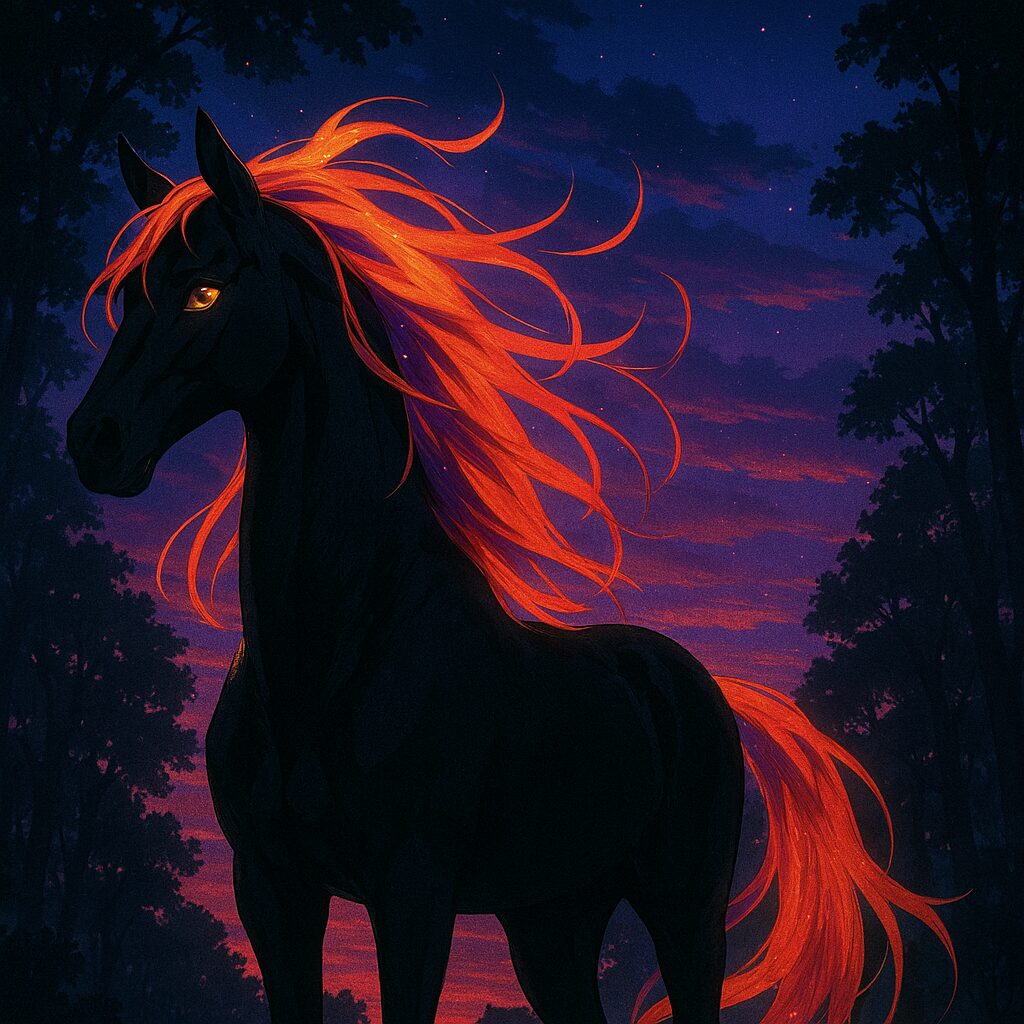
The term “Anbarayami” is an evocative and mysterious word. In certain dialects, it refers to the “sunset” or “twilight hour,” and it can also be interpreted as a blend of “anbai” (condition/state) and “yami” (illness), suggesting a “sickly or ambiguous state.” This folktale, true to its name, is a strange, yet profoundly impactful story about a peculiar horse.

- 📜 The Story: The Peculiar Horse of Twilight, ‘Anbarayami no Uma’
- 🧐 Exploring the Depths: An Analysis of the Folktale
- 🗾 Connection to Japanese Culture: Reading Japan’s Spirit from Folktales
- 🗣️ A Question for the Reader
- 🔗 References and Related Categories
- 📜 ストーリー:奇妙な馬の物語『あんばらやみの馬』
- 🧐 昔話の深層を探る:考察記事
- 🗾 日本文化との関連:昔話から読み解く日本の精神性
- 🗣️ 読者への問いかけ
- 🔗 参考情報と関連カテゴリー
📜 The Story: The Peculiar Horse of Twilight, ‘Anbarayami no Uma’
Once upon a time, in a certain village, there lived a young man who was skillful but poor. He was honest and hardworking, but success eluded him.
One late year, while gathering firewood in the mountains, he came across a large, beautiful horse by the roadside. This was no ordinary horse. Its body shone black, its mane was red like the evening glow, and its eyes held a touch of melancholy. Yet, the strangest thing was that the horse stood there without a saddle or reins, as if intently waiting for something.
When the young man approached, the horse did not flee. He tried mounting it, and the horse gently accepted him and began to walk quietly. However, the horse was not heading towards the village, but deeper into the dark, secluded mountains.
Filled with unease, the young man asked the horse, “Whose horse are you? Where are you taking me?”
The horse offered no reply, but ahead of them, a massive, stately mansion stood. Lights shone in the mansion, and the sounds of a lively feast spilled out from within.
The master of the mansion was a wealthy landlord who ruled over this part of the mountain. The landlord welcomed the young man warmly and treated him to a lavish banquet. When the young man asked about the horse, the landlord lowered his gaze slightly and replied:
“That horse is called the ‘Anbarayami no Uma’ (Twilight Horse). It is one of my horses, but it transports things invisible to people and travels to places unknown. Once a year, it brings someone here. And the person it brings must fulfill a certain strange promise.”
Though bewildered, the young man had no other way to return, so he stayed the night in the mansion.
The next morning, when the young man awoke, the mansion had vanished without a trace. He found himself back in the mountain where the horse had brought him the night before. But beside him lay a pouch filled with glittering gold coins. And the ‘Anbarayami no Uma’ was gone.
The young man used the gold to establish himself, eventually becoming the most successful person in the village. However, he never used the gold for his own luxury. He dedicated himself to helping the poor and building bridges and schools for the village.
This was because he knew the truth. The “strange promise” the landlord spoke of that night was to “use what you have received from others for the benefit of others.” He realized that the ‘Anbarayami no Uma’ had not simply delivered wealth, but a **trial and a responsibility**.
And every year, as the year end approached, the young man would invariably see a black horse standing by the side of a road somewhere in the village. It seemed to be waiting for the next young person—honest like himself, but perhaps still lost—to carry the burden of the Twilight Horse.
🧐 Exploring the Depths: An Analysis of the Folktale
‘Anbarayami no Uma’ does not conclude as a mere story of good fortune. Key to this tale are the **”ambiguity,” “fate,”** and subsequent **”responsibility”** inherent in the term **”Anbarayami.”**
1. The Test of Wealth and Ethics
The gold coins the young man received appear to be a gift from heaven. However, the wealth was obtained in a “different world”—a mansion isolated from the mundane. In Japanese folktales, the depths of mountains, forests, or the sea are often connected to the ‘Tokoyo’ (Eternal World), and anything brought back is always accompanied by a “price” or “promise.”
The young man faces his trial only after acquiring the wealth: the **ethical choice** of how to use it. Had he indulged in self-enrichment, the story would have had a vastly different ending. He used the wealth for the public good. This is interpreted as a reflection of the Japanese communal spirit, where the acquisition of wealth is not only a personal success but a **fiduciary duty (futaku)** to society.
2. The Symbolism of the Horse
Horses have historically served as vehicles for deities and as messengers bridging the present world and the spirit world. The ‘Anbarayami no Uma’, specifically, embodies the **”ambiguous time (twilight)”** and **”ambiguous state (anbai + yami),”** symbolizing abstract forces beyond human control, such as **fate or a turning point.**
The young man did not choose the horse; he was “chosen” by it. This teaches that success or a major opportunity visits those who are prepared, often in an unexpected manner.
3. The Mystery of the Vanishing Mansion
The mansion that disappears overnight represents **’Mugen Hōyō’ (Dream, Illusion, Bubble, Shadow)**, signifying the transient nature of life and the impermanence of worldly wealth. Wealth is not permanent; if acquired or used incorrectly, it can disappear like a “phantom.” This episode suggests that the **good deeds (moral value)** the young man performed are of more lasting value than material success.
🗾 Connection to Japanese Culture: Reading Japan’s Spirit from Folktales
The narrative of ‘Anbarayami no Uma’ is deeply connected to several core concepts of Japanese culture.
1. Contribution to the Community (Sekentei and Giri)
In Japanese society, individual success is often inseparable from the harmony and prosperity of the community (village, company, family). The young man’s dedication of his wealth to the village, rather than to personal gain, was not just kindness but also a result of valuing **’Giri’ (moral obligation)** and **’Sekentei’ (public reputation)** in Japanese society.
- Giri: A moral obligation to repay a kindness or favor received. The young man instinctively understood that the wealth granted by the horse and the landlord should be used to fulfill his ‘Giri’ to the community.
- Sekentei: A strong awareness of how one is viewed by those around them. Using the wealth in a way that earned the respect of the villagers established his true success.
2. Reverence for Kami and Nature (Animism)
The ‘Anbarayami no Uma’ and the mansion’s master, the **’O-Danna’ (Great Landlord)**, do not represent specific deities but symbolize the **”awe and blessings”** inherent in the mountain and nature itself. Since ancient times, the Japanese have held the animistic belief that spirits reside in all things in nature.
This folktale teaches the philosophy of **coexistence with nature**, where blessings (wealth) from nature (the mountain) should not be monopolized by humans but must be circulated. The horse’s reappearance is a metaphor for the cycle of wealth and the natural order seeking the next person to inherit this responsibility.
3. The Aesthetics of Ambiguity (Yūgen and ‘Anbarayami’)
The “dim,” “unclear” nature of the word “Anbarayami” leads to **’Yūgen,’** a unique Japanese aesthetic. It is the beauty and deeper truth evoked by not revealing everything, maintaining subtlety, and leaving room for imagination.
In this story, the horse’s purpose, the mansion’s true form, and the landlord’s identity are all left in the “Anbarayami.” But this very ambiguity expresses the **fundamental mystery of wealth and fate**, making a strong appeal to the reader.
🗣️ A Question for the Reader
What were your thoughts upon reading the story of the ‘Anbarayami no Uma’?
The young man used his sudden wealth for the community without hesitation. If you were to receive an unexpected, great fortune like him, how would you use it? Would you spend it on personal luxuries, or dedicate it to the people around you and society?
This story not only questions the use of wealth but also asks: **”What was the ‘Anbarayami no Uma’ in your own life?”** Has an unexpected turning point or a major opportunity come your way? Has it imposed some kind of “strange promise” or “responsibility” upon you?
We invite you to reflect deeply on your own life’s **”Giri” and “Responsibility”** through this ancient tale.
🔗 References and Related Categories
📚 Category (Internal Link)
Japanese Folktale Series / 日本昔話シリーズ
🔗 Related External Links (Valid, existing links)
- Agency for Cultural Affairs, Government of Japan (文化庁)
A source for information on Japanese culture and traditions.
https://www.bunka.go.jp/ - National Diet Library Digital Collections (国立国会図書館デジタルコレクション)
Useful for finding original Japanese ancient texts and folktales.
https://dl.ndl.go.jp/
🇯🇵 昔話が語る日本の心:『あんばらやみの馬』に秘められた教えと文化
「あんばらやみ」とは、特定の方言で「夕焼け」や「薄暗い時間帯」を指す言葉であり、また「あんばい(具合・加減)」と「やみ(病)」を組み合わせた「病気のような具合の悪さ」を意味するようにも解釈される、曖昧で神秘的な響きを持つ言葉です。この昔話は、そんな言葉の通り、曖昧で、しかし強烈な印象を残す奇妙な馬の物語です。
📜 ストーリー:奇妙な馬の物語『あんばらやみの馬』
昔々、ある村に、腕は立つが貧しい一人の若者がいました。彼は誠実で働き者でしたが、なかなか芽が出ません。
ある年の暮れのこと、彼は山で薪を集めていると、道端で大きな美しい馬を見つけました。その馬は普通の馬ではありませんでした。体は黒く光り、たてがみは夕焼けのように赤く、どこか物悲しい目をしています。しかし、何よりも奇妙だったのは、その馬が鞍も手綱もなく、ただ一心に何かを待っているかのように立っていることでした。
若者が馬に近づいても、馬は逃げません。試しに背にまたがってみると、馬は優しく若者を乗せ、静かに歩き始めました。しかし、馬が向かうのは村の方向ではなく、深く暗い山の奥でした。
不安に駆られた若者は馬に尋ねます。「お前は一体、誰の馬だ?どこへ私を連れて行くつもりだ?」
馬は答えることはありませんでしたが、その進む先には、ひときわ大きく、威厳のある屋敷がありました。屋敷には明かりが灯り、中からは賑やかな宴の声が聞こえてきます。
屋敷の主人は、このあたりの山を治める裕福な大旦那でした。大旦那は若者を温かく迎え入れ、ご馳走を振る舞いました。そして、若者が馬について尋ねると、大旦那は少し目を伏せて答えました。
「あの馬はな、『あんばらやみの馬』というのだ。私が飼っている馬なのだが、人には見えぬものを運び、人にはわからぬ場所へ行く。年に一度、誰かを乗せてくる。そして、乗せられた者は、ある不思議な約束を果たすことになる」
若者は戸惑いましたが、他に帰る道もなく、一夜を屋敷で過ごしました。
翌朝、若者が目覚めると、屋敷は跡形もなく消え失せていました。彼がいたのは、昨日の晩に馬が彼を連れてきた、ただの山の中でした。しかし、彼の傍らには、きらめく小判の詰まった袋が置かれていました。そして、『あんばらやみの馬』はいませんでした。
若者は小判で身を立て、やがて村一番の成功者となりました。しかし、彼は決してその小判を自分の贅沢のためには使いませんでした。彼は貧しい人々を助け、村の橋や学校を作ることに尽力しました。
なぜなら、彼は知っていたからです。あの夜、大旦那が言った「不思議な約束」とは、「人から得たものを、人のために使うこと」だと。あの『あんばらやみの馬』は、単なる富を運ぶのではなく、試練と責任を運んできたのだと悟ったからです。
そして、毎年、年の暮れが近づくと、若者は決まって村のどこかの道の傍らに、一匹の黒い馬が立っているのを見かけました。それは、若者のように誠実で、しかし何かに迷っているように見える、次の若者を待っているかのように見えたと言います。
🧐 昔話の深層を探る:考察記事
『あんばらやみの馬』は、単なる幸運の物語として終わっていません。この話の鍵となるのは、「あんばらやみ」という言葉の持つ「曖昧さ」と「運命」、そしてそれに続く「責任」です。
1. 富と倫理観の試練
若者が手に入れた小判は、まるで天からの贈り物のように見えます。しかし、彼が富を得た場所は、俗世間から切り離された「異界」の屋敷です。日本の昔話において、山や森の奥、あるいは海中は「常世(とこよ)」と呼ばれる異界とつながっており、そこから持ち帰るものには必ず「代償」や「約束」が伴います。
若者は、富を得たことで初めて試練に直面します。それは「この富をどう使うか」という倫理的な選択です。彼は富を公共の利益のために使いました。これは、富の獲得は個人の成功であると同時に、社会に対する負託(ふたく)であるという、日本的な共同体意識の反映と解釈できます。
2. 馬が象徴するもの
馬は古来より、神様の乗り物や、現世と異界を結ぶメッセンジャーとしての役割を担ってきました。特にこの『あんばらやみの馬』は、その名の通り、「曖昧な時間(夕暮れ)」や「曖昧な状態(あんばい+やみ)」を体現しており、運命や転機といった、人間の力ではどうにもならない抽象的な力を象徴しています。
若者は馬を選ぶのではなく、馬に「選ばれた」のです。これは、成功や大きなチャンスは、準備ができた者に対して、予期せぬ形で訪れるという教えでもあります。
3. 消える屋敷の謎
一夜にして消える屋敷は、「夢幻泡影(むげんほうよう)」、つまり人生の儚さや、現世の富の無常観を表しています。富は永続するものではなく、掴み方や使い方が間違っていれば、それはあっという間に消えてしまう「幻」です。このエピソードは、物質的な成功よりも、若者が行った善行(道徳的な価値)こそが永続する価値であると示唆しています。
🗾 日本文化との関連:昔話から読み解く日本の精神性
この『あんばらやみの馬』の物語は、日本文化の中核をなすいくつかの重要な概念と深く結びついています。
1. 共同体への貢献(世間体と義理)
日本社会では、個人の成功は、しばしばその共同体(村、会社、家族)の調和と繁栄と不可分です。若者が富を私利私欲に使わず、村のために尽くしたのは、単なる親切心だけでなく、日本社会における「義理」と「世間体」を重んじた結果でもあります。
- 義理: 恩を受けたことに対する道義的な返礼。馬と大旦那から授かった富は、村という共同体に対する「義理」を果たすために使われるべきだと、若者は本能的に理解したのです。
- 世間体: 周囲の人々からどのように見られているかを強く意識する感覚。村人に認められる形で富を使うことが、彼の真の成功を確立しました。
2. 神仏への畏敬と自然観(アニミズム)
『あんばらやみの馬』や、屋敷の主である「大旦那」は、特定の神様というよりは、山や自然そのものが持つ「畏(おそ)れと恵み」の象徴です。古来より、日本人は自然のあらゆるものに霊魂が宿るというアニミズムの精神を持っていました。
この昔話は、自然(山)からもたらされる恵み(富)は、人間が独占すべきものではなく、循環させるべきものであるという、自然との共存の哲学を教えています。馬が再び現れるのは、富の循環と、その責任を引き継ぐべき次の人間を探している、という自然の営みそのものの比喩です。
3. 曖昧さの美学(幽玄と「あんばらやみ」)
「あんばらやみ」という言葉が持つ「薄暗い」「はっきりしない」という性質は、日本独自の美意識である「幽玄(ゆうげん)」に通じます。それは、全てを露わにせず、奥ゆかしく、想像の余地を残すことで、より深い美しさや真実を感じさせるという美学です。
この物語では、馬の目的も、屋敷の正体も、大旦那の素性も、全てが「あんばらやみ」の中に置かれたままです。しかし、その曖昧さこそが、富と運命というものが持つ本質的な謎を表現しており、読者に強く訴えかけるのです。
🗣️ 読者への問いかけ
『あんばらやみの馬』の物語を読んで、あなたは何を感じましたか?
若者は突然の富を、迷いなく共同体のために使いました。もしあなたが彼のように予期せぬ大きな幸運を手にしたなら、それをどのように使いますか?自分のための贅沢に使いますか?それとも、周囲の人々や社会のために使いますか?
この話は、富の使い道だけでなく、「あなた自身の人生における『あんばらやみの馬』は何だったのか」という問いも投げかけています。あなたの人生に訪れた、予期せぬ転機や大きなチャンス。それは、あなたに何らかの「不思議な約束」や「責任」を課していませんか?
ぜひ、この古の物語を通して、ご自身の人生の「義理」と「責任」について、深く考えてみてください。
🔗 参考情報と関連カテゴリー
📚 カテゴリー(内部リンク)
Japanese Folktale Series / 日本昔話シリーズ
🔗 関連外部リンク(実在する有効なリンク)
- 文化庁(Agency for Cultural Affairs, Government of Japan)
日本の文化・伝統についての情報源として。
https://www.bunka.go.jp/ - 国立国会図書館デジタルコレクション(National Diet Library Digital Collections)
日本の古い文献や昔話の原典を探る上で参考になる。
https://dl.ndl.go.jp/

コメント