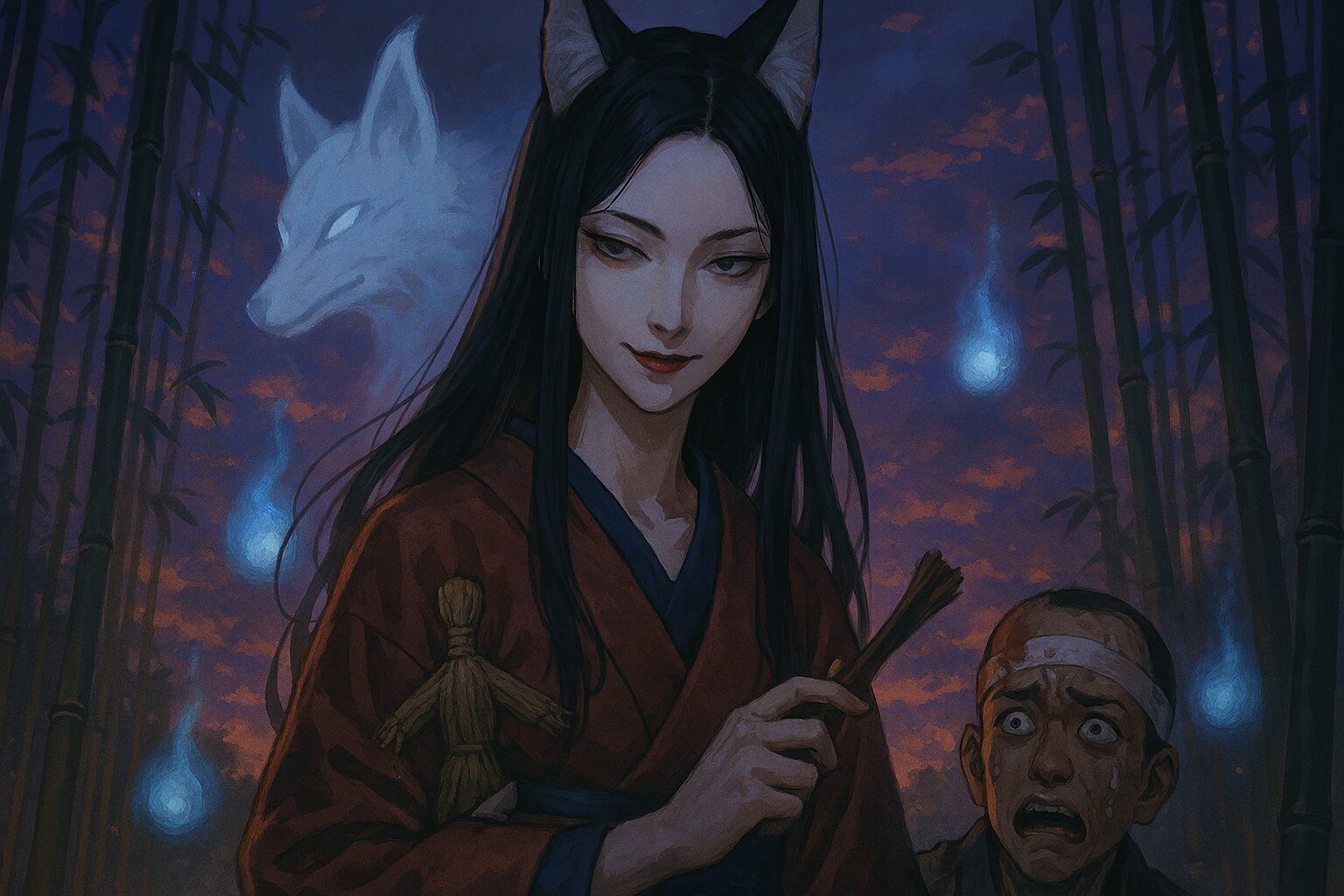
Japanese folktales often feature chilling narratives where animals deceive and test humans. Today, we introduce the Kamisori Gitsune (Razor Fox), a terrifying yet cautionary story primarily passed down in Western Japan, particularly the Chūgoku region. This tale is more than a simple fox prank; it sharply illustrates the profound terror of human hubris and delusion.

- The Eerie Legend of the Razor Fox: A Story of Deception and Hubris
- 🧐 Folklore Analysis: Why the Razor Fox?
- 🌸 Cultural Connections: What “Kamisori Gitsune” Tells Us About Japan
- 🗣️ To Our Readers: What Would You Do?
- 🔗 Further Reading and Links
- The Eerie Legend of the Razor Fox: A Story of Deception and Hubris
- 🧐 Folklore Analysis: Why the Razor Fox?
- 🌸 Cultural Connections: What “Kamisori Gitsune” Tells Us About Japan
- 🗣️ To Our Readers: What Would You Do?
- 🔗 Further Reading and Links
The Eerie Legend of the Razor Fox: A Story of Deception and Hubris
The Full Story: An Unbelievable Chain of Nightmares
Long ago, near a mountain village, an infamous family of foxes lived in a dense bamboo grove and amidst old trees. They were known as the “Kamisori Gitsune” (Razor Foxes). The terrifying reason was that any human they tricked would mysteriously find all their hair shaved off, leaving their head completely bald—a frightening consequence that occurred repeatedly.
The villagers lived in fear of these foxes, but one young man named Saizō scoffed at their existence. “What nonsense! I’ll go and expose the fox’s true identity myself,” he boasted. Ignoring the warnings of those around him, Saizō headed to the spot where the foxes were often sighted, just as dusk—the time of ambiguity—began to settle.
As he walked through the bamboo grove, he encountered a young woman. She looked exhausted, walking alone with a small baby strapped to her back. Saizō felt suspicious of anyone traveling alone at such an hour and observed her with caution, following her discreetly.
The woman crouched by the roadside and skillfully began weaving dried grass. In a matter of moments, a doll was complete, and magically, it transformed into a living baby. Saizō was horrified. The woman was indeed a fox.
Continuing to follow, the vixen entered a dilapidated shack where a fierce-looking old woman resided. The fox handed over the magically created baby to the old woman. Saizō was struck by a chilling realization: the vixen had also disguised herself as his own elder sister. He was certain the foxes were plotting to ensnare him, impersonating his entire family.
Saizō mustered his courage and burst into the shack.
“Old woman, that is not a baby! It’s dried grass! That woman is a fox!”
He snatched the baby from the old woman’s hands and hurled it into the hearth fire. However, contrary to Saizō’s expectation, the baby did not burn away like straw; instead, it was incinerated and died. Saizō was paralyzed with terror.
“You killed my grandchild! I will not forgive you!”
The old woman raged with a terrifying look, grabbing a knife and chasing after Saizō. He fled, barely managing to take refuge in the village temple. The astonished priest sheltered Saizō, listened to his tale, and calmed him down.
Saizō, remorseful over the deaths of his “sister-in-law” and “nephew,” even if it was the fox’s doing, desperately pleaded with the priest to take him on as a disciple to atone for their souls. The priest agreed, shaving Saizō’s head on the spot, marking his entry into the Buddhist clergy.
The next morning, Saizō awoke not in the temple, but in the middle of **the bamboo grove**, utterly aghast. He touched his head, which was smooth, shaved, and oozing blood.
Astonishingly, the temple, the priest, the old woman, and his sister—**all of it had been an elaborate illusion (bakejutsu) orchestrated by the Kamisori Gitsune family**. Saizō, defeated by the nightmare his own overconfidence had created, is said never to have boasted or shown arrogance again.
🧐 Folklore Analysis: Why the Razor Fox?
The “Kamisori Gitsune” is a Japanese folktale that demands deep consideration, focusing particularly on human psychology and delusion. Why did the fox fixate on “shaving hair” rather than taking a life?
The Punishment of Tonsure (Teihatsu): Stripping Authority and Pride
The core of the story lies in the “shaving of the head.” Since ancient times, hair in Japan was not merely body hair; it symbolized vitality, spiritual strength, social status, and a man’s pride. Before the Edo period, a commoner male having his head completely shaved signified “entering the priesthood,” an extremely solemn decision to abandon the secular world.
The Razor Fox’s final act of deception and shaving is more cruel than taking a life: it is the act of stripping the human of their social existence, their pride, and the symbol of “being a man.” For Saizō, who refused to believe in the fox’s power, it was a profoundly humiliating and spiritual punishment for his crime of “disbelieving the fox’s existence and overestimating his own wit and power.”
The Terror of “Mitate” (Substitution): Monsters Blending into Reality
Another crucial element is the sophistication of the fox’s illusion.
- Straw turning into a baby: A typical fox illusion (genjutsu).
- Impersonating his sister, an old woman, and a priest: By impersonating close family members and figures of authority (the priest), the fox **fundamentally destabilizes Saizō’s perception of reality**.
- The baby’s death: Saizō acts on his **certainty** (“it must be a fox’s illusion”), yet his action results in the horrifying death of what appeared to be a “real human.” In that moment, Saizō loses the **boundary between reality and illusion**.
- The final revelation that everything was a trick: Even Saizō’s subsequent actions, taken under the conviction of truth (deciding to become a priest and shaving his head), are revealed to be part of the fox’s **elaborate stage design**.
This suggests the fox possesses the ability not just to physically harm humans but to **completely master the human psyche and dismantle their perceived world**. Saizō’s tragedy illustrates how fragile a person’s **visual certainty** (“I saw it with my own eyes”) and **hubris** (“my judgment is correct”) can be, and how easily they can be shattered.
🌸 Cultural Connections: What “Kamisori Gitsune” Tells Us About Japan
The “Kamisori Gitsune” is not just a scary story; it is a window into the worldview and spiritual sensibility that the Japanese people have held for centuries.
1. The Special Status of the Fox (Kitsune): Between God and Yōkai
In Japan, the fox is not merely a wild animal. While revered as the messenger (kenzoku) of Inari Ōkami (the God of Harvest), it also has a dark side as a **Yōkai (supernatural entity)** or **evil spirit** that deceives people and commits mischief.
This duality reflects the complex feelings the Japanese hold toward nature. Nature is a sacred entity that bestows blessings (fertility) but also possesses a terrifying, unpredictable force (disaster, illusion) that can threaten humans. The Razor Fox precisely embodies this **“ambiguity” of nature**, and its deception techniques align with the miraculous, shape-shifting powers attributed to the Inari deity.
2. The Culture of “Haji” (Shame) and the Monitoring Society of “Seken”
Saizō’s fate of being shaved is closely linked to the Japanese cultural concept of **”Haji” (shame)**. Being found with a shaved head is the **”proof of his defeat”**—having been tricked by the very entity he insulted—and is exposed to the entire village.
In Japanese society, an individual’s actions and reputation are strongly governed by the “**Seken**” (public eye or social environment). To “feel shame” (haji o kaku) is not just a personal failure but the loss of trust and status within the collective. Saizō did not lose his life, but his social face (mentsu) was completely destroyed. This story reflects a unique Japanese social psychology where the **unseen judgment of the “Seken” and the resulting “shame”** can be a punishment more terrifying than death itself.
3. **The Wisdom of Navigating the “Vague World”: Never Drop Your Guard**
The setting of “Kamisori Gitsune” is the “**Tasogare Doki**” (dusk), the time when day and night intersect. This period is also called “**Ōma ga Toki**” (the time of meeting the demon), considered a dangerous hour when the boundary between humans and non-humans is most blurred.
Saizō stepped into the fox’s domain at this dangerous time, shielded only by his **”certainty”** and **”arrogance.”** The story teaches us that there is a **”vague realm”** that cannot be explained solely by “logic” or “scientific rationality.” It warns that human common sense fails in that realm, and the arrogant will inevitably suffer a harsh lesson. This caution of “**Yudan Taiteki**” (Never drop your guard) speaks to the ancient Japanese wisdom that one must always maintain humility and respect toward the unseen forces of nature, authority, and even the “Seken.”
🗣️ To Our Readers: What Would You Do?
Having read this chilling tale of the “Kamisori Gitsune,” what is your reaction?
Saizō, the protagonist, relied too much on his five senses and reason, refusing to believe in the unseen. Until the very end, he acted based on his **certainty that he was “right.”** However, that very conviction was the most elaborate trap set by the foxes.
If you were in Saizō’s position, would you have taken the **action based on your “certainty”**—throwing the baby into the fire? Or could you have continued to doubt whether the reality before your eyes was fake?
This folktale poses an important question for modern society. In an age saturated with information, where it is hard to distinguish truth from falsehood, how do we differentiate between **”what we want to believe” and “what we truly should believe”?**
We invite you to share your thoughts, keeping the lesson of this story in mind.
🔗 Further Reading and Links
If you wish to learn more about the culture and geography related to this folktale, please visit the external sites below.
- About the History of Traditional Japanese Tonsure: Japan Guide – Comprehensive information on Japanese culture
- The Concepts of Tasogare Doki (Dusk) and Ōma ga Toki: Wikipedia – Tasogare Doki
Category Link: Japanese Folktale Series
🇯🇵 Deep Dive into Japanese Folklore: The Chilling Tale of the “Kamisori Gitsune” (Razor Fox)
日本の昔話には、動物が人間を欺き、試す、時に恐ろしい物語が多く存在します。今回ご紹介するのは、西日本、特に中国地方に伝わる恐ろしくも教訓に満ちた物語、「かみそり狐(かみそりぎつね)」です。この物語は、単なる狐のいたずら話では片付けられない、人間の慢心と錯覚の恐ろしさを鋭く描き出しています。
The Eerie Legend of the Razor Fox: A Story of Deception and Hubris
昔話の全貌:信じがたい連鎖する悪夢
その昔、ある山里の近くにある竹藪や古木が茂る場所に、人を化かすことで悪名高い狐の一族が住んでいました。彼らは「かみそり狐」と呼ばれていました。なぜなら、彼らに騙された人間は、気づかないうちに髪の毛を全て剃られ、ツルツルにされてしまうという恐ろしい被害が相次いでいたからです。
村人たちはこの狐たちを恐れていましたが、一人、才造(さいぞう)という名の若者だけは、狐の存在を鼻で笑い、「そんな馬鹿げた話があるものか。俺が行って、狐の正体を暴いてやる」と豪語していました。周囲の制止も聞かず、才造は日が暮れ始めた黄昏時(たそがれどき)、狐がよく出るとされる場所へと向かいました。
竹藪を歩いていると、やがて彼は一人の若い女と出会います。女は幼い赤ん坊を背負い、疲れ果てた様子で一人、歩いていました。才造は、こんな時間に一人でいるのはおかしいと感じ、彼女を不審に思います。彼は警戒しつつ、そっと女の後を追いました。
女は道端にしゃがみ込むと、枯れ草を器用に編み始めました。見る間に人形が出来上がると、不思議なことに、それは生きている赤ん坊へと姿を変えたのです。才造は鳥肌が立ちました。女の正体は、やはり狐だったのです。
さらに後を追うと、女狐は一軒の古いあばら家に入っていきました。中には目つきの悪い老婆がおり、女狐は自分が化けさせて作った赤ん坊を老婆に預けました。才造は、その女狐が自分の家にいる姉に化けていることに気づき、戦慄します。狐たちは家族全員に化け、才造を陥れようとしているに違いないと確信しました。
才造は意を決し、あばら家に押し入ります。
「ばあさん、それは赤ん坊じゃない!枯れ草だ!その女は狐だ!」
彼は老婆の手から赤ん坊を取り上げ、囲炉裏の火の中に投げ込みました。しかし、才造の予想に反し、赤ん坊は燃え尽きることなく、そのまま焼死してしまったのです。才造は恐怖に震え上がります。
「孫を殺したな!許さない!」
老婆は凄まじい形相で怒り狂い、包丁を持ち出して才造を追いかけました。才造はただ逃げ惑い、やっとのことで逃げ込んだのは、村の寺でした。寺の和尚は驚きながらも才造を匿い、事情を聞いて彼をなだめました。
才造は、狐の仕業とはいえ、自分が手を下した嫁と孫の死を悔い、供養のために和尚に弟子入りしたいと懇願します。和尚は彼の願いを聞き入れ、その場で才造の髪を剃り、出家させました。
次の朝、目を覚ました才造は、自分が寺ではなく、あの竹藪の中にいることに気づき、愕然とします。そして、頭を触ると、そこはツルツルに剃られて血がにじんでいました。
なんと、あの寺も、和尚も、老婆も、姉も、**全てはかみそり狐の一族が仕掛けた、巧妙な化け術(ばけじゅつ)**だったのです。才造は、自分の過信が招いた悪夢に打ちのめされ、二度と強がりを言うことはなかったと伝えられています。
🧐 Folklore Analysis: Why the Razor Fox?
この「かみそり狐」の物語は、日本の昔話の中でも特に人間の心理と錯覚に焦点を当てた、奥深い考察を必要とする作品です。なぜ狐は、人間を殺すのではなく「髪を剃る」という行為に執着したのでしょうか?
剃髪(ていはつ)という罰:権威と誇りの剥奪
物語の核心は「剃髪」にあります。古代から、髪の毛は単なる体毛ではなく、生命力、精神力、社会的な地位、そして武士や男の誇りを象徴するものでした。江戸時代以前、平民の男性が髪を全て剃るのは「出家」を意味し、世俗を捨てる極めて重大な決断でした。
かみそり狐が人間を騙し、最後に髪を剃るのは、命を奪うことよりも残酷な、その人間の社会的な存在、誇り、そして「人間であること」の象徴を剥奪する行為なのです。特に、狐を信じなかった才造にとっては、「狐の存在を認めず、己の知恵と力を過信した」ことへの、極めて屈辱的で精神的な罰と言えます。
「見立て」の恐怖:現実に溶け込む化け物
この物語のもう一つの重要な要素は、狐の化け術の巧妙さです。
- 枯れ草が赤ん坊に変わる:これは典型的な狐の幻術(げんじゅつ)です。
- 姉、老婆、和尚に化ける:才造の周りの親しい人物や、権威ある人物(和尚)に化けることで、彼の現実認識を根底から崩壊させます。
- 赤ん坊の焼死:才造が「狐の幻術に違いない」という確信を持って行動した結果、彼の予想に反して「本物の人間」が死んでしまうという恐ろしい結末を迎えます。この瞬間に、才造は現実と幻術の境界線を見失います。
- 全てが幻術だったという最後の暴露:才造が真実だと思って取った行動(出家を決意し、髪を剃る)そのものまでもが、狐の用意した壮大な舞台装置の一部だったと判明します。
これは、狐が人間を物理的に害するだけでなく、人間の精神を完全に掌握し、現実世界を破壊する能力を持っていることを示唆しています。才造の悲劇は、彼自身の「見て確認した」という視覚的な確信と「自分の判断は正しい」という**慢心**が、いかに脆く、容易く崩されるかを示しています。
🌸 Cultural Connections: What “Kamisori Gitsune” Tells Us About Japan
「かみそり狐」は、単なる怖い話としてではなく、日本人が古くから抱いてきた世界観や精神性を理解するための窓口となります。
1. 狐(きつね)の特別な地位:神と妖怪の間
日本では、狐は単なる野生動物ではありません。農耕の神である稲荷神(いなりしん)の使い(眷属:けんぞく)として信仰の対象となる一方で、人を化かし、悪事を働く妖怪(ようかい)や悪霊としての側面も持ち合わせています。
この二面性は、日本人が自然に対して抱く複雑な感情の表れです。自然は恵み(豊穣)をもたらす神聖な存在であると同時に、予測不能で時に人間を脅かす恐ろしい力(災害、幻惑)を持っています。かみそり狐は、まさにその自然の持つ「両義性(ambiguity)」を体現しており、その化け術は、稲荷神が持つとされる神通力や変幻自在の力に通じるものがあります。
2. 「世間」という名の監視社会と恥(Haji)の文化
才造が髪を剃られるという結末は、日本文化における**「恥(はち/haji)」**の感覚と密接に関わっています。髪を剃られた姿は、彼が狐に騙され、村人たちが恐れていた存在を侮った**「敗北の証」**として、村中に晒されることになります。
日本社会では、個人の行動や評価は、常に「**世間(せけん)**」、すなわち周囲の人々の目や意見によって強く規定されます。「恥をかく」とは、単なる個人的な失敗ではなく、集団からの信頼や地位を失うことを意味します。才造は、命は失いませんでしたが、社会的な顔(メンツ)を完全に潰されました。この物語は、**目に見えない「世間」の判断と、それに伴う「恥」の重さ**が、時には死よりも恐ろしい罰になり得るという、日本特有の社会心理を反映しています。
3. **「あやふやな世界」を生きる知恵:油断大敵**
「かみそり狐」の舞台は、昼と夜が交差する「**黄昏時(たそがれどき)**」です。この時間は「**逢魔時(おうまがとき)**」とも呼ばれ、人と人ではないものが最も出会いやすい、世界の境界が曖昧になる危険な時間とされてきました。
才造は、この危険な時間に、自らの**「確信」**と**「傲慢」**という鎧を身につけて狐の領域に踏み込みました。物語は、この世には「道理」や「科学的合理性」だけでは説明できない、**「あやふやな領域」**が存在することを教えています。その領域では、人間の常識は通用せず、傲慢な心を持つ者は必ず痛い目を見る、という警告です。この「油断大敵」という教訓は、自然や権威、あるいは「世間」といった目に見えない力に対して、常に謙虚さと敬意を払うべきだという、日本人古来の知恵を物語っています。
🗣️ To Our Readers: What Would You Do?
この恐ろしい「かみそり狐」の物語を読み終えて、あなたは何を感じましたか?
物語の主人公である才造は、自分の五感と理性を過信し、見えないものを信じようとしませんでした。彼は最後まで、自分が「正しい」という確信を持って行動しました。しかし、その「正しい」という確信こそが、狐の仕掛けた最も巧妙な罠だったのです。
もしあなたが才造の立場だったら、あばら家で赤ん坊を火に投げ込むという、あなたの「確信」に基づく行動を取ったでしょうか?あるいは、最後まで、目の前の現実が偽物であると疑い続けることができたでしょうか?
この昔話は、現代社会においても重要な問いを投げかけています。情報が溢れ、何が真実で何が偽物かわからない現代において、私たちは「自分が信じたいもの」と「本当に信じるべきもの」を、どう見分けているのでしょうか。
ぜひ、この物語から得た教訓を胸に、あなたの意見を聞かせてください。
🔗 Further Reading and Links
この昔話と関連する日本の文化、地理についてもっと知りたい方は、以下の外部サイトをご覧ください。
- 日本の伝統的な剃髪の歴史について:Japan Guide – 日本の文化についての包括的な情報
- 黄昏時(たそがれどき)と逢魔時(おうまがとき)の概念:Wikipedia – 黄昏時
Category Link: Japanese Folktale Series (日本昔話シリーズ)


コメント