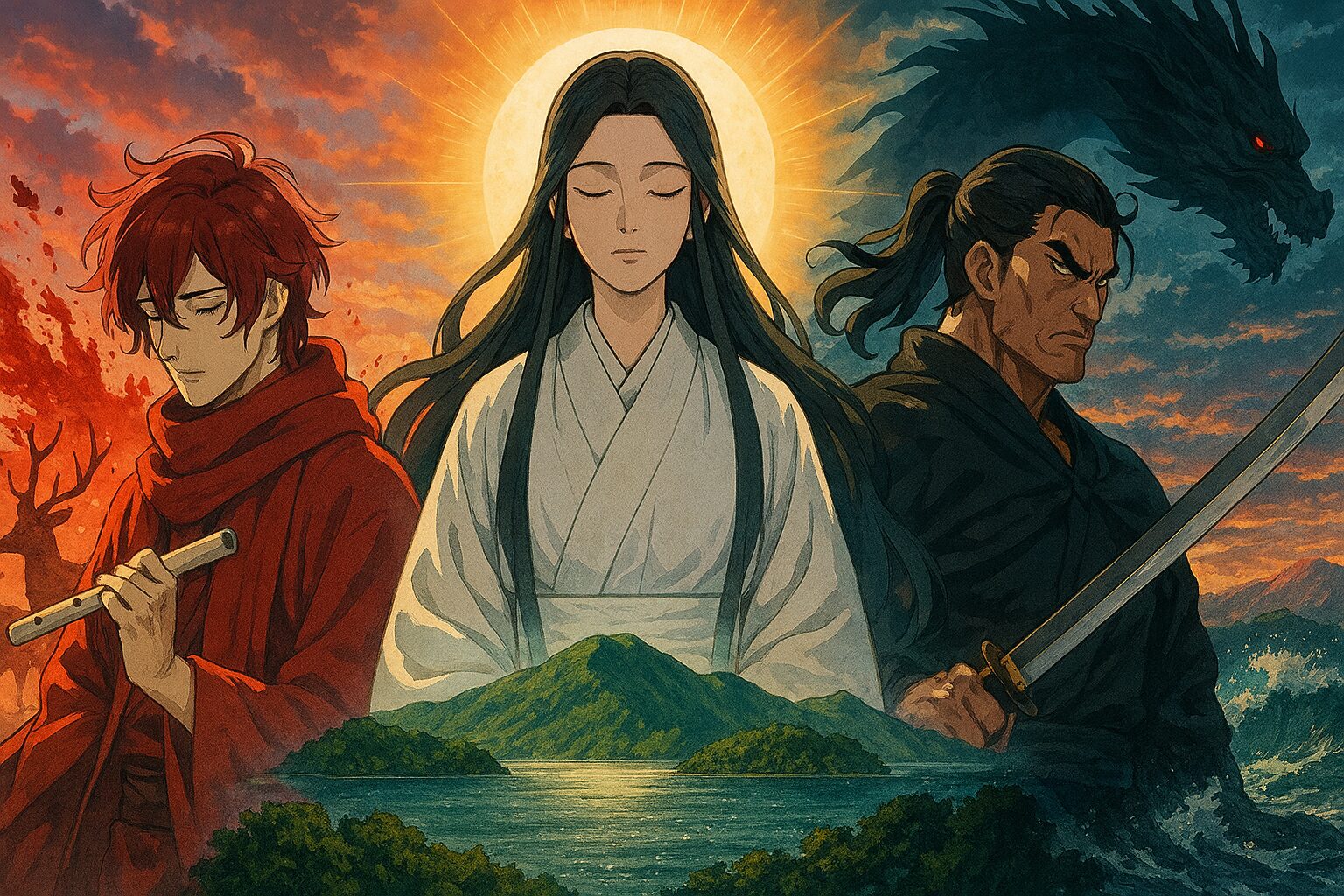
Hello to all our international readers! I’m your programmer and blogger, and I’m here to guide you through the world of “Japanese Folktales,” the wellspring of Japanese culture. Today, we introduce the dramatic northern legend of “Akakami (Red God) and Kurokami (Black God)” and delve into a thorough analysis of its deep meaning and connection to Japanese culture.

- 🔥 Long-Form Analysis: The Passion and Cultural Roots of the Japanese Folktale “Akakami and Kurokami”
- 🔥 超長文解説!日本の昔話「赤神と黒神」が描き出す情熱と文化のルーツ
🔥 Long-Form Analysis: The Passion and Cultural Roots of the Japanese Folktale “Akakami and Kurokami”
I. The Legendary Story: The Duel Between Two Gods for a Beautiful Goddess
The story of “Akakami and Kurokami” is a grand and romantic legend passed down in the Tohoku region, particularly around Lake Towada, which straddles the border of Aomori and Akita Prefectures.
🎸 Lake Towada: The Goddess’s Song
The tale is set in the mysterious, forest-ringed lake, Lake Towada. A beautiful Goddess resided on its shore, enchanting visitors by playing the Koto (Japanese harp) and singing in a lovely voice every day.
🦌 Akakami’s Melody of Love
Her song reached the ears of a God dwelling far away in Oga, Akita: Akakami (Red God). Akakami was a slender, handsome youth who played a delicate transverse flute. He fell in love instantly, visiting Lake Towada frequently to play his flute. The Goddess, charmed by Akakami’s kindness and heart-stirring music, became his companion. They spent happy, peaceful days with the Goddess singing and dancing to the sound of Akakami’s flute.
🐉 Kurokami’s Passion and Valor
However, the Goddess’s song also reached the ears of another God, Kurokami (Black God), residing in Tsugaru (present-day Western Aomori). Kurokami was a valiant and brave God, always accompanied by a fierce Dragon and wielding a sharp Katana, symbolizing raw power.
Kurokami was equally captivated by the Goddess’s beauty. He began visiting, bringing extravagant gifts of whales and animals he hunted. The Goddess was gradually drawn to Kurokami’s passion and valor, a striking contrast to Akakami’s gentleness.
⚔️ The Inevitable Duel
Torn between the kind Akakami and the passionate Kurokami, the Goddess was deeply troubled. Seeing her distress, the two Gods decided to engage in a duel to determine who was more worthy of her.
The duel was fierce. Akakami brought a great herd of deer from his homeland, Oga, while Kurokami commanded his terrifying Dragon. They fought with all their might. However, Akakami’s graceful power was no match for the valiant Kurokami, his Dragon, and his sharp sword.
Akakami was severely wounded by Kurokami’s sword. Bleeding profusely, his blood staining the ground red, he was forced to flee back to his homeland, Oga, in agony.
💔 The Fate of Love and the Birth of the Tsugaru Strait
Kurokami, convinced of his victory, triumphantly told the Goddess, “Now you are mine.”
Yet, the story takes an unexpected turn. The Goddess, instead of favoring the victor Kurokami, worried about the wounded and bleeding Akakami and left to comfort and heal him in Oga.
Faced with this unforeseen development, even the mighty Kurokami was powerless. He sat atop a northern mountain, his back to Lake Towada, and continued to sigh, a deep, continuous expression of his profound sorrow.
His sigh was a force of nature, so tremendous that it tore the ground between Honshu (Tsugaru) and Ezochi (Hokkaido), creating a massive waterway. This is the origin of the Tsugaru Strait.
II. Folktale Analysis: The Paradox of Love and Power
The tale of “Akakami and Kurokami” is not just a simple love triangle; it is rich with profound symbolism and cultural insight.
⚖️ Gentleness vs. Might (Bun and Bu)
Akakami, the “slender, handsome youth playing a transverse flute,” is an emblem of elegance, art, and “Bun” (literacy/culture). Kurokami, “valiant and brave,” with a “dragon and sharp Katana,” embodies strength, martial valor, and “Bu” (military might).
The Goddess’s attraction to both reflects the perennial Japanese ideal of balancing “Bun and Bu.” While Japanese people have historically aspired to Bunbu-Ryodo (excelling in both), the story depicts Bu (Kurokami) initially overcoming Bun (Akakami). This may mirror the real-world reality where brute force often prevails in power struggles.
🩸 The Goddess’s Choice: Rejection of the Victor
The most crucial twist is the Goddess choosing the defeated Akakami over the triumphant Kurokami. This suggests that sincere affection and compassion for the weak ultimately capture the heart, transcending domination through force or victory.
While power is alluring, the Goddess’s “concern” for the wounded Akakami was the truest form of love for her. This connects deeply with the Japanese aesthetic of “Hōgan-Biiki” (sympathy for a tragic hero or the underdog).
🌊 Geographic Symbolism: The Boundary Born of a God’s Sigh
The ending, where Kurokami’s sigh creates the Tsugaru Strait, elevates the story beyond a divine romance to a grand myth of “Creation of the Land” (Kokudo Sōsei). The Tsugaru Strait is a critical geographic barrier marked by the rough power of nature, separating Honshu and Hokkaido.
The idea that a God’s “deep sigh,” a negative emotion like “grief” or “unfulfilled desire,” could shape Japan’s geography showcases an **Animistic** worldview, where divine drama is interwoven with natural phenomena. This points to the profound respect and awe for nature at the core of Japanese culture.
III. Connection to Japanese Culture: Love, Nature, and the Supremacy of the Heart
“Akakami and Kurokami” is deeply relevant to various aspects of Japanese culture.
1. Shinto and Animism: Fusion of Nature and Deity
The story strongly reflects Shinto beliefs, where Gods are tied to specific regions (Lake Towada, Oga, Tsugaru), and their emotions trigger natural events (the Strait’s birth). The Animistic belief that Gods dwell in all phenomena—mountains, rivers, lakes, storms, and earthquakes—forms the backbone of this folktale.
2. The Spirit of Bushido: Harmony of Strength and Compassion
While Bushido (the way of the warrior) is associated with “Bu,” its true essence involves kindness and righteousness. In this tale, Kurokami, the victor of “Bu,” loses love, while the Goddess chooses Akakami, who possesses the “heart” of gentleness. This exemplifies the Japanese value that **integrity and emotional sincerity**, not mere power, ultimately determine worth.
3. View of Romance: The Strength Named “Gentleness”
In Japanese classical literature and modern romance, it is common for the “compassionate, sensitive soul” to be loved over the “dominating hero.” Akakami’s **”gentleness”** and the **”sense of security”** it gave the Goddess highlight that inner harmony and emotional depth are highly valued in Japanese relationships.
4. Origin of Place Names: Landscape and Storytelling
By tying the tale to specific locations—Oga (Akakami’s home) and Tsugaru (Kurokami’s home)—the story becomes a **”Narrative of the Land”** for the local people.
- The Namahage of Oga: Oga, where Akakami fled, is known for the “Namahage” tradition—fierce, God-like messengers. This might suggest the land, stained by Akakami’s sacred blood, holds a special, wild power.
Thus, “Akakami and Kurokami” is not just a folktale but a precious cultural heritage, intricately weaving together Japan’s geography, religious views, spirituality, and aesthetic sensibilities.
IV. A Question for Our Readers: Which Would You Choose?
International readers, how did this epic love story of “Akakami and Kurokami” resonate with you?
Put yourself in the Goddess’s shoes:
- A. Akakami, who plays a delicate tune despite being wounded and weak?
- B. Kurokami, who is strong, valiant, and capable of protecting everything?
When faced with the ultimate choice, which God would you side with? And if you were Kurokami, how would you overcome the deep sorrow of losing your love? How would your emotion, like his sigh, affect the world around you?
Consider the ending of this story in light of your own values.
V. External Links and Category
If you’re interested in the Japanese culture and geography behind this story, please explore the links below.
🔗 External Links
🗄️ Category (Internal Link)
🇯🇵 神秘と情熱の物語:十和田湖に響く愛の笛と剣の音
海外読者の皆様、こんにちは! プログラマー兼ブロガーの私が、日本の古き良き文化の源泉である「昔話」の世界へご案内します。今回は、北国に伝わる壮絶な愛憎劇、「赤神(あかかみ)と黒神(くろかみ)」をご紹介し、その深い考察と日本文化との関連性を徹底的に掘り下げます。
🔥 超長文解説!日本の昔話「赤神と黒神」が描き出す情熱と文化のルーツ
I. 伝説のストーリー:美しき女神を巡る二柱の神の決闘
ご紹介する「赤神と黒神」は、東北地方、特に青森と秋田の境界に位置する十和田湖(とわだこ)に伝わる、雄大でロマンチックな伝説です。
🎸 舞台は十和田湖、女神の歌声
物語の舞台は、深い森に囲まれた神秘的な湖、十和田湖です。その湖畔には、それはそれは美しい女神が住んでいました。女神は毎日のように琴(こと)を奏で、美しい声で歌を歌い、湖畔を訪れる人々を魅了していました。
🦌 赤神の愛の旋律
その歌声は、遠く離れた秋田の男鹿(おが)に住む一柱の神の耳に届きました。彼の名は「赤神」。赤神は痩身で、繊細な横笛を吹く、優美な美青年でした。
赤神は女神を一目見て恋に落ち、十和田湖に通い詰め、得意の笛を奏でました。女神も赤神の優しさと、心に響く笛の音に魅了され、いつしか二柱は仲良しに。赤神が吹く笛の音に合わせて女神が歌い踊る、という幸せで穏やかな毎日を過ごしていました。
🐉 黒神の情熱と豪胆さ
しかし、その女神の歌声は、今度は遠く津軽(つがる)(現在の青森県西部)に住む、もう一柱の神の耳にも届きます。彼の名は「黒神」。黒神は勇猛果敢な神で、いつも獰猛な龍(りゅう)を従え、鋭い刀(かたな)を持つ、力強さの象徴のような存在でした。
黒神もまた、女神を一目見るなり、その美しさに強く惹かれました。彼は得意の狩りで獲った鯨や動物を豪快な土産として女神に捧げ、頻繁に訪ねるようになります。女神は、赤神の優しさと対照的な、黒神の熱意と勇猛さにも次第に心惹かれていきました。
⚔️ 避けられない決闘
優しい赤神も、情熱的な黒神も、どちらも好きな女神は、どうすれば良いか分からず深く悩みました。
その様子を見た赤神と黒神は、どちらが女神にふさわしいかを決める決闘を決意します。
決闘は壮絶を極めました。赤神は故郷の男鹿から連れてきた鹿の大群を従え、対する黒神は、恐ろしい龍を従え、互いに力の限り闘います。しかし、勇猛な黒神と、龍、そして鋭い剣の前に、優美な赤神の力は及びませんでした。
力の差は歴然。赤神は黒神の剣に深く傷つけられ、血を流しながら、その血で地面を赤く染めながら、故郷の男鹿へと悲痛な思いで逃げ帰りました。
💔 愛の行方と津軽海峡の誕生
黒神は勝利を確信し、喜び勇んで女神に「これで女神は俺のものだ」と告げます。
しかし、ここで物語は意外な展開を見せます。女神は、勝利者となった黒神ではなく、傷つき血を流した赤神の方を心配し、彼を癒すために男鹿へと行ってしまったのです。
予想外の事態に、さすがの勇猛な黒神もどうすることもできません。彼は十和田湖を背に、北の山の頂に座り込み、深い、深い溜息をつき続けました。
その溜息は、神の力のこもった途方もないものでした。その凄まじい溜息の力で、とうとう本州(津軽)と蝦夷地(えぞち:現在の北海道)の地面は裂け、巨大な水道が誕生しました。それが、現在の津軽海峡(つがるかいきょう)になったというお話です。
II. 昔話の考察:愛と力のパラドックス
この「赤神と黒神」の物語は、単なる三角関係の物語として片付けられない、深い象徴と示唆に富んでいます。
⚖️ 優しさ vs 力強さ(文と武)
赤神は「痩身で横笛を吹く美青年」であり、優雅さや芸術、そして「文(ぶん)」(知識や教養)の象徴として読み取れます。対して、黒神は「勇猛果敢」「龍を従え鋭い刀を持つ」という、力強さ、武勇、そして「武(ぶ)」(戦いや力)の象徴です。
女神がこの二柱に惹かれたのは、日本人にとって永遠のテーマである「文と武のバランス」を具現化しています。日本人は古来より、**文武両道**(知識と武力を兼ね備えること)を理想としてきましたが、この物語では、武(黒神)が文(赤神)に一度は勝利します。これは、現実世界の覇権争いにおいて、しばしば武力が優勢になる現実を反映しているとも言えます。
🩸 女神の選択:勝者への拒絶
物語の最も重要な転換点は、女神が勝者の黒神ではなく、敗者である赤神を選んだ点です。これは、力による支配や勝利よりも、**心から湧き出る愛情**や**弱者への思いやり**が、最終的に人(神)の心を捉えるという、普遍的な価値観を示しています。
武力や豪胆さは魅力的ですが、傷つき血を流して逃げ帰った赤神への**「心配」**という感情こそが、女神にとっての真実の愛だったのです。これは、日本の美意識における**「判官贔屓(ほうがんびいき)」**(弱者や悲劇のヒーローに同情し、肩入れする心情)とも深く繋がります。
🌊 地理的象徴:神の溜息が生んだ境界線
黒神の溜息が津軽海峡を生み出したという結末は、この物語が単なる神々の恋愛ドラマではなく、**「国土創成(こくどそうせい)」**に関わる壮大な神話であることを示しています。津軽海峡は、本州と北海道を分かつ、荒々しい自然の力を持つ重要な地理的境界線です。
神の「深い溜息」、つまり「悲しみ」や「叶わぬ願い」といったネガティブな感情が、日本の地理を形成したという発想は、自然現象に神の感情やドラマを重ね合わせる**アニミズム的**な世界観を如実に表しています。これは、日本文化の根底にある自然への畏敬の念を示唆しています。
III. 日本文化との関連性:愛、自然、そして心の優位性
「赤神と黒神」の物語は、日本のさまざまな文化的側面に深く関連しています。
1. 神道とアニミズム:自然と神の融合
この物語は、神々が特定の地域(十和田湖、男鹿、津軽)と結びつき、その感情が自然現象(津軽海峡の誕生)を引き起こすという、**神道(しんとう)**的な考え方を色濃く反映しています。日本において、山、川、湖、そして嵐や地震といった現象のすべてに神が宿ると考える**アニミズム(精霊信仰)**は、この昔話のバックボーンです。
2. 武士道に通じる精神性:力と心の調和
武士道というと「武」のイメージが強いですが、その真髄は「優しさ」と「義」です。この物語において、黒神は「武」の勝利者でありながら愛を得られず、女神は「心」の優しさを持つ赤神に寄り添います。これは、単なる力ではなく、**心の在り方や倫理観**こそが、最終的な価値を決定するという、日本人が重んじてきた精神性を体現しています。
3. 恋愛観:「優しさ」という名の強さ
日本の古典文学や現代の恋愛観においても、「力で支配するヒーロー」よりも、「弱さに寄り添い、繊細な心を持つ人」が愛されるパターンは珍しくありません。赤神の「優しさ」と、それによって女神が得た「安心感」は、日本人の恋愛や人間関係において、**内面的な調和**が非常に重視されることを示しています。
4. 地名の由来:ランドスケープとストーリーテリング
この昔話は、男鹿(赤神の故郷)と津軽(黒神の故郷)という具体的な地名と結びつくことで、地域住民にとっての**「土地の物語」**となっています。
- 男鹿(おが)の「なまはげ」: 赤神の逃げ帰ったとされる男鹿には、古くから荒々しい神の使者とされる「なまはげ」の伝統があります。これは、赤神の神聖な血を帯びた土地として、特別な力を宿していることを示唆しているのかもしれません。
このように、「赤神と黒神」は、単なる昔話としてだけでなく、日本の地理、宗教観、精神性、美意識が複雑に絡み合った、貴重な文化遺産なのです。
IV. 読者への問いかけ:あなたならどちらを選ぶか?
海外読者の皆さん、この「赤神と黒神」の壮大なラブストーリーを読んで、あなたはどのように感じましたか?
女神の立場になって考えてみましょう。
- A. 傷つきながらも繊細な愛を奏でる「赤神」
- B. 力強く、豪胆に全てを守り抜く「黒神」
あなたなら、究極の選択を迫られたとき、どちらの神に心を寄せますか? そして、もしあなたが黒神だったとしたら、愛を失った後、どのようにしてその深い悲しみを乗り越えるでしょうか? その溜息が海峡を生んだように、あなたの感情は世界にどんな影響を与えるでしょうか?
ぜひ、あなた自身の価値観と照らし合わせて、この物語の結末について考えてみてください。
V. 外部リンクとカテゴリー
この物語の背景にある日本の文化や地理に興味を持たれた方は、以下の情報もぜひご覧ください。


コメント