CATEGORY: What’s Today’s Special Day Series
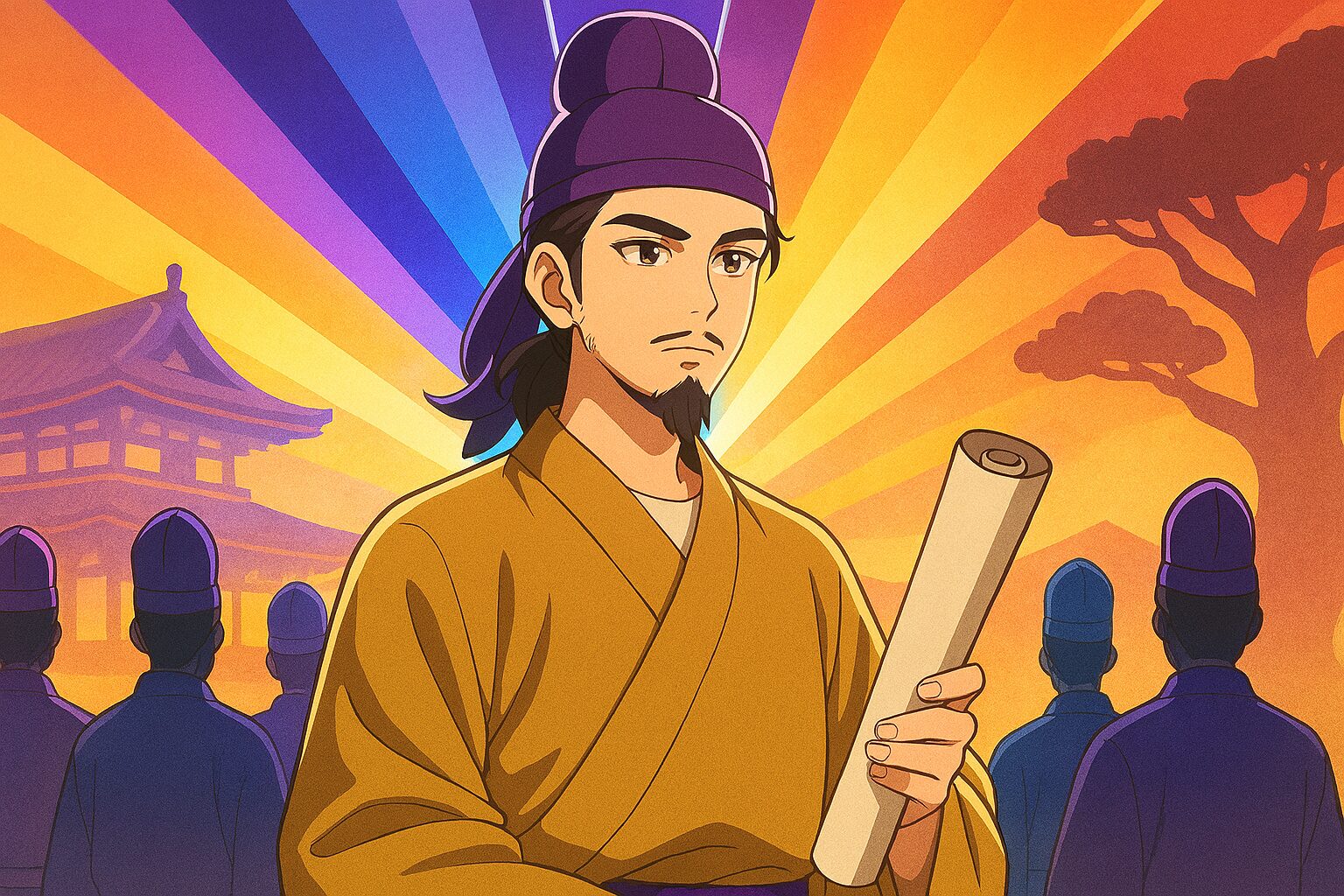
December 5th. Do our international readers know that this day holds a special significance on the Japanese calendar? Over 1,400 years ago, in the Asuka Period (specifically, December 5th of the 11th year of Empress Suiko’s reign, 603 CE, according to the Nihon Shoki), **Prince Shotoku (聖徳太子)**, a powerful royal and regent, established a groundbreaking system that fundamentally changed the course of Japanese history. This system is the **”Twelve Cap Ranks” (冠位十二階: Kan’i Jūnikai).**
This is not merely a past event. This system was the magnificent beginning of a transformation that profoundly influenced the future structure of Japanese society, particularly the culture that emphasizes **”ability” (Meritocracy)**, and even the nation’s aesthetics of color.

- 👑 ① The Establishment of the Twelve Cap Ranks: A Major Shift from Lineage to Merit
- 🌸 ② Decoding Japanese Culture from the Twelve Cap Ranks: The Source of Meritocracy and Color Aesthetics
- 💡 ③ A Question for the Reader: What is Your “Purple”?
- 🌐 ④ Related Information and External Links
- 👑 ① 冠位十二階の制定:血縁から能力への大転換
- 🌸 ② 冠位十二階が読み解く日本文化:能力主義と色彩感覚の源流
- 💡 ③ 読者への問い:あなたにとっての「紫」は何ですか?
- 🌐 ④ 関連情報と外部リンク
👑 ① The Establishment of the Twelve Cap Ranks: A Major Shift from Lineage to Merit
At the time the Twelve Cap Ranks were established, the early Asuka Period, Japan had yet to establish a centralized government. Political power was hereditarily held by influential local clans, known as **Gōzoku (豪族)**, such as the Soga and Mononobe clans, based on their **Shisei (氏姓)**, or blood ties and family lineage. The positions of officials were largely inherited, placing the society within a rigid system where individual ability and achievement were rarely acknowledged.
Prince Shotoku strongly recognized the necessity to break this stagnation and establish a powerful, centralized nation under the Emperor. This was driven by the need for Japan to survive in the competitive international environment, especially in the context of diplomacy with the powerful Chinese state of **Sui (隋)**. A modern national system was essential for the country’s future.
🎨 The “Virtues” and “Ranks” Indicated by the Color of the Cap
The Twelve Cap Ranks are, literally, a system of ranks consisting of **twelve grades**. The names of the ranks are based on six virtues derived from Confucianism (**Jukyō**): **”Virtue” (徳: Toku)**, **”Benevolence” (仁: Jin)**, **”Propriety” (礼: Rei)**, **”Faithfulness” (信: Shin)**, **”Righteousness” (義: Gi)**, and **”Wisdom” (智: Chi)**. Each of these six virtues was divided into “Greater” (大: Dai) and “Lesser” (小: Shō) to form a total of twelve ranks.
| Rank Order | Cap Rank Name | Virtue | Cap Color (Shade) | Modern Value |
|---|---|---|---|---|
| 1st | Greater Virtue (Daitoku) | Virtue | Purple (Murasaki) | Highest Rank / Leadership |
| 2nd | Lesser Virtue (Shōtoku) | Virtue | Purple (Murasaki) | |
| 3rd | Greater Benevolence (Daijin) | Benevolence | Blue/Green (Ao) | Humanity / Compassion |
| 4th | Lesser Benevolence (Shōjin) | Benevolence | Blue/Green (Ao) | |
| 5th | Greater Propriety (Dairei) | Propriety | Red (Aka) | Discipline / Etiquette |
| 6th | Lesser Propriety (Shōrei) | Propriety | Red (Aka) | |
| 7th | Greater Faithfulness (Daishin) | Faithfulness | Yellow (Ki) | Trust / Integrity |
| 8th | Lesser Faithfulness (Shōshin) | Faithfulness | Yellow (Ki) | |
| 9th | Greater Righteousness (Daigi) | Righteousness | White (Shiro) | Justice / Impartiality |
| 10th | Lesser Righteousness (Shōgi) | Righteousness | White (Shiro) | |
| 11th | Greater Wisdom (Daichi) | Wisdom | Black (Kuro) | Knowledge / Intellect |
| 12th | Lesser Wisdom (Shōchi) | Wisdom | Black (Kuro) |
The most innovative aspect of this system was making the ranks immediately recognizable by the **color of the cap** (kanmuri) and its shade. The highest rank, “Virtue,” was denoted by **Purple (Murasaki)**, a dye that was extremely rare and difficult to obtain at the time.
The true significance of this system lies in its principle: **”Regardless of birth or family lineage, officials are granted rank and are eligible for promotion based on their individual ability, merit, and level of virtue.”** This was the seed of **Meritocracy** first introduced in Japan, which can be considered the origin of modern bureaucratic systems and corporate performance evaluation in the country.
🌸 ② Decoding Japanese Culture from the Twelve Cap Ranks: The Source of Meritocracy and Color Aesthetics
The Twelve Cap Ranks not only brought about a major political change in Japan but also deeply influenced the nation’s culture. From this system, we can discern two important cultural elements that continue to resonate in modern Japan.
1. The Fusion of Meritocracy and the Principle of “Wa” (Harmony)
In parallel with establishing the Cap Ranks, Prince Shotoku promulgated the **”Seventeen-Article Constitution” (十七条の憲法: Jūshichijō no Kenpō)** in 604 CE. The first article contains the famous phrase: **”Harmony (Wa) should be valued and avoiding opposition should be honored”** (Wa wo motte tōtoshi to nashi, sakarau koto naki wo mune to seyo).
At first glance, the merit-based Cap Ranks might seem to conflict with the Constitution’s call for collective harmony. However, this apparent contradiction holds the key to Prince Shotoku’s ideal state and the deep structure of modern Japanese culture.
To quell the conflicts between the clans and establish an order centered on the Emperor, the Prince implemented Meritocracy (Cap Ranks) to appoint talented individuals. Simultaneously, he strongly demanded that these officials work cooperatively for the collective good (Seventeen-Article Constitution) rather than pursuing personal ambitions without restraint.
Even in modern Japanese society, while ability and results are valued, a strong value is placed on **teamwork, cooperation, and maintaining “Wa” (harmony)** with one’s surroundings. This demonstrates that the political and moral foundation of “the balance between merit and harmony,” established by Prince Shotoku in ancient times, has been transmitted and transformed into the present day.
2. Hierarchy Dominated by Color and Japanese Aesthetic Sense
The Cap Ranks employed specific colors—purple, blue, red, yellow, white, and black—to denote status. The prestige of the highest rank’s **”Purple”** was immense, and after this system’s introduction, purple became known as a **”Forbidden Color” (Kinjiki)** in Japan, recognized as the highest status color, forbidden for wear by all but a few high-ranking nobles.
This culture of “indicating rank by color” was passed down to the **”Court Rank” (I-kai)** system under the **Ritsuryō system** (governance based on penal and administrative codes) in the subsequent **Nara Period**. It exerted a decisive influence on Japanese court culture and costume aesthetics.
The hierarchical use of color was not limited to rank display; it contributed to refining the Japanese people’s sensibility toward color. Constrained by the limited availability of dyes and the need to express rank through shades, Japanese crafts, textiles, and art developed a unique culture of **finding deep meaning and beauty in subtle color variations (gradation)**. For instance, hundreds of names exist for subtle nuances of traditional Japanese colors. Shades of the same color, such as Fuji-iro (wisteria color), Sumire-iro (violet color), and Shōbu-iro (iris color), express an infinite range of emotions.
We can interpret the authority Prince Shotoku conferred upon color through the Twelve Cap Ranks as a catalyst for nurturing the **”symbolism of color”** and the **”diversity of delicate colors”** that underlie Japanese aesthetics.
💡 ③ A Question for the Reader: What is Your “Purple”?
Thank you for staying with this long article. While the Twelve Cap Ranks is a system from the distant past, it poses a universal question that still applies to us today:
The question is: **”What criteria should be used to evaluate people and build a society?”**
Prince Shotoku broke the wall of hereditary privilege and ushered in a new era by visually embodying the intangible values of “virtue” and “ability” through the “color” of the cap.
If you were the leader of a new company or community in modern Japan, what kind of **”Twelve-Rank System”** would you devise to evaluate people and boost morale? Would it be based merely on job titles, or would it assess the unseen “abilities” and “virtues” essential for society?
And for you, what values or goals would the **”Purple Cap”**—the symbol of the highest rank—represent?
I hope that encountering this ancient Japanese wisdom will inspire you to reflect once more on your own values. Please share your thoughts in the comments!
🌐 ④ Related Information and External Links
Category
External References
- Nihon Shoki (Japanese Chronicle): One of Japan’s oldest official histories, describing the establishment of the Twelve Cap Ranks. (*In Japanese only, for scholarly reference*)
- Horyu-ji Temple: A temple complex said to have been built under the patronage of Prince Shotoku, featuring the world’s oldest wooden structures. A key cultural asset demonstrating the Prince’s devotion to Buddhism.
- Twelve Cap Ranks (Wikipedia, Japanese): Comprehensive information on the system’s details, color interpretation, and transition to later systems.
🇯🇵 【超長文解説】日本の記念日シリーズ:12月5日、聖徳太子が「冠位十二階」を制定した日。能力主義の夜明けと日本の色の文化
CATEGORY: 日本の記念日、暦、出来事
12月5日。この日が日本のカレンダーにおいて特別な意味を持つことを、海外の読者の皆さんはご存知でしょうか。今から1400年以上も前、飛鳥時代と呼ばれる西暦603年(『日本書紀』によれば推古天皇11年12月5日)に、時の皇族であり政治の摂政であった聖徳太子(しょうとくたいし)が、日本の歴史を根本から変える画期的な制度を制定しました。それが、「冠位十二階(かんいじゅうにかい)」です。
これは単なる過去の出来事ではありません。この制度こそが、後の日本社会のあり方、特に「能力」を重んじる文化、そして日本の色彩美学にまで深く関わる、壮大な変革の始まりだったのです。
👑 ① 冠位十二階の制定:血縁から能力への大転換
冠位十二階が制定された当時の日本、すなわち飛鳥時代初期は、まだ中央集権的な国家体制が確立されていませんでした。政治の実権は、蘇我氏(そがし)や物部氏(もののべし)といった豪族(ごうぞく)たちが、それぞれの氏姓(しせい)、つまり血縁や家柄に基づいて世襲的に握っている状態でした。役人の地位も世襲が基本であり、個人の能力や功績は評価されにくい、硬直化した社会システムの中にあったのです。
聖徳太子は、この閉塞した状況を打破し、天皇を中心とした強力な中央集権国家を樹立する必要性を強く認識していました。その背景には、当時のアジア大陸、特に強大な国家として台頭していた中国の隋(ずい)との外交があり、国際的な競争の中で日本が生き残るためには、近代的な国家制度が不可欠だったのです。
🎨 冠の色が示す「徳」と「位」
冠位十二階は、文字通り12の階級からなる位の制度です。その名称は、中国の儒教(じゅきょう)の教えに由来する「徳(とく)」、「仁(じん)」、「礼(れい)」、「信(しん)」、「義(ぎ)」、「智(ち)」という六つの徳目に基づいています。この六つの徳目を、それぞれ「大(だい)」と「小(しょう)」に分けて、合計12の位階を構成しました。
| 順位 | 冠位名 | 徳目 | 冠の色(濃淡) | 現代的価値観 |
|---|---|---|---|---|
| 1位 | 大徳(だいとく) | 徳 | 紫(むらさき) | 最高位・リーダーシップ |
| 2位 | 小徳(しょうとく) | 徳 | 紫(むらさき) | |
| 3位 | 大仁(だいにん) | 仁 | 青(あお) | 人間性・思いやり |
| 4位 | 小仁(しょうにん) | 仁 | 青(あお) | |
| 5位 | 大礼(だいらい) | 礼 | 赤(あか) | 規律・作法 |
| 6位 | 小礼(しょうらい) | 礼 | 赤(あか) | |
| 7位 | 大信(だいしん) | 信 | 黄(き) | 信頼・誠実さ |
| 8位 | 小信(しょうしん) | 信 | 黄(き) | |
| 9位 | 大義(だいぎ) | 義 | 白(しろ) | 正義・公明正大 |
| 10位 | 小義(しょうぎ) | 義 | 白(しろ) | |
| 11位 | 大智(だいち) | 智 | 黒(くろ) | 知識・知性 |
| 12位 | 小智(しょうち) | 智 | 黒(くろ) |
そして、この位の上下を冠(かんむり)の色とその濃淡で一目で識別できるようにしたことが、この制度の最も革新的な点でした。最高位である「徳」には、当時極めて貴重で入手困難な染料であった紫(むらさき)が用いられました。
この制度の真の意義は、「生まれや家柄に関係なく、個人の能力や功績、そして徳の高さに応じて役人に位を与え、昇進も可能にする」という点にあります。これこそが、日本で初めて導入された能力主義( Meritocracy)の萌芽であり、現代の官僚制度や企業における人事評価システムの原点とも言えるでしょう。
🌸 ② 冠位十二階が読み解く日本文化:能力主義と色彩感覚の源流
冠位十二階は、日本の政治体制に大きな変革をもたらしただけでなく、その後の日本文化全体にも深い影響を与えました。この制度から、私たちは現代の日本にも通じる二つの重要な文化の要素を読み解くことができます。
1. 能力主義と「和を以て貴しとなす」の融合
聖徳太子は、冠位十二階の制定と並行して、翌604年に「十七条の憲法(じゅうしちじょうのけんぽう)」を制定します。その第一条には、有名な「和(わ)を以(もっ)て貴(とうと)しと為(な)し、忤(さか)うること無きを宗(むね)とせよ」(調和を最も大切にし、争い逆らうことのないのを根本としなさい)という言葉があります。
一見すると、個人の能力を重んじる冠位十二階と、集団の調和を説く十七条の憲法は相反するように見えます。しかし、ここにこそ聖徳太子の目指した理想的な国家像と、現代日本文化の深層が隠されています。
太子は、豪族同士の争いを抑え、天皇を中心とする秩序を確立するため、能力主義(冠位十二階)で有能な人材を登用する一方、彼らが独走せず、全体の利益のために協調して働くこと(十七条の憲法)を強く求めたのです。
現代の日本社会においても、能力や成果が評価される一方で、チームワーク、協調性、そして周囲との「和」を大切にするという価値観が強く根付いています。これは、聖徳太子が古代に築いた「能力と調和のバランス」という政治的・道徳的な基盤が、形を変えながら現代まで受け継がれている証拠と言えるでしょう。
2. 色彩が支配する序列と日本の美意識
冠位十二階では、地位の高さを示すために紫、青、赤、黄、白、黒という明確な色が用いられました。特に最上位の「紫」が持つ権威は絶大で、この制度以降、日本において紫は「禁色(きんじき)」、すなわち一部の貴族や高位の者以外が着用を許されない、最高の格を持つ色として認識されるようになりました。
この「位を色で表す」という文化は、後の奈良時代(ならじだい)の律令制(りつりょうせい)における「位階(いかい)」制度にも受け継がれ、日本の宮廷文化や服飾文化に決定的な影響を与えます。
色の序列化は、単なる階級表示に留まらず、日本人の色彩に対する感性を磨く一因となりました。限られた染料と、色の濃淡で序列を表現するという制約の中で、日本の工芸、染織、そして美術は、わずかな色の違い(グラデーション)の中に深い意味と美を見出す独自の文化を発展させていきます。例えば、日本の伝統色には、微妙な色の違いを表す数百もの名称が存在します。「藤色」「菫色」「菖蒲色」など、同じ紫でもその濃淡や色合いによって、無限の情感を表現するのです。
聖徳太子が冠位十二階で色に権威を与えたことが、日本の美意識の根底にある**「色彩の持つ象徴性」**と、**「繊細な色の多様性」**を育むきっかけの一つとなったと読み解くことができます。
💡 ③ 読者への問い:あなたにとっての「紫」は何ですか?
さて、長文にお付き合いいただきありがとうございます。聖徳太子が制定した冠位十二階は、遠い過去の制度ではありますが、現代の私たちにも通じる普遍的なテーマを投げかけています。
それは、**「何を基準に人を評価し、社会を築くべきか」**という問いです。
聖徳太子は、世襲という既得権益の壁を壊し、「徳」や「能力」という見えない価値を、冠の「色」という視覚的な形で具現化することで、新しい時代を切り開きました。
もしあなたが現代の日本で、新しい会社やコミュニティのリーダーになったとしたら、人々を評価し、モチベーションを高めるために、どのような「十二階のシステム」を考えますか? それは、単なる肩書きでしょうか、それとも目には見えないが社会に不可欠な「能力」や「徳」を評価するものになるでしょうか。
そして、あなたにとって、最高位を示す「紫の冠」とは、どのような価値観や目標を象徴する色になるでしょうか。
この古代日本の英知に触れ、あなた自身の価値観をもう一度見つめ直すきっかけにしていただけたら幸いです。ぜひ、あなたの考えをコメントで聞かせてください。
🌐 ④ 関連情報と外部リンク
カテゴリ
参考外部情報
- 日本書紀 (Japanese Chronicle): 冠位十二階の制定について記述されている、日本最古の正史の一つです。(学術的資料のため、日本語のみ)
- 法隆寺 (Horyu-ji Temple): 聖徳太子が建立に関わったとされる、世界最古の木造建築群を持つ寺院。太子の仏教への傾倒を示す重要な文化遺産です。
- 冠位十二階 (Wikipedia, Japanese): 制度の詳細、色の解釈、後の制度への移行など、包括的な情報が掲載されています。


コメント