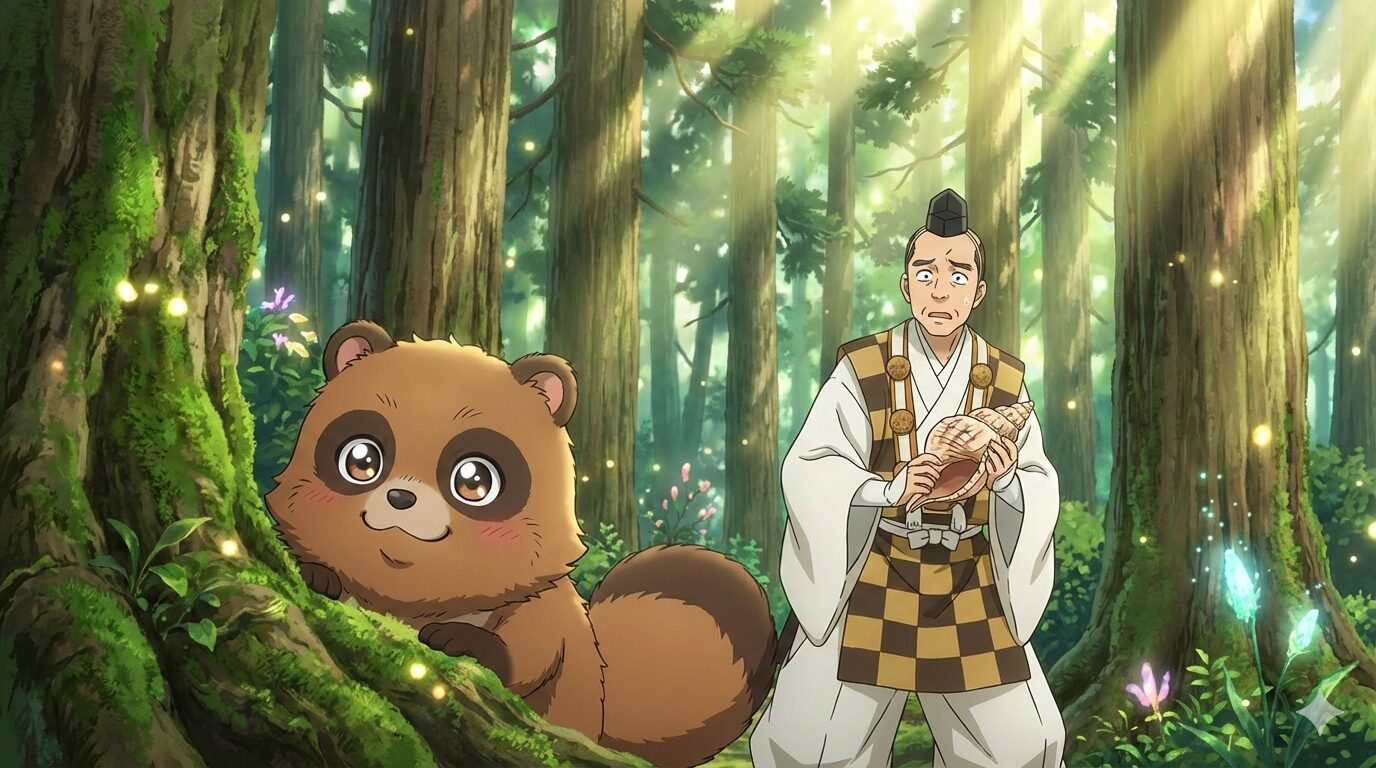
In the deep mountains of Japan, mysterious powers are said to reside. Today, I’d like to introduce a folktale full of humor and moral lessons featuring a “Yamabushi” (a strict mountain ascetic) and a “Tanuki” (a raccoon dog), the lovable trickster of the Japanese forest.

1. The Story: The Yamabushi and the Baby Tanuki
Long, long ago, in the depths of a dense mountain, there lived a Yamabushi. A Yamabushi is a mystical hermit who undergoes rigorous training in the mountains to acquire spiritual powers.
On this particular day, the Yamabushi was walking along a steep path, chanting a purification prayer, “Rokkon Shojo, Rokkon Shojo.” Hanging from his waist was a large Horagai (conch shell trumpet), an important tool used to ward off evil spirits and signal fellow practitioners.
The Encounter with the Baby Tanuki
It was just past noon. As the Yamabushi stopped to rest under a large pine tree, he sensed movement at the base of the trunk. Peering quietly, he saw a baby Tanuki sound asleep, looking completely safe and peaceful.
Seeing its curled-up back and fluffy fur, a mischievous thought sprouted in the Yamabushi’s mind. “I bet I could give this little one a good scare.” Despite being a disciplined monk, in that moment, he let his guard down and gave in to a childish impulse.
The Yamabushi crept closer without making a sound, positioned his large conch shell right next to the baby Tanuki’s ear, took a deep breath, and—
“BLAAAAAARE!!!”
A thunderous sound, enough to shake the mountain, roared through the air. “Kiii!” The baby Tanuki jumped up, eyes wide with terror, and tumbled into the bushes, running away without looking back.
“Bwahahaha! That was a masterpiece. I bet he nearly jumped out of his skin!” Laughing loudly, the Yamabushi continued his walk along the mountain path.
Sudden Darkness and Strange Occurrences
However, after walking for a while, something strange happened. Although it was still early afternoon, the sky suddenly turned pitch black, and the mountain was enveloped in the darkness of night.
“That is odd. They say mountain weather is changeable, but to turn to night so quickly…” As the confused Yamabushi stood there, he saw the light of torches approaching from the distance. A long procession seemed to be heading his way.
“Clang, clang…” Along with the sound of a bell, he heard low, eerie chanting. It was a funeral procession. But in such a remote mountain, it was impossible for such a grand funeral to take place. A chill ran down the Yamabushi’s spine.
“This is no ordinary event. Is it the work of a Yokai (spirit)?” Panicked, the Yamabushi climbed high up a nearby tree and held his breath, waiting for the procession to pass. When the group arrived directly under the tree, they stopped.
“Master Yamabushi, Master Yamabushi. What are you doing up so high?” The head priest at the front of the procession looked up and smiled eerily at him. “Eek!” The moment the Yamabushi screamed in surprise, the tree shook violently, and he fell headfirst toward the ground.
The Morning Awakening
“Ouch, ouch, ouch…” When the Yamabushi opened his eyes, he was back on the usual mountain path, bathed in the morning sunlight. There was no funeral procession, no dark night. He had simply fallen from the roots of the tree and landed on his backside.
Then, glancing over, he saw the baby Tanuki from yesterday peeking out from the bushes. It seemed to grin at him before wagging its tail and disappearing deep into the forest.
“Ah, I see. I was tricked by that baby Tanuki…” The Yamabushi felt ashamed of his immaturity. He had received a fitting punishment for using his power to bully a weaker creature. He bowed deeply in the direction the Tanuki had gone, vowed to correct his heart, and set off on his training journey once more.
2. Analysis: Arrogance and Nature’s Retaliation
This story is not just about an animal seeking revenge. It hides themes deeply cherished by the Japanese people: “Awe of Nature” and “Humility.”
The Responsibility of Power
At the beginning of the story, the Yamabushi uses his conch shell—a sacred tool—to scare a defenseless baby Tanuki. This is a metaphor for humans arrogantly exercising their technology or power against nature. The Yamabushi was supposed to be a spiritual guardian, but he abused his power for personal amusement.
The Meaning of the Tanuki’s Illusion
The illusion of the “funeral procession” created by the Tanuki can be interpreted as a ritual of “death and rebirth” for the Yamabushi. By falling from the high tree (a symbol of authority) and hitting the ground (reality/nature), he discarded his old, arrogant self. The baby Tanuki, by humiliating him, acted as a small teacher, reminding him of what a true ascetic should be.
3. Cultural Insights: The Yamabushi and the Tanuki
For international readers, the two main characters in this story might be unfamiliar. Let’s dig a little deeper.
What is a Yamabushi?
Yamabushi literally means “One who lies in the mountains.” They are practitioners of Shugendo, a unique Japanese religion that blends ancient mountain worship with Buddhism and Shintoism.
- Distinctive Attire: They wear a small black cap called a tokin, unique robes, and carry the horagai (conch shell) mentioned in the story.
- Role: They are believed to gain spiritual powers from the mountains to heal the sick and exorcise evil spirits.
The Japanese Tanuki is NOT a Raccoon
Although often translated as “raccoon dog,” the Tanuki in Japanese folklore is more than just an animal.
- Shapeshifting: Along with foxes (Kitsune), Tanuki are believed to have the ability to shapeshift and trick humans. While foxes are often depicted as clever or sometimes malicious, Tanuki tricks are usually humorous, clumsy, or playful.
- Belly Drumming: Legend says that on full moon nights, Tanuki drum on their large bellies, making a “Pom-Poko” sound.
- Ceramic Statues: You may have seen statues of Tanuki wearing a straw hat and holding a sake bottle in front of shops in Japan. They are charms for business prosperity (Shigaraki ware).
4. Message for the Modern World
This story teaches us that “no matter how high your status or ability, you must remain humble toward the weak and nature.” The Yamabushi reflected on his actions and showed respect to the baby Tanuki in the end. This “reconciliation” is the beauty of the Japanese spirit.
To my readers:
If you found a sleeping animal in the forest, what would you do? Would you startle it like the Yamabushi? Or would you watch over it quietly?
The next time you walk in nature, please remember that a little Tanuki might be watching you from the shadows of the trees.
References & Links:
- For more Japanese legends and folktales: Japanese Folktale Series
- About Shugendo and Yamabushi: Dewa Sanzan (Japan National Tourism Organization)
【日本昔話シリーズ】山伏と子だぬき:修行者と森の精霊の知恵比べ
日本の深い山々には、不思議な力が宿ると信じられています。今回は、厳しい修行を行う「山伏(やまぶし)」と、日本の森のアイドルでありトリックスターである「タヌキ」が登場する、ユーモアと教訓に満ちた物語をご紹介します。
1. 昔話「山伏と子だぬき」の物語
むかしむかし、ある深い山の中に、一人の山伏がいました。山伏とは、山の中で厳しい修行を行い、特別な霊力を身につけようとする行者のことです。
その日も山伏は、「六根清浄(ろっこんしょうじょう)、六根清浄」と唱えながら、険しい山道を歩いていました。彼の腰には、大きな法螺貝(ほらがい)がぶら下がっています。これは、魔を払い、仲間への合図に使う大切な道具です。
子だぬきとの出会い
昼過ぎのことです。山伏が大きな松の木の下で一休みしようとすると、木の根元で何かが動く気配がしました。そっと覗き込むと、そこには一匹の可愛らしい子だぬきが、安心しきった様子でスヤスヤと昼寝をしていました。
丸まった背中、ふかふかの毛並み。無防備なその姿を見て、山伏の中にいたずら心が芽生えました。
「どれ、ひとつ驚かしてやろう」
厳しい修行をしているはずの山伏ですが、この時はつい、魔が差してしまったのです。
山伏は音を立てないように忍び寄り、子だぬきの耳元で、腰の法螺貝を構えました。そして、思い切り息を吸い込むと――
「ブォォォォォォォォォーッ!!!」
山全体が震えるような大音響が響き渡りました。
「キーッ!」
飛び起きた子だぬきは、何が起きたのかわからず、目を白黒させながら、転がるようにして藪の中へ逃げ込んでいきました。
「わっはっは! こりゃあ傑作だ。肝を冷やしたに違いない」
山伏は高笑いしながら、再び山道を歩き始めました。
突然の夜と怪奇
しかし、しばらく歩いていると、不思議なことが起こりました。まだ午後のはずなのに、急に空が暗くなり、あたり一面が夜の闇に包まれてしまったのです。
「おや? 山の天気は変わりやすいと言うが、これほど急に日が暮れるとは……」
困惑する山伏の前に、遠くから松明(たいまつ)の明かりが見えてきました。どうやら、長い行列がこちらへ向かってくるようです。
「チリーン、チリーン……」
鐘の音と共に聞こえてくるのは、低く不気味な読経の声。それは、葬式の行列でした。しかし、こんな山奥で、これほど立派な葬列が行われるはずがありません。山伏は背筋が寒くなりました。
「これはただごとではない。妖怪の仕業か?」
山伏は慌てて近くの高い木によじ登り、息を潜めて行列が通り過ぎるのを待つことにしました。行列は木の真下まで来ると、ピタリと止まりました。
「山伏殿、山伏殿。そんな高いところで何をなされている」
行列の先頭にいた和尚が、木の上を見上げて不気味に笑いかけました。
「ひいっ!」
山伏が驚いて声を上げたその瞬間、木がぐらりと揺れ、彼は真っ逆さまに地面へと落ちてしまいました。
朝の目覚め
「痛たたた……」
山伏が目を覚ますと、そこは朝の光が降り注ぐ、いつもの山道でした。葬列も、闇夜もどこにもありません。彼は木の根元から転げ落ちて、尻餅をついていただけでした。
そして、ふと向こうを見ると、昨日の子だぬきが、茂みの陰からこちらを見て、ニヤリと笑った(ように見えた)あと、尻尾を振って森の奥へと消えていきました。
「ああ、そうか。わしはあの子だぬきに化かされていたのか……」
山伏は、自分の未熟さを恥じました。修行者である自分が、弱い者いじめのような悪戯をした報いを受けたのです。彼は子だぬきが消えた方向へ深く一礼し、心を入れ替えて、再び修行の旅に出ました。
2. 物語の考察:傲慢さと自然のしっぺ返し
この物語は、単なる「動物の仕返し」の話ではありません。ここには、日本人が大切にしてきた「自然への畏敬の念」と「謙虚さ」というテーマが隠されています。
「力」を持つ者の責任
物語の冒頭、山伏は法螺貝という「力(ツール)」を使って、無防備な子だぬきを驚かせます。これは、人間が持つ技術や権力を、自然界に対して傲慢に行使することのメタファー(隠喩)です。山伏は本来、霊的な守護者であるはずですが、その力を私的な快楽(いたずら)のために乱用しました。
タヌキの幻術が意味するもの
タヌキが見せた「葬列」の幻覚は、山伏にとっての「死と再生」の儀式とも読み取れます。彼は一度、高い木(権威の象徴)から落ちることで、古い傲慢な自分を捨て、地面(現実・自然)に戻ってきました。子だぬきは、山伏に恥をかかせることで、彼に「本来あるべき修行者の姿」を思い出させた、小さな師匠だったのかもしれません。
3. 日本文化の深層:山伏とタヌキの正体
海外の読者の皆様にとって、この物語に登場する二つの存在は少し馴染みがないかもしれません。ここで少し深掘りしてみましょう。
山伏(Yamabushi)とは?
山伏は、「山に伏して修行する者」を意味します。彼らは「修験道(Shugendo)」の実践者です。修験道は、日本古来の山岳信仰に、仏教や神道が習合して生まれた独自の宗教です。
- 特徴的な服装:頭に小さな黒い帽子(兜巾)、独特の装束、そして物語にも登場した法螺貝を持っています。
- 役割:彼らは山で得た霊力を使って、人々の病気を治したり、悪霊を払ったりすると信じられていました。
日本のタヌキ(Tanuki)は「Raccoon」ではない
英語ではしばしば “Raccoon Dog” と訳されますが、日本の伝承におけるタヌキは、単なる動物ではありません。
- 変身能力:キツネと並び、タヌキは人を化かす能力を持つとされています。キツネが賢く、時に冷徹に人を化かすのに対し、タヌキの化かし方はどこかユーモラスで、愛嬌があるのが特徴です。
- 腹鼓(はらづつみ):タヌキは満月の夜に、自分のお腹を太鼓のように叩いて楽しむと言われています(ポンポコという音)。
- 信楽焼(Shigaraki ware):日本の家の軒先や店の前で、笠をかぶり、酒瓶を持ったタヌキの置物を見たことがありませんか?あれは「他を抜く(他より優れる)」という語呂合わせから、商売繁盛の縁起物として愛されています。
4. 現代へのメッセージ
この物語は、私たちに「どんなに高い地位や能力があっても、弱者や自然に対して謙虚であること」を教えてくれます。山伏は最後に反省し、子だぬきに敬意を払いました。この「和解」こそが、日本的な精神の美しさです。
読者の皆様へ:
もしあなたが森の中で眠っている動物を見つけたら、どうしますか? 山伏のように驚かせますか? それとも、静かに見守りますか?
次に自然の中を歩くときは、木の陰から小さなタヌキがあなたを見ているかもしれないことを、どうか忘れないでください。
参考リンク・関連情報:
- 日本の民話や伝説をもっと知りたい方はこちら:Japanese Folktale Series
- 修験道と山伏について(英語):Dewa Sanzan (Japan National Tourism Organization)


コメント