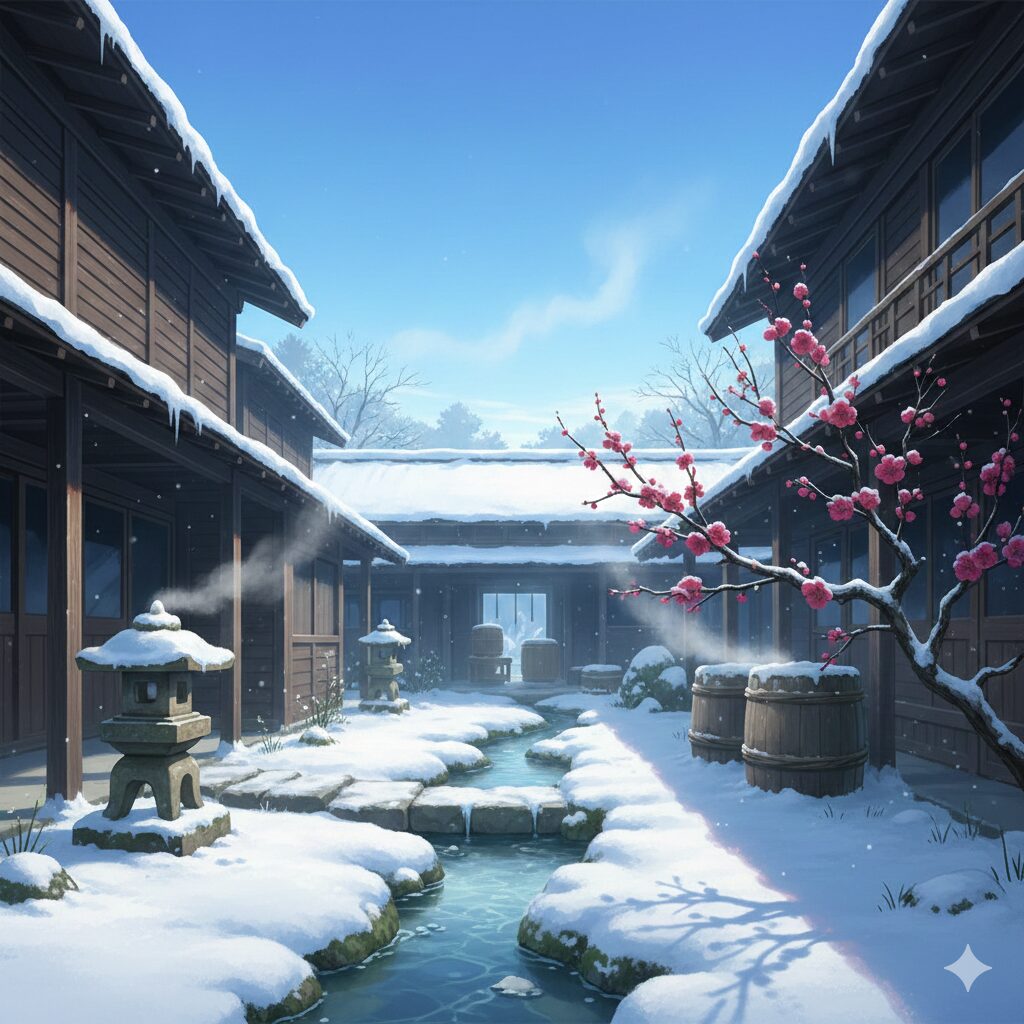
In the Japanese calendar, there exists a beautiful system called “Nijushi Sekki” (The 24 Solar Terms) that captures the subtle shifts of the seasons. The 24th and final term, marking the conclusion of the solar year, is “Daikan” (Major Cold), which arrives around January 20th.
Literally meaning “Major Cold,” this period represents the harshest temperatures of the year. However, in Japanese history and culture, Daikan is not merely a time to endure. The Japanese people have long respected this extreme cold as a special period to brew the finest sake, forge the spirit, and prepare for the coming spring.
Why do the Japanese welcome the cold rather than fear it? In this article, we delve into the wisdom and aesthetics hidden within Daikan.

- 1. What is Daikan? The Finale of the 24 Solar Terms
- 2. “Kan-jikomi”: The Ultimate Flavor Born from Extreme Cold
- 3. Spiritual Purification: Kan-geiko and Misogi
- 4. Lucky Foods to Eat on Daikan
- Cultural Insight: Transforming Adversity into Quality
- What Do You Think?
- 1. 大寒とは何か?:二十四節気のフィナーレ
- 2. 「寒仕込み」:極寒が生み出す究極の味
- 3. 精神の浄化:寒稽古と禊(Misogi)
- 4. 大寒に食べるべき幸運の食材
- 文化的考察:逆境を「質」に変える日本の思考
- あなたはどう感じますか?
1. What is Daikan? The Finale of the 24 Solar Terms
Daikan refers to the day when the sun reaches the celestial longitude of 300 degrees, or the roughly 15-day period until the next term, “Risshun” (The Start of Spring). In 2026, Daikan falls on January 20th.
The 30-day period from “Shokan” (Minor Cold) to “Risshun” is called “Kan no uchi” (Within the Cold), and Daikan is its peak. Meteorologically, the Japanese archipelago is covered by cold air masses from Siberia during this time, bringing heavy snowfall to the Sea of Japan side and dry, freezing winds to the Pacific side.
Countdown to “Setsubun”
The last day of the Daikan period is “Setsubun” (Seasonal Division), and the following day is “Risshun” (Start of Spring). Thus, Daikan is a crucial turning point where the severity of winter peaks just as the faint pulse of spring begins.
2. “Kan-jikomi”: The Ultimate Flavor Born from Extreme Cold
During Daikan, Japanese artisans are at their busiest. This practice is known as “Kan-jikomi” (Cold Brewing). It is believed that fermented foods like Sake, Miso, and Soy Sauce reach their highest quality when brewed during this coldest season.
- Suppression of Bacteria: Low temperatures inhibit the growth of unwanted bacteria.
- Low-Temperature Fermentation: In sake brewing, fermenting slowly over time at low temperatures is essential for producing delicate, aromatic flavors without off-tastes. This is the secret to high-quality “Ginjo” sake.
- Kan no Mizu (Water of the Cold): Water drawn during this period is said to be cold, clear, and resistant to spoilage. In particular, “Kanku no Mizu” (water drawn on the 9th day of the cold season) was historically believed to have medicinal properties.
Sake brewed during the “Kan” period is considered the most delicious because the cold tests the yeast, forcing it to survive at its limit. This process generates highly pure alcohol and aromas, a concept that resonates deeply with Japanese aesthetics.
3. Spiritual Purification: Kan-geiko and Misogi
The “Cold” is utilized not just for material goods, but for the spirit as well. In martial arts dojos (Judo, Kendo, Kyudo, etc.), a practice called “Kan-geiko” (Winter Training) is held during this period.
Training early in the morning in unheated dojos, outdoors, or sometimes even in freezing rivers or the sea, serves a purpose beyond improving technique: “Mental Discipline.” Enduring the pain of cold and conquering oneself is at the root of Japanese spirituality.
Additionally, Shinto rituals known as “Misogi” involve bathing in cold water to purify the body. By emptying one’s mind in the extreme cold, the soul is reset, preparing one to welcome the new year.
4. Lucky Foods to Eat on Daikan
There are customs of eating special foods to survive this harsh season and improve one’s fortune.
Kan-tamago (Great Cold Eggs)
Eggs laid on the day of Daikan are called “Daikan Eggs” and are considered extremely auspicious. According to Feng Shui, because hens drink less water due to the cold, the nutrients in the eggs are more concentrated. The richness of the yolk is associated with an increase in “financial luck,” and eating eggs on this day is said to ensure money will not be an issue for the year.
Ingredients of the Cold
Winter delicacies such as “Kan-buri” (Winter Yellowtail), “Kan-shijimi” (Winter Clams), and winter vegetables like Komatsuna spinach. These ingredients store up fat and sugar to protect themselves from the cold, making them exceptionally delicious.
Cultural Insight: Transforming Adversity into Quality
What becomes visible through Daikan is the unique Japanese mindset of “Transforming Adversity.”
Generally, a harsh winter is seen as something to avoid or simply endure. However, traditional Japanese culture reinterpreted this severity as a “prerequisite for creating high-quality products.” Without cold, good sake cannot be made. Without cold, a strong spirit cannot be cultivated.
This philosophy underlies modern Japanese craftsmanship and service. It is the idea that refinement arises from constraints and strict conditions. Daikan is not just a meteorological phenomenon; it is a source of Japanese strength and delicacy.
What Do You Think?
Is the winter cold merely something uncomfortable for you? Or is it a preparation period to create something new?
The next time you face a freezing morning, please remember Japan’s “Kan-jikomi.” That cold might be maturing something in your life into something deeper and more flavorful.
How do you spend the “winter” of your life, and what do you wish to brew from it? I would love to hear your thoughts.
References & Related Links
- What’s Today’s Special Day Series (Category)
- Japan Meteorological Agency (Current Season Info)
- Japan National Tourism Organization (Winter Travel)
【1月20日】大寒(Daikan):日本人が最も寒さを愛し、利用する日
日本の暦には、季節の微妙な変化を捉える「二十四節気(Nijushi Sekki)」という美しいシステムが存在します。その24番目、つまり1年の締めくくりとなる節気が、1月20日頃に訪れる「大寒(Daikan)」です。
字義通り「大きな寒さ(Major Cold)」を意味するこの時期は、一年で最も気温が低くなる過酷な季節です。しかし、日本の歴史と文化において、大寒は単に耐え忍ぶだけの期間ではありません。日本人はこの極限の寒さを利用し、最高の酒を醸し、精神を鍛え、春への準備を整える特別な期間として尊重してきました。
なぜ日本人は寒さを恐れず、むしろ歓迎するのか?この記事では、大寒に秘められた日本の叡智と美学を深掘りします。
1. 大寒とは何か?:二十四節気のフィナーレ
大寒は、太陽黄経が300度に達する日、または次の節気である「立春(Risshun)」までの期間(約15日間)を指します。2026年の大寒は1月20日です。
小寒(Shokan)から立春までの約30日間を「寒の内(Kan no uchi)」と呼び、大寒はそのピークにあたります。気象学的にも、日本列島はこの時期、シベリアからの寒気団に覆われ、日本海側では豪雪となり、太平洋側では乾燥した冷たい風が吹き荒れます。
季節の分かれ目「節分」へのカウントダウン
大寒の期間が終わる日が「節分(Setsubun)」であり、その翌日が「立春(春の始まり)」です。つまり、大寒は冬の厳しさが頂点に達すると同時に、春の胎動が始まる重要な転換点なのです。
2. 「寒仕込み」:極寒が生み出す究極の味
大寒の時期、日本の職人たちは最も忙しい時間を過ごします。それが「寒仕込み(Kan-jikomi)」です。酒、味噌、醤油などの発酵食品は、この最も寒い時期に仕込むことで、最高品質になると信じられています。
- 雑菌の抑制: 気温が低いことで、余計な雑菌の繁殖が抑えられます。
- 低温発酵: 日本酒(Sake)造りにおいて、低温でゆっくりと時間をかけて発酵させることは、雑味のない繊細で芳醇な吟醸香を生み出すために不可欠です。
- 寒の水(Kan no Mizu): この時期の水は、冷たく澄み切っており、腐りにくいとされています。特に「寒九の水(寒に入って9日目の水)」は薬としての効能さえあると信じられてきました。
「寒造り」の酒が最も美味とされるのは、寒さが酵母に試練を与え、その限界ギリギリで生命活動を営ませることで、純度の高いアルコールと香りが生成されるからです。これは、日本の美学に通じるものがあります。
3. 精神の浄化:寒稽古と禊(Misogi)
物質的なものだけでなく、精神的な側面でも「寒」は利用されます。武道(柔道、剣道、弓道など)の道場では、この時期に「寒稽古(Kan-geiko)」が行われます。
早朝、暖房のない道場や屋外、時には冷たい川や海の中で稽古を行うことは、技術の向上以上に「精神の鍛錬」を目的としています。寒さという苦痛に耐え、己に打ち勝つこと(克己心)が、日本人の精神性の根幹にはあります。
また、神社では冷水を浴びて身を清める「禊(Misogi)」が行われることもあります。極限の寒さの中で無心になることで、魂がリセットされ、新しい一年を迎える準備が整うのです。
4. 大寒に食べるべき幸運の食材
この厳しい季節を乗り切るため、また運気を上げるために特別な食事を摂る習慣があります。
寒卵(Kan-tamago)
大寒の日に産まれた卵は「大寒卵」と呼ばれ、非常に縁起が良いとされています。風水では、寒さで鶏が水分を摂らなくなるため、卵の栄養価が凝縮されると考えられています。特に黄身の濃さは「金運」の上昇に関連付けられ、この日に卵を食べると一年間お金に困らないと言われています。
寒の食材
寒ブリ(Yellowtail)、寒シジミ(Clams)、小松菜などの冬野菜。これらは寒さにあたることで糖度や脂を蓄え、最も美味しくなります。
文化的考察:逆境を「質」に変える日本の思考
大寒という日を通じて見えてくるのは、日本文化特有の「逆境の転換」です。
一般的に、厳しい冬は「避けるべきもの」「耐え忍ぶだけのもの」と考えられがちです。しかし、日本の伝統文化は、その厳しさを「高品質なものを生み出すための必須条件」と捉え直しました。寒くなければ良い酒はできない。寒くなければ強い精神は育たない。
この考え方は、現代の日本のモノづくりやサービスにも通底しています。制約や厳しい条件の中でこそ、工夫が生まれ、洗練されたものが出来上がるという思想です。大寒は、単なる気象現象ではなく、日本人の「強さ」と「繊細さ」の源泉とも言えるでしょう。
あなたはどう感じますか?
冬の寒さは、あなたにとって単なる不快なものでしょうか?それとも、何か新しいものを生み出すための準備期間でしょうか?
もしあなたが次に凍えるような寒い朝を迎えたら、日本の「寒仕込み」を思い出してください。その寒さが、あなたの人生における何かを、より深く、味わい深いものに熟成させているのかもしれません。
あなたは、人生の「冬」をどのように過ごし、何を醸成したいですか?ぜひ、あなたの考えを聞かせてください。


コメント