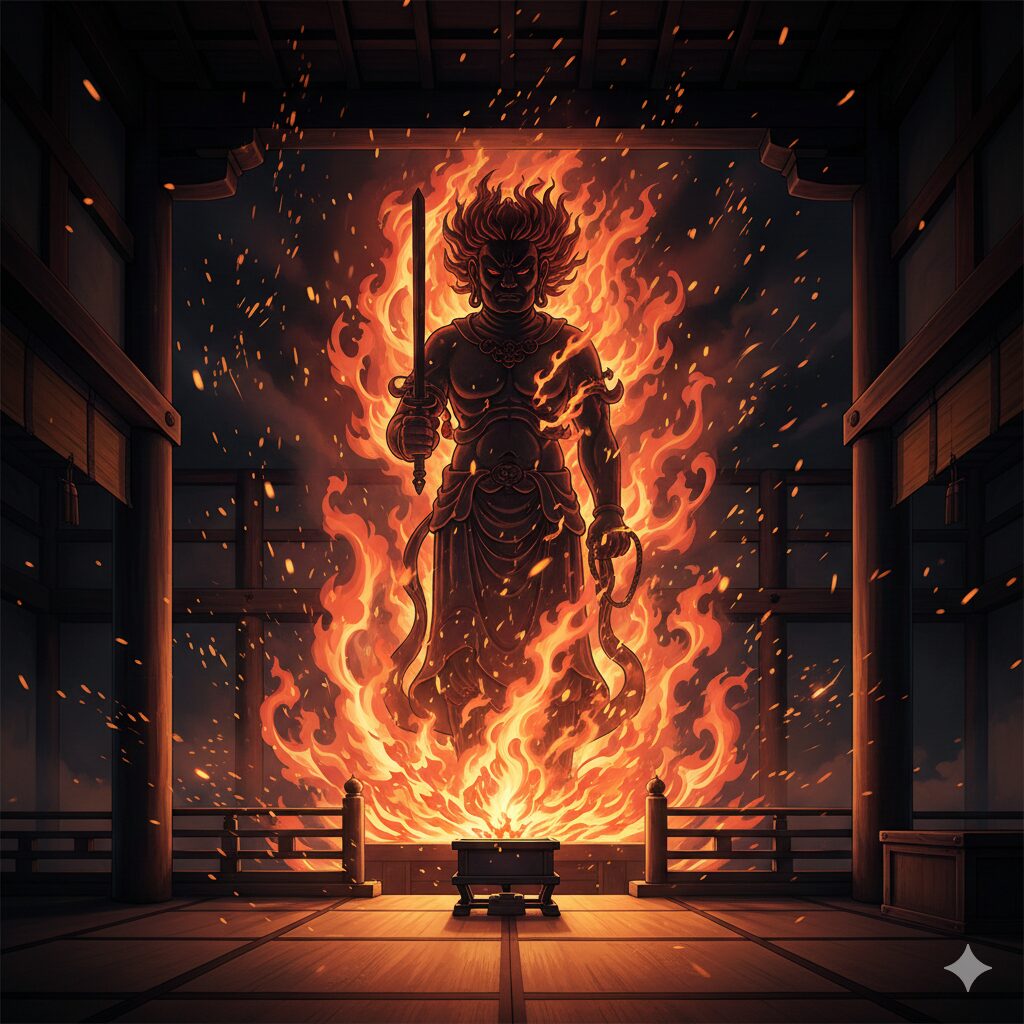
January 28th. In the Japanese calendar, this is not just another winter day. At temples across the country, especially those of the Esoteric Buddhism (Mikkyo) sects, flames roar into the sky, and the sound of heavy drums shakes the earth.
Today is “Hatsu Fudo” (The First Fudo).
It marks the first Ennichi (holy day) of the year for Fudo Myoo (Acala), one of the most prominent superstars in the Japanese Buddhist pantheon. Many international travelers visiting Japanese temples look at the statues of Fudo Myoo and wonder: “Why is this Buddha so angry?” His furious expression stands in stark contrast to the serene smile of the classic Buddha.
However, behind that rage lies a uniquely Japanese concept: “Kindness in the form of severity.” In this article, we will thoroughly decode the history of Hatsu Fudo and the deep spirituality embedded within it.

What is Hatsu Fudo? History and Basics
The 28th of every month is designated as the holy day for Fudo Myoo. An “Ennichi” is a day when one can form a special connection (en) with a specific deity. It is believed that worshiping on this day brings greater merit than usual.
Among these, January 28th, being the first one of the New Year, is called “Hatsu Fudo,” and special services are held.
The Identity of Fudo Myoo (Acala)
Fudo Myoo is called Acala-natha in Sanskrit, meaning “The Immovable Protector.” He is an incarnation of Dainichi Nyorai (the Cosmic Buddha who represents the truth of the universe). He takes on a terrifying form to forcibly save stubborn sentient beings who do not follow teachings through gentle words.
The Goma Ritual: Purification by Fire
The highlight of Hatsu Fudo is undoubtedly the “Goma” (Fire Ritual). This is an esoteric ritual where special wood (Goma-gi) is burned, and offerings are thrown into the flames while prayers are made.
- The Fire: Represents the wisdom of Fudo Myoo, burning away all bonno (earthly desires/passions) and disasters.
- The Smoke: Carries prayers up to the Buddhas in the heavens.
The sight of monks forming hand seals (mudras) and chanting mantras in front of the roaring fire is breathtaking. It possesses an energy akin to a soul-stirring live performance, transcending mere religious ceremony.
Decoding Symbolism: Why Does He Carry a Sword and Rope?
Observe the figure of Fudo Myoo closely. He holds a sword in his right hand and a rope in his left. These are not mere weapons of war.
The Sword in the Right Hand (Kurikara Sword)
This sword is not for injuring enemies. It is the Sword of Wisdom used to sever the “Three Poisons” within the human mind: Greed, Anger, and Ignorance. It symbolizes the determination to cut away one’s own weak spirit.
The Rope in the Left Hand (Kensaku)
The rope is a tool to bind those who try to stray from the righteous path and forcibly drag them back to the correct direction. It manifests a compassion similar to intense paternal love: “If you won’t listen, I will save you even if I have to tie you up.”
The Depths of Japanese Culture: Anger as Mercy
This is the core of the matter. Through the event of Hatsu Fudo, we can glimpse a facet of the Japanese mental structure.
In modern society, “anger” is often processed as a negative emotion. However, Fudo Myoo’s anger is not “private rage” (personal selfishness) but “public rage” (for justice), and furthermore, it is a “sorrowful rage” born out of concern for others.
Re-evaluating “Severity”
Traditional Japanese education and mentorship often include strict discipline. This connects to the spirit of Fudo Myoo. Love is not just about gentle consolation. Sometimes, scolding like thunder to correct a wrong path is considered the truest form of love.
Many Japanese people pray to Fudo Myoo on Hatsu Fudo because they wish to burn away their own spoiling mentality and receive an “Immovable Mind” to face strict realities. This can be seen as the ultimate form of self-discipline.
How to Spend Hatsu Fudo Today
If you are in Japan on January 28th, I highly recommend visiting famous Fudo temples such as Naritasan Shinshoji (Chiba Prefecture) or Takahata Fudoson (Tokyo).
The approach to the temple will be lined with stalls from early morning, filled with the scent of sweet sake (Amazake) and vibrant energy. As you stare into the Goma fire, you will strangely feel your mind quieting down. The fire is hot and fierce, but the human heart watching it regains its cool.
A Question for You
Fudo Myoo chose the face of a demon to save souls that could not be saved by kindness alone.
Who in your life has scolded you or guided you strictly? You might have rebelled at the time, but looking back now, perhaps that was a form of “loving anger” like Fudo Myoo’s.
Also, are there any “weaknesses” or “excuses” within yourself that need to be severed by the sword?
January 28th, Hatsu Fudo. This is the day to reignite the fire within you. What will you vow to this sacred flame?
Related Information & Links
For those who want to experience the powerful Goma fire ritual, the following temple is the most famous.
External Link: Naritasan Shinshoji Temple Official Site
Category: What’s Today’s Special Day Series
【1月28日】初不動:なぜ日本の仏は怒っているのか?炎と慈悲のパラドックス
1月28日。日本の暦において、この日は単なる冬の一日ではありません。全国各地の寺院、特に密教系の寺院では、空を焦がすような炎が立ち上り、太鼓の音が大地を揺らします。
今日は「初不動(Hatsu Fudo)」の日です。
不動明王(Fudo Myoo)という、日本の仏教界でも屈指のスーパースターにとって、一年で最初の縁日(ennichi)にあたります。多くの海外旅行者が日本の寺院を訪れ、不動明王の像を見てこう思います。「なぜ、この仏はこれほどまでに怒っているのか?」と。穏やかな微笑みをたたえるブッダとは対極にある、その憤怒の形相。
しかし、その怒りの裏側には、日本人が大切にしてきた「厳しさという名の優しさ」が隠されています。この記事では、初不動の歴史的背景から、そこに込められた日本独自の精神性までを徹底的に紐解きます。
初不動とは何か?歴史と基礎知識
毎月28日は不動明王の縁日とされています。「縁日(Ennichi)」とは、その神仏と特別な縁(つながり)を結ぶことができる日のこと。この日に参拝すると、普段以上の功徳(ご利益)が得られると信じられています。
その中でも、新しい年を迎えて最初に巡ってくる1月28日を「初不動」と呼び、特別な法要が営まれます。
不動明王(Acala)の正体
不動明王は、サンスクリット語では「アチャラ・ナータ(Acala-natha)」と呼ばれ、「動かざる守護者」を意味します。彼は大日如来(宇宙の真理そのものとされる仏)の化身であり、教えに従わない強情な衆生を、力ずくでも救済するために恐ろしい姿をしているとされています。
護摩(Goma)の儀式:炎の浄化
初不動のハイライトは、なんといっても「護摩(Goma)」です。これは、薪(護摩木)を焚き上げ、その炎の中に供物を投じて祈願する密教の儀式です。
- 炎:不動明王の智慧を表し、あらゆる煩悩(bonno / earthly desires)や災いを焼き尽くします。
- 煙:祈りを天上の仏のもとへ運びます。
燃え盛る炎の前で、僧侶たちが印を結び、真言(マントラ)を唱える光景は、圧巻の一言に尽きます。それは単なる宗教儀式を超え、魂を揺さぶるライブパフォーマンスのようなエネルギーを持っています。
シンボリズムの解読:なぜ彼は剣と縄を持っているのか?
不動明王の姿をよく観察してください。彼は右手に剣、左手に縄を持っています。これらは単なる武器ではありません。
右手の剣(倶利伽羅剣)
この剣は、敵を傷つけるためのものではありません。人間の内面にある「三毒(Three Poisons)」、すなわち貪り(Greed)、怒り(Anger)、愚かさ(Ignorance)を断ち切るための智慧の剣です。自分自身の弱い心を切り捨てる決意の象徴なのです。
左手の縄(羂索)
縄は、正しい道から踏み外そうとする人々を縛り上げ、強引にでも正しい方向へ引き戻すための道具です。「言うことを聞かないなら、縛ってでも救ってやる」という、強烈な父性愛のような慈悲が現れています。
日本文化の深層:慈悲としての「怒り」
ここからが本題です。初不動という行事を通じて、私たちは日本人の精神構造の一端を垣間見ることができます。
現代社会において、「怒り」はネガティブな感情として処理されがちです。しかし、不動明王の怒りは「私憤(個人的な怒り)」ではなく「公憤(正義のための怒り)」、さらには相手を想うがゆえの「悲憤」です。
「厳しさ」の再評価
日本の伝統的な教育や師弟関係には、時に厳しい指導が含まれます。それは不動明王の精神に通じるものがあります。優しく慰めるだけが愛ではない。時には雷のように叱り、誤った道を正すことこそが、真の愛情であるという考え方です。
初不動の日に多くの日本人が不動明王に手を合わせるのは、自分自身の甘えを焼き払い、厳しい現実立ち向かうための「不動の心(Immovable Mind)」を授かりたいと願うからです。これは、自己啓発(Self-discipline)の究極の形とも言えるでしょう。
現代における初不動の過ごし方
もしあなたが1月28日に日本にいるなら、ぜひ成田山新勝寺(千葉県)や高幡不動尊(東京都)などの有名な不動尊を訪れてください。
そこでは、早朝から参道に露店が並び、甘酒の香りが漂い、活気に満ちています。護摩の炎を見つめていると、不思議と心が静まっていくのを感じるはずです。炎は熱く激しいものですが、それを見つめる人間の心は、逆に冷静さを取り戻すのです。
読者への問いかけ
不動明王は、優しさだけでは救えない魂を救うために、あえて鬼の形相を選びました。
あなたの人生において、あなたを叱ってくれた人、厳しく指導してくれた人は誰ですか?その時は反発したかもしれませんが、今振り返れば、それは不動明王のような「愛ある怒り」だったのかもしれません。
また、あなた自身の中に、剣で断ち切るべき「弱さ」や「言い訳」はありませんか?
1月28日、初不動。この日は、自分の中の炎を再点火する日です。あなたなら、この神聖な炎に何を誓いますか?
関連情報・リンク
不動明王の迫力ある護摩祈祷を体験したい方は、以下の寺院が最も有名です。

コメント