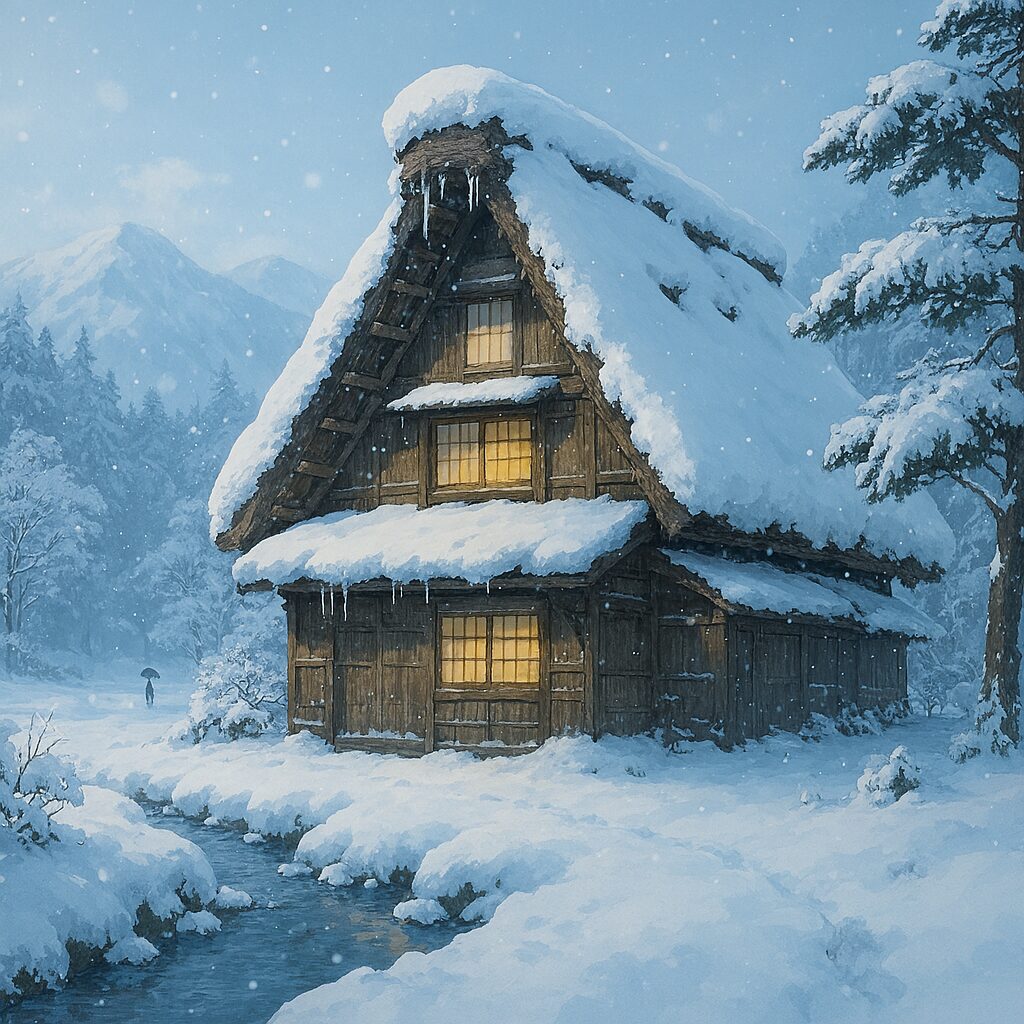
Winter in Japan. Snow brings both severity and tranquil beauty.

- ❄️ What is “Taisetsu”? The Twenty-Four Solar Terms Governing Japan’s Seasons
- ⛩️ Japanese History and Culture Nurtured by Major Snow
- 🗾 Japanese Events Related to December 7th
- 🇯🇵 Decoding the Article: The Core of Japanese Culture as Seen Through Snow
- ❓ A Question for the Reader: What does “Winter” mean to you?
- 🔗 Related Information and External Links
- ❄️ 「大雪」(たいせつ)とは? 日本の季節を司る二十四節気
- ⛩️ 大雪が育んだ日本の歴史と文化
- 🗾 12月7日にまつわる日本の出来事
- 🇯🇵 記事を読み解く:雪から見る日本文化の核心
- ❓ 読者への問いかけ:あなたにとっての「冬」とは?
- 🔗 関連情報と外部リンク
❄️ What is “Taisetsu”? The Twenty-Four Solar Terms Governing Japan’s Seasons
The Japanese calendar is not just a measure of dates; it is a system that delicately captures the shifts in nature. Among these, the “Nijūshi Sekki” (二十四節気, Twenty-Four Solar Terms) is particularly important. This system divides the year into 24 periods based on the movement of the sun, each named to represent the season, and has historically served as a guide for agriculture and daily life.
Arriving around December 7th is one of these terms: “Taisetsu” (大雪), which literally means “Major Snow.” As its name suggests, it signifies “the time when snow begins to fall heavily.” It marks the period when snow starts accumulating not only in the mountains but also in the villages, signaling the start of true winter.
The Taisetsu period lasts for about 15 days, until the next term, “Tōji” (Winter Solstice). During this time, the strong winter pressure pattern brings heavy snow day after day to Northern Japan and the regions facing the Sea of Japan. This natural severity has profoundly influenced Japanese culture and way of life.
⛩️ Japanese History and Culture Nurtured by Major Snow
Taisetsu is more than just a cold weather indicator. It has been a crucial element in shaping Japan’s history and culture.
1. Life and Wisdom in Snow Country: Snow Removal and “Yukikakoi”
In snowy regions, particularly Hokuriku and Tohoku, Taisetsu changes life itself. “Yukioroshi” (雪下ろし), or snow removal, to protect houses from the weight of snow, is a regular winter event, often performed as a communal effort. Furthermore, “Yukikakoi” (雪囲い), the practice of covering house windows and walls with wood to protect them from the snow, is an architectural technique filled with traditional wisdom and aesthetics for surviving the winter.
2. Food Culture: Preserved Foods Prepared During Winter
During the long, snowbound winter, securing food was a major challenge. Thus, the Taisetsu period became a critical time for preparing preserved foods to be consumed throughout the season.
- Tsukemono (漬物, Pickles): Winter vegetables like daikon radish and Chinese cabbage are preserved by salting. Smoked pickles, such as “Iburigakko” (from Akita), are a winter tradition in deeply snowy areas, offering both rich flavor and high preservation to help endure the harsh conditions.
- Kamboshi (寒干し, Cold-Drying): The sight of foods like daikon or mochi (rice cakes) hung under the eaves to be repeatedly frozen and dried, which enhances their flavor, is a classic winter scene.
3. Art and Literature: The “Wabi-Sabi” Brought by Snow
Snowscapes have been a central theme in Japanese poetry and art since ancient times. A world covered in silver erases all color, bringing a monochrome silence and beauty. This stillness is deeply connected to the Japanese aesthetic concept of “Wabi-Sabi” (侘び・寂び).
In Haiku, terms like “Taisetsu” and “Miyuki” (deep snow) are used as Kigo (seasonal words), and their severity and beauty have been immortalized by many literary masters.
Ah, such silence! The cry of a cicada
Sinks into the rocks. (Matsuo Bashō)Though not a snow poem, the profound stillness in this verse resonates with the sensation when snow blankets everything.
🗾 Japanese Events Related to December 7th
Beyond the Solar Terms, December 7th is associated with several important events and observances in Japanese history.
1. Special Day on the Calendar: Preparation for “Susuharai”
The Taisetsu period is when preparations for the New Year become serious. Specifically, “Susuharai” (煤払い) on December 13th is a key event dating back to the Edo period: a grand cleaning to sweep away soot and dust from the entire house in preparation for welcoming the gods. Around December 7th, people would begin preparing tools and mentally getting ready for this big clean.
2. History: Japan’s Confrontation with International Affairs
On December 8, 1941 (Japan time), the Imperial Japanese Navy attacked **Pearl Harbor** in Hawaii, initiating the Pacific War. Due to the time difference, the date in the United States was December 7th. This day holds a deeply serious significance in both Japanese and world history, prompting profound reflection on contemporary international peace and diplomacy.
🇯🇵 Decoding the Article: The Core of Japanese Culture as Seen Through Snow
The core of Japanese culture that can be deciphered from this article is “**coexistence and adaptation with nature**.”
The severity of Taisetsu did not compel the Japanese to conquer nature, but rather to adopt the wisdom and ingenuity to accept its changes and integrate them into daily life.
- The Power of Community: Snow removal and Yukikakoi, tasks too difficult for an individual, fostered the spirit of “Yui” (結), or mutual assistance among community members.
- Sustainable Living: The culture of preserved foods reflects the idea of sustainability—wasting no food and maximizing the utilization of nature’s bounty.
- Spirituality: A unique sense of “**tranquil beauty**,” rarely found in other nations, arose from the heart of this severe nature.
The phenomenon of “Taisetsu” serves as an excellent window into understanding how the Japanese people’s **collectivism** (mutual aid), **environmental adaptability** (preserved foods, architectural techniques), and **distinct aesthetic sense** (Wabi-Sabi) were cultivated. Snow, sometimes harsh, sometimes beautiful, has always remained at the heart of Japanese life and culture.
❓ A Question for the Reader: What does “Winter” mean to you?
After reading this article, you might be surprised by how deeply a natural phenomenon like snow has influenced a country’s culture and history.
What does winter mean in your homeland?
What special wisdom, customs, or foods have been passed down in your country or region to overcome the harsh winter?
If you were to visit a snow-covered Gassho-zukuri village (like Shirakawa-go) in Japan, what kind of beauty would you find in that silence and severity?
Please share your thoughts. And this winter, take a moment to reflect on the wisdom and culture of Japan’s snow country.
🔗 Related Information and External Links
Related Links within the Category (Internal Link)
Reference and External Links (Existing Pages)
- JNTO (Japan National Tourism Organization): Travel to Snow Country (in Japanese)
- UNESCO: Historic Villages of Shirakawa-go and Gokayama (Gassho-zukuri)
🇯🇵 12月7日:冬の訪れを告げる「大雪」— 雪がもたらす日本の文化と生活の奥深さ
冬の日本。雪は、厳しさと同時に静謐な美をもたらします。
❄️ 「大雪」(たいせつ)とは? 日本の季節を司る二十四節気
日本の暦は、単に日付を示すだけでなく、自然の移り変わりを繊細に捉える仕組みを持っています。その中でも、特に重要なのが「二十四節気(にじゅうしせっき)」です。これは、太陽の動きを基に1年を24等分し、それぞれの期間に季節を表す名前をつけたもので、古来より農業や生活の指針としてきました。
12月7日頃に訪れるのが、その二十四節気のひとつ「大雪(たいせつ)」です。その名の通り、「雪が激しく降り始める頃」という意味を持ちます。これは、山々だけでなく里にも雪が降り積もり始め、本格的な冬の到来を告げる時期として位置づけられています。
大雪の期間は、次の節気である「冬至(とうじ)」までの約15日間を指します。この時期、日本列島は西高東低の冬型の気圧配置が強まり、北日本や日本海側の地域では、連日のように大雪に見舞われます。この自然の厳しさが、日本の文化や生活様式に深く影響を与えてきたのです。
⛩️ 大雪が育んだ日本の歴史と文化
大雪は、単なる寒さの指標ではありません。それは、日本の歴史と文化を形作る重要な要素となってきました。
1. 雪国の生活と知恵:雪下ろしと「雪囲い」
雪深い地域、特に北陸や東北地方では、大雪は生活そのものを変えます。家屋を雪の重みから守るための「雪下ろし」は、冬の恒例行事であり、地域の共同作業として行われてきました。また、家の窓や壁を雪から保護するために木材で覆う「雪囲い(ゆきがこい)」は、冬を乗り越えるための昔ながらの知恵と美意識が詰まった建築技術です。
2. 食文化:冬の間に仕込む保存食
雪に閉ざされる冬の期間は、食料の確保が大きな課題でした。このため、大雪の時期は、冬の間に食べる保存食を仕込む重要なタイミングとなりました。
- 漬物(つけもの):大根や白菜などの冬野菜を塩漬けにして保存します。特に雪深い地方の「いぶりがっこ」(秋田)のような燻製した漬物は、厳しい冬を乗り越えるための豊かな風味と保存性を兼ね備えています。
- 寒干し(かんぼし):凍結と乾燥を繰り返すことで旨味が増す大根や餅などの食材を軒下に吊るす光景は、冬の風物詩です。
3. 芸術と文学:雪がもたらす「侘び寂び」
雪景色は、古くから日本の詩歌や美術の重要なテーマでした。一面の銀世界は、すべての色彩を消し去り、モノトーンの静寂と美をもたらします。この静けさが、日本の美意識である「侘び・寂び(わび・さび)」の精神と深く結びついています。
俳句においては、「大雪」や「深雪(みゆき)」は冬の季語として用いられ、多くの文豪によって、その厳しさと美しさが詠まれてきました。
閑さや 岩にしみ入る 蝉の声(松尾芭蕉)
芭蕉の句ではありませんが、この静寂を極めた境地は、雪がすべてを覆い尽くした時の感覚に通じるものがあります。
🗾 12月7日にまつわる日本の出来事
二十四節気以外にも、12月7日には日本の歴史において、いくつかの重要な出来事や記念日があります。
1. 暦の上の特別な日:「煤払い」(すすはらい)の準備
大雪の期間は、新年を迎えるための準備が本格化する時期です。特に、12月13日の「煤払い(すすはらい)」は、江戸時代から続く重要な行事で、神様を迎えるために家中の煤や塵を払い清める、大掃除の原型です。12月7日頃は、この大掃除に向けて道具を準備したり、心の準備を始めるタイミングでした。
2. 歴史:日本が直面した国際情勢
1941年(昭和16年)12月8日(日本時間)には、日本海軍がハワイの真珠湾を攻撃し、太平洋戦争が開始されました。時差の関係でアメリカ時間では12月7日となります。この日は、日本と世界の歴史において、現代の国際的な平和と外交のあり方を深く考えさせる、非常に重い意味を持つ日です。
🇯🇵 記事を読み解く:雪から見る日本文化の核心
この記事から読み取れる、日本の文化の核心は「自然との共存と適応」です。
大雪の厳しさは、日本人に自然を征服するのではなく、その変化を受け入れ、生活の中に組み込む知恵と工夫を求めました。
- 共同体の力:一人では対処できない雪下ろしや雪囲いは、地域の人々が互いに助け合う「結(ゆい)」の精神を育みました。
- 持続可能な生活:保存食の文化は、食料を無駄にせず、自然の恵みを最大限に活かすという、持続可能性の考え方を反映しています。
- 精神性:厳しい自然の中にこそ、他の国々には見られない、特有の「静謐な美」を見出す精神性が生まれました。
「大雪」という現象は、日本人の集団主義(助け合い)と環境適応能力(保存食、建築技術)、そして独特の美意識(侘び寂び)がどのようにして育まれたのかを理解するための、最高の窓口なのです。雪は、時に厳しく、時に美しく、常に日本人の生活と文化の中心にあり続けているのです。
❓ 読者への問いかけ:あなたにとっての「冬」とは?
この記事を読んで、雪という自然現象が、ある国の文化や歴史に、これほど深く影響を与えていることに驚いたかもしれません。
あなたの故郷では、冬はどのような意味を持っていますか?
厳しい冬を乗り越えるために、あなたの国や地域で受け継がれている特別な知恵や習慣、食べ物はありますか?
もし日本に来て、雪に覆われた合掌造りの村(白川郷など)を訪れたとしたら、あなたはその静寂と厳しさの中に、どのような美しさを見出すでしょうか。
ぜひ、あなたの考えを聞かせてください。そして、この冬、日本の雪国の知恵と文化に思いを馳せてみてください。

コメント